What Is the Best Wire Crimping Tool in 2026?

Time:2026-10-24 Author:Madeline
0%

Choosing the best Wire Crimping Tool in 2026 is less simple than online rankings suggest. A professional installer may value repeatable pressure, while a homeowner may prefer comfort and low cost. The right choice depends on terminal type, wire gauge, workload, and required connection strength.

This guide examines tools through practical, measurable details. We consider crimp accuracy, jaw alignment, handle control, ratchet release, insulation support, and long-term durability. We also look at how each tool performs with copper, aluminum, insulated, and heat-shrink terminals. A clean crimp should hold firmly without cutting strands or crushing the connector. Small defects can create resistance, heat, and unreliable equipment.

Real workshop experience matters. A tool that feels excellent for five minutes may cause wrist fatigue after fifty crimps. Likewise, an expensive ratcheting model is not automatically the best option. Some budget tools perform surprisingly well, but their quality control can vary between batches. That limitation deserves attention.

Testing should include visual inspection, pull testing, and repeated use. Manufacturer specifications provide useful guidance, but independent checks reveal practical weaknesses. We will compare popular designs without treating marketing claims as proof. There is no universal winner. That may sound unsatisfying.

Our goal is a dependable recommendation for electricians, technicians, mechanics, and careful DIY users. By matching the tool to real working conditions, you can avoid loose terminals, damaged conductors, and unnecessary replacement costs. Even experienced users should verify the finished crimp. Mistakes happen.
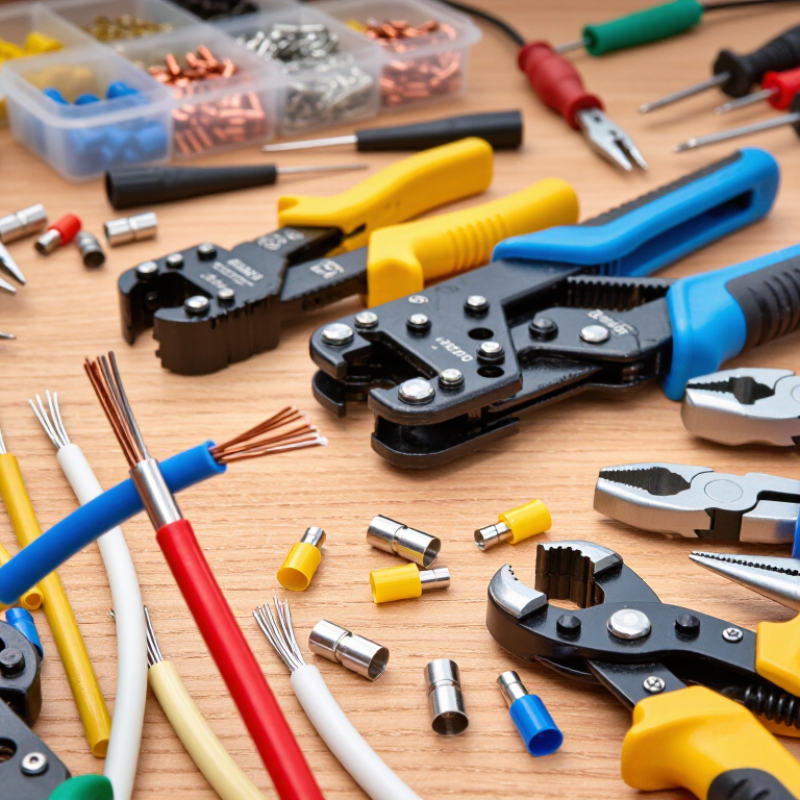
What Is the Best Wire Crimping Tool in 2026?

What Is a Wire Crimping Tool and How Does It Work?

A wire crimping tool joins a stripped wire to a metal terminal through controlled pressure. The tool does not solder the connection. Its jaws compress the terminal barrel around the conductor, creating a mechanical and electrical bond. Ratcheting models release only after completing the crimp cycle. This reduces half-finished crimps, though it cannot correct the wrong terminal size.

The process starts with accurate stripping. Remove insulation without cutting copper strands. Insert the conductor until its strands reach the barrel’s end. Then place the terminal inside the matching die and squeeze steadily. IPC/WHMA-A-620, widely used for cable and wire harness acceptance, emphasizes conductor placement, insulation support, and visible deformation. A simple pull test can reveal weak compression. It is not a substitute for laboratory testing, but it catches obvious failures.

Market data shows why this small operation matters. Grand View Research valued the global wire and cable market at over USD 200 billion in 2023, with continued growth expected through 2030. More assemblies mean more termination points and more opportunities for inconsistent workmanship. A polished crimp may still fail internally. I would inspect the barrel, check for exposed strands, and verify terminal compatibility before trusting it. That extra minute feels excessive. It often is not.

Which Wire Crimping Tool Types Are Available in 2026?

In 2026, wire crimping tools are available in several practical types. Handheld ratcheting crimpers remain common for household repairs, automotive wiring, and small control panels. Their ratchet mechanism keeps the jaws closed until the crimp finishes. This helps prevent loose connections caused by rushed hand pressure. Self-adjusting crimpers are faster when wire sizes change frequently, although their adjustment can feel less precise.

Hydraulic crimpers suit thicker cables and high-force terminals. They create strong, even compression with less effort from the operator. Pneumatic models work well on production benches, where repeated crimps would quickly tire the hands. Battery-powered hydraulic tools add portability for field work, but battery condition affects reliability. I once underestimated that detail. A slow battery can produce inconsistent results.

Specialized tools also matter. Ferrule crimpers shape wire-end sleeves neatly for screw terminals. Open-barrel crimpers handle delicate terminals used in compact connectors. Coaxial crimpers form connector sleeves around cable shielding without crushing the inner conductor. For reliable work, match the die profile, wire size, and terminal material before applying pressure. Inspect the finished crimp for even compression, exposed strands, and damaged insulation. A gentle pull test can reveal weakness, but it cannot replace proper specifications or calibrated equipment. The “best” type depends on cable size, work volume, access, and how much repeatability the job demands.

How to Compare Wire Crimping Tools by Key Performance Factors

The best wire crimping tool in 2026 depends on measurable performance, not appearance. Start with crimp consistency. Measure crimp height across several terminals, then compare the readings. A reliable tool should produce repeatable results with limited variation. IPC/WHMA-A-620E emphasizes visual inspection, conductor placement, insulation support, and acceptable crimp geometry. These details matter more than a polished handle.

Pull-out strength reveals deeper quality. NASA-STD-8739.4 requires documented crimp inspection and tensile testing, with minimum values changing by conductor size and terminal type. Check whether the tool supports calibrated testing, not vague “heavy-duty” claims. Jaw alignment also matters. Poor alignment can leave one side compressed and create hidden weak points. My first comparison was too narrow. I focused on force, but cycle life matters just as much. Record performance after repeated crimps, especially on larger cable sizes.

Ergonomics deserves serious attention. The U.S. Bureau of Labor Statistics reported about 2.6 million nonfatal private-industry injury and illness cases in 2023. Not every case involves hand tools, but repetitive force remains a practical workplace concern. Compare handle span, required squeeze force, return action, and accessibility inside crowded panels. A ratcheting mechanism can prevent incomplete crimps, yet it may feel slow during high-volume work. Test both. A tool that saves strength but causes wrist fatigue is not truly efficient. Small imperfections in the first sample should trigger another measurement, not an immediate purchase.

What Is the Best Wire Crimping Tool for Each Common Application?

The best wire crimping tool in 2026 depends on the application, wire size, and terminal design.

For insulated household terminals, choose a ratcheting crimper with clearly marked gauge cavities. Matching the cavity to the wire prevents uneven compression. A loose crimp can heat under load.

Test it.

In practical work, I tug each finished connection and inspect the sleeve for even compression. This simple check catches many errors.

For automotive repairs, a narrow crimper suits crowded areas behind fuse boxes. A tool designed for heat-shrink terminals adds protection against moisture and vibration.

For electronics, use a precision crimper for small open-barrel contacts. It should form a clean bell mouth, not flatten the contact. Small terminals punish rough technique.

For coaxial cable, use a dedicated compression tool matched to the connector size. For battery cables, select a heavy-duty hex or indent crimper rated for the cable.

Hammer-style tools may help in limited field situations, but they need controlled force and stable support. They are not my first choice.

A failed high-current connection can become dangerously hot.

Strip insulation without nicking strands, then verify that the terminal grips copper, not insulation. I have occasionally trusted a firm-looking joint too quickly. A pull test and visual inspection would have exposed the mistake.

How to Choose and Use the Right Wire Crimping Tool Safely

What Is the Best Wire Crimping Tool in 2026?

Choosing the best wire crimping tool starts with the connector, wire size, and working environment. A professional tool should match the terminal’s specified gauge range. Its crimping dies must close evenly without crushing the metal. Ratcheting models can help maintain consistent pressure, especially during repeated repairs. However, a ratchet does not guarantee a reliable connection. The correct die cavity matters more.

Before crimping, disconnect all power and confirm the circuit is inactive with a suitable tester. Strip only the required insulation length. Exposed strands should fit inside the terminal barrel, not extend beyond it. Place the terminal fully into the matching die, then squeeze until the mechanism releases. A firm pull test can reveal a weak crimp. Do not twist the wire aggressively. That mistake can damage hidden strands. I have learned that rushing this step creates more rework than careful preparation.

Tips: Keep several connector sizes nearby, and inspect the tool before use. Worn dies may leave uneven marks. Choose insulated terminals for suitable applications, and add heat-shrink protection when required. Wear eye protection while cutting or stripping wire. Keep fingers behind the cutting edges. If the crimp looks flattened, cracked, or loose, remove it and start again. My early assumption was that greater force meant greater strength. It did not. Clean alignment usually matters more.

FAQS

What types of wire crimping tools are available in 2026?

Common types include ratcheting, self-adjusting, hydraulic, pneumatic, and battery-powered hydraulic tools. Specialized tools handle ferrules, open-barrel terminals, and coaxial cables.

When should I use a ratcheting crimper?

Use one for household repairs, vehicle wiring, and small control panels. The ratchet keeps the jaws closed until the crimp finishes. This helps prevent rushed, loose connections.

Are self-adjusting crimpers suitable for changing wire sizes?

Yes, they are convenient when wire sizes change often. However, adjustment may feel less precise. Check the result carefully.

When is a hydraulic crimper more suitable?

Hydraulic tools suit thicker cables and high-force terminals. They create even compression with less hand effort. They are often heavier and less convenient in tight spaces.

What are the advantages of pneumatic and battery-powered tools?

Pneumatic tools work well on production benches with repeated crimps. Battery-powered hydraulic tools provide more freedom during field work. A weak battery can cause inconsistent results. I underestimated that once.

How do I choose a specialized crimping tool?

Use ferrule crimpers for wire-end sleeves in screw terminals. Use open-barrel crimpers for delicate compact connectors. Use coaxial crimpers without crushing the inner conductor.

How can I check whether a crimp is reliable?

Confirm the die matches the wire size and terminal material. Inspect even compression, exposed strands, and damaged insulation. Then perform a gentle pull test. It is useful, but not enough.

Which performance factors matter most when comparing tools?

Compare crimp consistency, jaw alignment, cycle life, squeeze force, and handle comfort. Measure crimp height across several terminals. Record results after repeated use, especially with larger cables.

How important is tool ergonomics?

Compare handle span, required force, return action, and access inside crowded panels. A ratchet may prevent incomplete crimps but feel slow during high-volume work. Strength savings can still create wrist fatigue. Test before deciding.

Conclusion

Choosing the best Wire Crimping Tool in 2026 depends on the connector type, wire size, working environment, and required connection strength. A wire crimping tool works by compressing a terminal around a stripped conductor, creating a secure mechanical and electrical connection without soldering. Common options include handheld ratcheting tools, self-adjusting models, precision crimpers for small terminals, and heavier tools for larger cables. Each type offers different levels of control, speed, portability, and crimp consistency.

When comparing tools, consider crimp accuracy, compatibility with terminal profiles, adjustment range, handle comfort, durability, and built-in safety features. The ideal choice may differ for household wiring, automotive repairs, electronics assembly, network cables, or industrial cable work. Always match the tool to the terminal and wire specifications, remove only the required insulation, and place the terminal correctly before crimping. Inspect every finished connection for firm retention, even compression, and exposed strands. Using the right Wire Crimping Tool carefully helps create reliable connections while reducing damage, rework, and safety risks.


Madeline

Madeline

Madeline is a dedicated marketing professional with a wealth of expertise in our company's core offerings. With a keen understanding of the industry, she brings a unique perspective to her role, consistently delivering high-quality content that highlights the superior aspects of our products. As......