Choosing Terminal Crimpers for global sourcing is not simply a matter of comparing prices. The correct tool must match the terminal series, conductor size, insulation profile, production volume, and required crimp geometry. A compact hand crimper may suit maintenance work, while a calibrated pneumatic or automatic machine may be necessary for stable factory output.
“Reliable crimps begin with a controlled match between the terminal, wire, and applicator,” says Daniel Mercer, a connector-application specialist with more than two decades of production experience. His point is practical. A crimp can look polished yet fail a pull test, cross-section inspection, or vibration test. That risk becomes larger when suppliers use different materials, drawings, or quality procedures.
Look closely.
Global buyers should request sample crimps, tooling specifications, calibration records, and measurable acceptance criteria before placing a large order. I have seen sourcing teams focus on machine speed while overlooking die wear, spare-part availability, and operator training. That decision often creates hidden costs later. It is also easy to trust a familiar brand too quickly. Familiarity is not proof.
This guide examines how to compare Terminal Crimpers across suppliers, regions, and production environments. It considers manual, pneumatic, hydraulic, and automated options. It also reviews terminal compatibility, force control, maintenance access, documentation, and after-sales support. Some recommendations will remain conditional, because no single crimper fits every application. That uncertainty deserves attention. A dependable sourcing decision should be based on test evidence, transparent specifications, and the real conditions on your production floor.
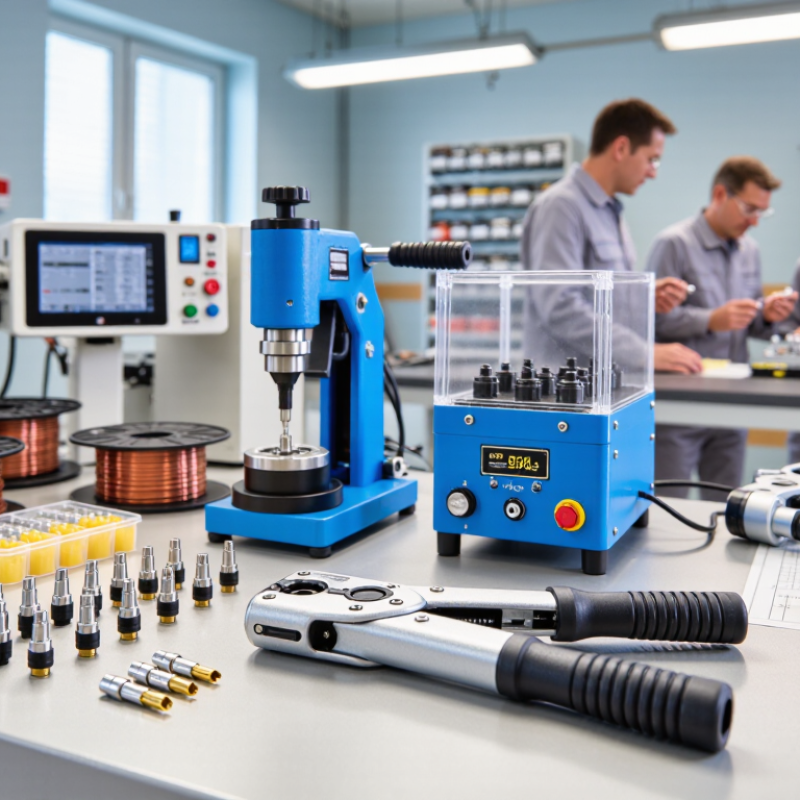
Terminal crimpers join electrical terminals to wires by controlled mechanical pressure. They are not ordinary pliers. A suitable tool shapes the terminal barrel without cutting strands or damaging insulation.
In practical assembly work, the terminal type determines the crimper design. Open-barrel terminals need different dies from insulated ring terminals. Ferrules also require their own compression profile. Check the wire gauge, terminal material, and insulation diameter before purchasing. A loose match can create resistance, heat, or intermittent connections.
Ratchet crimpers help maintain consistent pressure during repeated work. They usually release only after completing the crimp. That matters on production lines. For occasional repairs, a simpler tool may be sufficient, but comfort still matters. A heavy handle can cause fatigue quickly.
Look for replaceable dies, clear markings, and a firm locking mechanism. Die cavities should hold the terminal steadily. The crimp should appear even, with no cracked insulation or exposed conductor beyond the approved area. A pull test provides useful evidence, although it does not replace electrical testing.
Global sourcing adds another question: can operators use the tool correctly after delivery? Instructions should show terminal placement, stripping length, and inspection points. Testing one sample batch is wise. I have seen tools that looked precise but produced inconsistent results after several cycles. Tool selection is therefore partly technical and partly practical. The cheapest option may become expensive through rework.
When selecting terminal crimpers for global sourcing, begin with the terminal design, not the tool catalog. Open-barrel terminals need controlled wings and accurate support. Closed-barrel terminals often require hex, indent, or four-indent compression. Insulated terminals need dies that compress the sleeve without cutting it. Small details matter. Ask for the terminal drawing, conductor range, insulation diameter, and required crimp profile.
A ratchet hand crimper suits low-volume assembly and field repairs. It gives direct feedback, but operator strength can affect consistency.
Pneumatic crimpers improve speed for repetitive work and reduce hand fatigue. Hydraulic models handle larger cable sizes and higher compression forces.
For reel-fed production, an applicator with a dedicated die may be more stable. That choice costs more.
Before purchase, request sample crimps from the actual terminal and wire combination. Measure crimp height, pull force, conductor brush, and insulation support. Visual checks alone can miss loose strands or over-compression.
Confirm spare die availability, calibration records, adjustment instructions, and operator training. I have seen tools pass a quick test yet fail after repeated cycles. That is an uncomfortable reminder.
Keep records. Recheck samples when suppliers, wire lots, or terminal plating change.
When sourcing terminal crimpers globally, evaluate the finished connection, not only the tool’s price. From hands-on procurement work, I examine jaw alignment, handle force, and adjustment stability. The crimper must match terminal geometry, wire gauge, and insulation diameter. Samples can deceive. Request production samples using your actual terminals and cables. Then inspect the crimp cross-section for even compression, clean strands, and proper insulation support.
Quality needs repeatable evidence. Ask for dimensional drawings, material details, inspection records, and calibration dates. A pull test can reveal weak compression that looks acceptable from outside. Measure crimp height with a suitable gauge, and compare results across several samples. In one sourcing review, I accepted a tool after checking only five crimps. Later, variation appeared after repeated use. That mistake changed my process: I now request larger sample sets and repeated-cycle testing. The method is not perfect, but it exposes more risk.
Compatibility also includes maintenance and operator training. Confirm replacement parts, adjustment instructions, and clear quality criteria. For international purchasing, review applicable technical standards and supplier declarations for the target market. Keep lot numbers, test results, and revision-controlled drawings in the sourcing file. Traceability supports reliable audits and helps resolve inconsistent batches. Do not assume one certification covers every terminal, cable, or destination. A small mismatch can create rework, delays, and unsafe electrical performance.
| Evaluation Dimension | Recommended Specification or Benchmark | Why It Matters in Global Sourcing | Verification Method | Priority |
|---|---|---|---|---|
| Terminal Type | Select tooling for insulated terminals, non-insulated terminals, open-barrel contacts, closed-barrel lugs, or coaxial contacts. These terminal families are not interchangeable. | The wrong jaw geometry can produce incomplete wings, conductor damage, loose connections, or an unacceptable pull-out force. | Match the crimper profile to the terminal drawing, application specification, and approved sample. | Critical |
| Conductor Size Range | Typical manual ranges include 22–18 AWG (0.326–0.823 mm²), 16–14 AWG (1.31–2.08 mm²), 12–10 AWG (3.31–5.26 mm²), or 8–6 AWG (8.37–13.3 mm²). Confirm the exact terminal range. | AWG and metric cross-sections are not identical. A stated range must cover the actual conductor, insulation, and terminal barrel. | Check the tool marking and test crimp samples at the smallest and largest specified conductor sizes. | Critical |
| Crimp Profile | Common profiles include B-crimp, hexagonal crimp, indent crimp, oval crimp, and manufacturer-specific open-barrel forming profiles. | Profile controls conductor compression, contact resistance, mechanical strength, and compatibility with the terminal barrel. | Compare the finished crimp with the terminal supplier’s crimp-height, crimp-width, and visual-acceptance requirements. | Critical |
| Insulated Terminal Support | Use dedicated cavities for common insulation sizes and terminal colors only when the color coding matches the applicable terminal system. Typical insulation groups are red, blue, and yellow, but color conventions should be confirmed. | Color alone does not guarantee conductor-size compatibility across all markets or terminal constructions. | Verify the cavity marking, terminal barrel dimensions, and finished insulation support on actual samples. | High |
| Ratchet Mechanism | Prefer a full-cycle ratchet with controlled release, positive jaw alignment, and an emergency release function where the application requires it. | A controlled cycle reduces under-crimping and improves repeatability between operators and production locations. | Perform repeated cycles, inspect the release function, and measure crimp results at the beginning and end of the tool’s adjustment range. | High |
| Crimp Force and Adjustment | Use a tool with a defined force range or validated adjustment system. Avoid relying only on handle feel or visual appearance. | Consistent force helps maintain electrical and mechanical performance across operators, batches, and factories. | Use a calibrated force tester or a documented crimp-height and pull-test procedure. | Critical |
| Electrical Performance | The finished connection should provide stable low contact resistance, full conductor capture, and no excessive conductor strand damage. | Poor electrical contact can cause localized heating, voltage drop, intermittent faults, and premature product failure. | Measure contact resistance when required and inspect cross-sections or conductor deformation during qualification. | Critical |
| Mechanical Performance | Define a minimum pull-out force according to the conductor size, terminal design, and applicable product specification rather than using one universal value. | Pull strength confirms that the conductor and terminal have formed a mechanically secure connection. | Conduct destructive pull tests using a calibrated tensile tester and record the failure mode. | Critical |
| Applicable Standards | Consider IEC 60352-2 for solderless crimped connections, applicable national electrical standards, and terminal-specific requirements such as UL or CSA conditions where required by the destination market. | Standards support consistent qualification, documentation, and acceptance criteria across international supply chains. | Request the relevant test report, declaration, technical specification, and traceable revision history. | High |
| Material and Surface Treatment | Look for hardened tool steel in load-bearing areas, corrosion-resistant surfaces, and jaws with controlled hardness and dimensional stability. | Material quality influences service life, jaw wear, dimensional accuracy, and performance in humid or coastal logistics environments. | Review material declarations, hardness records, coating specifications, and corrosion inspection results. | High |
| Dimensional Compatibility | Confirm terminal barrel diameter, wall thickness, insulation diameter, conductor stranding, and access space before selecting the jaw geometry. | Two terminals with the same nominal wire range may require different crimp cavities because their barrel dimensions and materials differ. | Use terminal drawings, wire specifications, go/no-go gauges, and first-article crimp samples. | Critical |
| Ergonomics and Operator Safety | Choose handles with a secure grip, suitable leverage, controlled opening, and a working force appropriate for the expected production volume. | Ergonomic design reduces fatigue, repetitive-strain risk, and variation caused by operator discomfort. | Conduct operator trials over a representative production cycle and record cycle time and defect rate. | Medium |
| Calibration and Maintenance | Require a documented calibration interval, wear limits, cleaning instructions, lubrication points, and replacement-part availability. | A well-maintained tool protects process capability and reduces unplanned downtime at overseas production sites. | Review calibration certificates, maintenance records, spare-part lead time, and service instructions. | High |
| Quality Management | Prefer suppliers with a documented quality management system, incoming-material control, in-process inspection, final inspection, and lot traceability. | Process control is more reliable than relying only on final visual inspection or a supplier’s general product claim. | Audit quality procedures and request inspection plans, nonconformance records, and batch traceability samples. | High |
| Material Compliance | Where applicable, request declarations for RoHS, REACH, restricted substances, conflict minerals, and packaging requirements for the destination market. | Compliance documentation can be required for customs clearance, customer approval, environmental reporting, and market access. | Verify declarations against the actual tool materials, coatings, packaging, and current regulatory requirements. | High |
| Sampling and Acceptance | Approve a pre-production sample using the exact terminal, conductor, insulation, and crimp settings planned for production. | Sample approval prevents substitutions in terminal construction or wire size from creating hidden compatibility problems. | Record crimp height, crimp width, pull force, visual condition, contact resistance, and tool settings in an inspection report. | Critical |
| Packaging and International Logistics | Use protective packaging that prevents jaw damage, corrosion, contamination, and accidental ratchet engagement during transport and storage. | Long-distance shipping, humidity, vibration, and repeated warehouse handling can affect tool condition before delivery. | Inspect export packaging, moisture protection, carton labeling, product identification, and shipping documentation. | Medium |
Choosing terminal crimpers for global sourcing requires more than comparing catalog prices. A reliable supplier should explain tooling materials, crimp-force control, replacement parts, and inspection methods. Request production samples using your actual terminal and wire sizes. A clean crimp should show even compression, stable pull-off strength, and no damaged insulation. Supplier experience matters most when specifications are incomplete or frequently changing.
Compare total cost, not only the quoted unit price. Include molds, setup fees, minimum order quantities, packaging, freight, taxes, and quality inspection. A low offer may become expensive after repeated adjustments. Ask for recent capacity records, shift numbers, lead times, and backup equipment. A factory producing near full capacity may accept your order but miss delivery dates. Production plans should be supported by photographs, records, or a live audit. I have seen capacity claims look convincing until a simple trial order exposed delays. That mistake is worth remembering.
Tips: Check certification numbers through official databases, and confirm their exact scope. Ask whether certificates cover the factory, product, or management system. Review calibration records for force testers and measuring tools. Start with a small pilot order before committing to annual volumes. Keep written approval criteria. Otherwise, personal judgments can quietly replace measurable quality.
Anonymous supplier comparison based on landed cost, certification coverage, production capacity, and lead time.
| Supplier Profile | Landed Cost / 10,000 Units | Certification Coverage | Monthly Capacity | Typical Lead Time | Readiness Score |
|---|---|---|---|---|---|
| Profile A | US$1,850 | 80 / 100 | 2.4 million units | 28 days | 87% |
| Profile B | US$1,620 | 65 / 100 | 1.6 million units | 35 days | 79% |
| Profile C | US$2,100 | 95 / 100 | 3.2 million units | 21 days | 92% |
| Profile D | US$1,480 | 50 / 100 | 0.9 million units | 42 days | 68% |
The readiness score uses a weighted sourcing model: certification coverage 30%, production capacity 25%, lead-time reliability 25%, and landed cost 20%. Certification coverage should be verified through current ISO 9001, IATF 16949, UL, CSA, or customer-specific compliance documentation before placing an order.
Choosing terminal crimpers for global sourcing requires more than comparing unit prices. Request production samples from at least two tool batches. Check crimp height, terminal alignment, insulation support, and pull-out force. Cross-sections can reveal hidden conductor damage. IEC 60352-2 provides useful crimping guidance, but supplier claims still need independent verification. Measure twice. Paper is not proof.
Inspection plans should define sampling levels, calibration records, spare-part availability, and corrective-action deadlines. A factory acceptance test should use your actual terminal and wire combinations, not generic materials. The 2023 World Bank Logistics Performance Index shows that international logistics performance varies sharply across economies, especially in tracking and customs reliability. Therefore, inspection evidence should travel digitally before the equipment ships. Photos help, but signed measurement records are stronger. I would also retain one approved sample at the buyer’s site. It sounds basic, yet many teams overlook it.
Shipping risk deserves equal attention. UNCTAD’s Review of Maritime Transport 2024 reported continuing disruptions and longer routing pressures in global container networks. Protect critical crimpers with moisture control, shock indicators, and clearly documented spare tooling. Sea-Intelligence schedule reports have shown that vessel reliability can remain close to half of scheduled arrivals during unstable periods. Delays compound. Build a realistic buffer, not an optimistic promise. Long-term supply contracts should cover material substitutions, tooling maintenance, quality audits, and exit support. One weakness remains: forecasts can age quickly. Review them quarterly, and keep a qualified second source before the first supplier becomes indispensable.
Compare tooling materials, crimp-force control, replacement parts, inspection methods, and production experience. Catalog price is only one piece. Ask for evidence, not confident promises.
Use your actual terminals and wire sizes. Check even compression, terminal alignment, insulation support, and pull-off strength. A cross-section may reveal hidden conductor damage. Measure twice.
Include molds, setup fees, minimum quantities, packaging, freight, taxes, and inspections. Repeated adjustments can make a low quote expensive. I have underestimated this before.
Request recent capacity records, shift information, lead times, and backup equipment details. Support claims with photographs, production records, or a live audit. A trial order exposes reality quickly.
Check certificate numbers through official databases. Confirm whether each certificate covers the factory, product, or management system. The exact scope matters more than a certificate image.
Test the equipment with your actual terminal and wire combinations. Define crimp height, alignment, pull-out force, sampling levels, and corrective-action deadlines. Generic materials can hide problems.
Send inspection evidence digitally before shipping. Keep signed measurement records, calibration details, and clear photographs. Retain one approved sample at the buyer’s site. Basic, but often forgotten.
Use moisture control, shock indicators, spare tooling, and realistic delivery buffers. Review forecasts quarterly because they age quickly. Keep a qualified second source before dependence becomes a weakness.
Choosing the right Terminal Crimpers for global sourcing requires a clear understanding of their purpose, operating methods, and intended applications. Buyers should match the crimper type to the terminal design, wire size, contact material, and production volume. Important evaluation factors include crimping accuracy, tool durability, ergonomic design, compatibility with existing equipment, and consistency across repeated operations. Quality standards, inspection procedures, and technical documentation should also be reviewed before placing an order.
A reliable sourcing process involves comparing suppliers according to total cost, certifications, manufacturing capability, quality control systems, and production capacity. Requesting samples can help verify performance before mass production, while pre-shipment inspections can confirm specifications, packaging, and workmanship. Buyers should also assess shipping arrangements, lead times, communication practices, warranty support, and contingency plans for material or production delays. By considering both immediate requirements and long-term supply risks, companies can select dependable Terminal Crimpers and build a more stable international procurement strategy.

