Choosing a Cable Crimper in 2026 requires more than comparing jaw shapes and online prices. The tool must match the terminal, conductor size, material, and required compression profile. Grand View Research continues to identify steady growth in global wire and cable demand, driven by electrification, data infrastructure, and renewable-energy projects. MarketsandMarkets reports similar pressure across cable assemblies and connectivity systems. These trends matter because higher installation volumes leave less room for weak terminations.
Cable-assembly engineer Paul Gillis explains, “A reliable crimp begins with the correct terminal and calibrated tool, not with hand pressure.” That principle sounds simple. It is often ignored. A professional Cable Crimper should provide repeatable force, visible die markings, comfortable handling, and compatibility with recognized terminal systems. Look for documentation covering conductor ranges, crimp geometry, and maintenance intervals. Ratcheting handles can prevent premature release, while interchangeable dies may support several applications. However, flexibility can become a weakness when die alignment is poor.
Standards also deserve attention. IEC 60352-2 and applicable UL requirements provide useful guidance for solderless electrical connections, though they do not replace the manufacturer’s instructions. Check whether the tool supports insulated, non-insulated, coaxial, ferrule, or battery-cable terminals. A tool that performs well on a 2.5 mm² copper wire may fail badly on a thick automotive lug. Reports provide market direction, not a buying decision. The practical test remains a clean crimp, firm retention, correct compression, and repeatable results. Even experienced technicians should verify samples before full production.
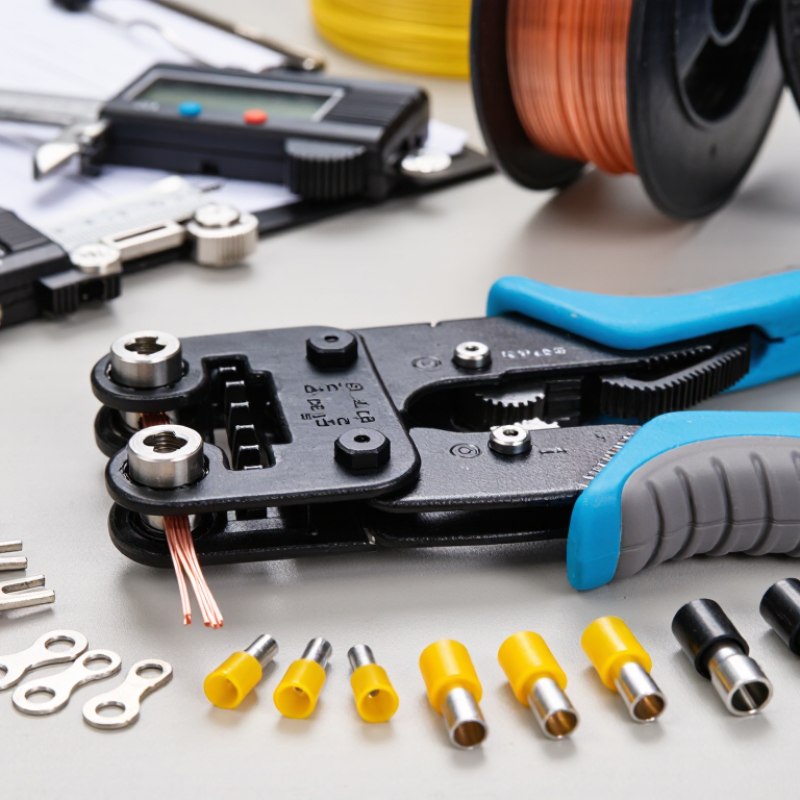
How to Choose a Cable Crimper in 2026?
Understanding cable crimper types and their applications starts with the terminal, cable size, and required compression profile. Hand ratcheting crimpers suit control panels, repair work, and small automotive terminals. They provide tactile feedback and prevent premature release. Hydraulic crimpers deliver higher force for battery cables, distribution equipment, and larger copper lugs. Battery-powered models improve productivity on solar installations and field maintenance, where repeated crimps can quickly fatigue the operator.
Application matters more than appearance. A closed-barrel terminal may require a hex or indent die, while open-barrel contacts need controlled wings around the conductor and insulation. Poor die matching can create loose connections, even when the crimp looks acceptable. A practical check includes conductor brush length, insulation support, and a pull test. Not every “tight” crimp is reliable.
The IEA’s Electricity 2024 report projects global electricity demand to grow by over 3% annually through 2026, increasing installation and maintenance activity. The U.S. Bureau of Labor Statistics projects electrician employment to grow 6% from 2023 to 2033. These figures support demand for faster, repeatable tools. Still, higher speed is not automatically better. Select calibrated dies, documented force ratings, and replaceable parts. A cheaper tool may pass today’s test and fail after months of vibration. That uncomfortable possibility deserves attention.
How to Choose a Cable Crimper in 2026?
Cable crimper selection starts with the cable, terminal, and connector—not the tool’s appearance. Match the die profile to the terminal barrel: open-barrel contacts need controlled wings, while closed barrels often require hex or indent compression. Check conductor size, insulation diameter, material, and plating. A ratcheting mechanism helps complete each cycle, but it cannot correct a mismatched die. Small detail. The completed crimp should show even compression, firm retention, and no damaged strands.
MarketsandMarkets’ 2024 Wire and Cable Market report estimates the global market at about USD 213 billion in 2024, with continued growth expected through 2029. More cable assemblies mean more variation in conductor sizes and connector formats. Therefore, adjustable tooling may suit repair benches, while fixed precision dies usually provide better repeatability in production. Follow IPC/WHMA-A-620 workmanship guidance and verify results through pull testing, visual inspection, and electrical resistance checks. The exact test force depends on conductor size and terminal design. Do not guess.
In practice, I would test several sample crimps before approving a tool. Measure the crimp height, inspect the bellmouth, and record pull-force results. My first choice is not always the fastest tool. It may be the one that reduces rework. Even experienced technicians can overlook insulation support or die wear. That deserves honest review.
How to Choose a Cable Crimper in 2026?
A reliable cable crimper should produce repeatable results, not merely a tight-looking joint. IPC/WHMA-A-620E defines visual and mechanical acceptance criteria for cable assemblies. IEC 60352-2 also specifies requirements for solderless crimped connections. I inspect conductor capture, insulation support, and the crimp profile under bright light. A small bellmouth should appear even. Loose strands signal trouble. A ratcheting mechanism should complete the cycle before releasing. Partial crimps are dangerous and easy to miss. Check the manufacturer’s wire-size range against your actual terminals, not estimated sizes. A pull-test sample adds confidence, although many small workshops skip it.
Material choices affect precision and service life. Look for hardened alloy-steel dies, clean machining, and corrosion-resistant surfaces. Replaceable dies are useful when cable types change. However, harder is not always better. Poor die geometry can damage insulation or flatten conductors. My first tool choice has sometimes focused too much on jaw strength. That was a mistake. The U.S. Bureau of Labor Statistics reported 2.6 million nonfatal workplace injuries and illnesses in 2023. Ergonomics deserves serious attention. Choose handles that fit your hand, open smoothly, and require controlled force. A comfortable grip reduces slipping during repetitive work. Test the tool with gloves. Check the handle span. It should not force your fingers wide apart. A spring return helps, but excessive tension quickly becomes tiring. Small details matter. Viewing the finished crimp from several angles remains worthwhile, because no tool stays perfectly calibrated forever.
Recommended evaluation weights for comparing cable crimpers by crimp quality, precision, materials, and ergonomics.
Crimp quality and precision receive the greatest emphasis because they directly affect electrical reliability and terminal consistency. Materials and ergonomics support service life, operator control, and repeatable use. Apply the percentages as a neutral scoring framework when testing tools against the cable terminals and wire sizes used in your application.
Choosing a cable crimper in 2026 starts with conductor size, terminal material, and daily workload. A manual crimper suits occasional repairs and thin cable. It offers tactile feedback, low cost, and easy maintenance. However, hand fatigue appears quickly on larger terminals.
Hydraulic crimpers deliver greater, more consistent compression for heavy conductors. Battery-powered models improve field productivity when crews repeat many crimps away from a workbench. Their batteries add weight and require inspection.
Smart crimpers can record pressure, cycle counts, and connection data. Useful, but connectivity does not replace a poor die match. Check the terminal manufacturer’s required crimp profile and verify finished connections with pull testing. IEC 60352-2 emphasizes controlled crimping conditions and repeatable mechanical performance.
Market context also matters. Fortune Business Insights valued the global wire and cable market at about USD 216.6 billion in 2023, with continued growth expected through 2032. More installations mean more joints, but higher volume can expose small process errors.
In practice, I would choose manual tools for low-volume service, hydraulic tools for large conductors, and battery tools for mobile teams. Smart models fit controlled production environments. Still, their software may be unnecessary for a two-person maintenance crew. That is the part buyers often overlook. A cheaper tool can become expensive when incorrect crimps create rework, heat, or intermittent faults.
A safe cable crimper should feel controlled, not merely powerful. I look for a full-cycle ratchet that prevents incomplete crimps. A quick-release lever also matters when a cable enters the wrong die. Insulated handles should remain firm with oily or gloved hands. Clear gauge markings reduce guesswork. Small details matter.
Check whether the tool supports the cable sizes and terminals used in your work. Its documentation should identify tested materials, crimp profiles, and applicable electrical standards. Do not assume one approval covers every region or installation. Request inspection records or test information when the application is safety-critical. A professional supplier should explain these limits plainly. I once trusted a vague size chart and produced a weak crimp. It passed a visual check, but a pull test exposed the problem.
Maintenance affects value more than a low purchase price. Wipe metal surfaces after use, remove debris from the dies, and inspect for jaw misalignment. Store the crimper dry, with the handles closed but not forced. Calibration requirements deserve attention. Some tools need periodic verification, especially after heavy use or a hard drop. Replacement dies, service support, and traceable documentation can extend useful life. Still, a longer warranty does not guarantee better performance. Compare repair access, spare-part availability, and consistent crimp results. Keep sample crimps for later inspection. That habit can reveal gradual wear before failures become expensive.
Start with the cable, terminal, and connector. Match the die profile to the terminal barrel. Appearance is not enough.
Open-barrel contacts need controlled wing formation. Closed barrels often need hexagonal or indent compression. Confirm the required profile.
Check conductor size, insulation diameter, conductor material, and terminal plating. These details affect fit and compression.
A ratchet helps complete each crimp cycle. It cannot repair a mismatched die. The finished crimp still needs inspection.
A manual crimper works well for thin cables and low-volume repairs. It offers tactile feedback and simple maintenance. Hands may tire quickly.
Hydraulic tools suit large conductors and demanding compression work. They reduce hand effort and improve consistency. They can feel excessive for small repairs.
Yes, they support repeated work away from a bench. Battery tools add weight and require battery inspection. Convenience is not always efficiency.
Smart tools can record pressure, cycle counts, and connection data. They suit controlled production settings. Software cannot replace correct die selection.
Inspect compression, strand condition, insulation support, and bellmouth shape. Perform pull testing and electrical resistance checks. Do not guess the test force.
Yes. Crimp several samples first. Measure crimp height and record pull-force results. I might choose the slower tool if it reduces rework.
Choosing the right Cable Crimper in 2026 starts with understanding the work it must perform. Manual crimpers are suitable for light-duty repairs and occasional projects, while hydraulic, battery-powered, and smart models provide greater force, speed, consistency, and data support for demanding or high-volume applications. The crimper should match the cable size, terminal type, connector design, and required crimp profile to ensure a secure electrical and mechanical connection.
Beyond power, evaluate crimp precision, jaw alignment, material durability, handle comfort, and overall ease of use. Useful safety features may include controlled release mechanisms, insulated handles, overload protection, and clear adjustment settings. It is also important to check applicable industry standards, calibration needs, cleaning procedures, replacement parts, and warranty support. A well-maintained tool that delivers repeatable results, reduces operator fatigue, and remains adaptable to future cable requirements will usually offer better long-term value than choosing solely by price or maximum force.

