Engineered for repeatable pull-out tensile thresholds, anti-fatigue cycle life, and ultra-low contact resistance across industrial power distribution applications.
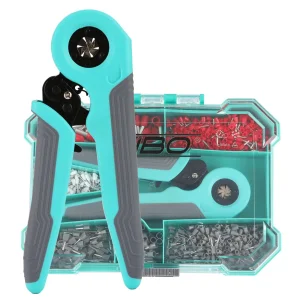
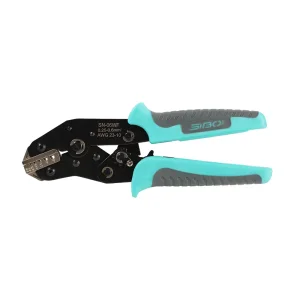
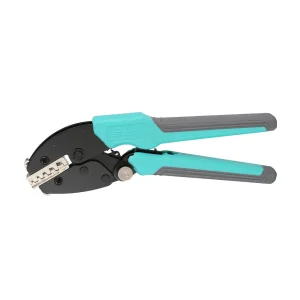
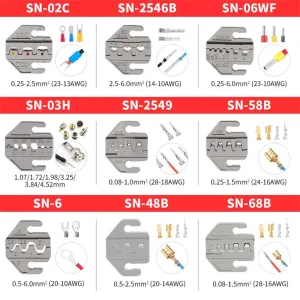
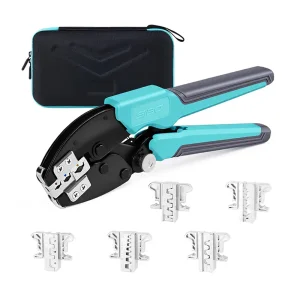
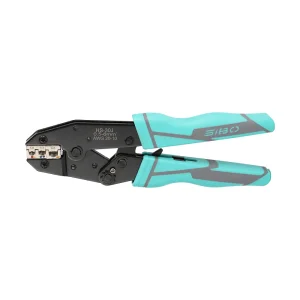
Why standard crimping pliers cause terminal warping, resistive heating, and catastrophic thermal runaway in 30A to 175A DC connectors.
In modern electrical architecture, Anderson Powerpole® connectors and multipole SB® series contacts serve as the operational backbone for mission-critical direct current (DC) transmission. From lithium-ion battery energy storage systems (BESS) and autonomous mobile robots (AMRs) to recreational 4WD auxiliary systems, DC power demands flawless structural integrity. Unlike alternating current (AC) systems where zero-crossing assists in quenching arc anomalies, direct current faults produce relentless continuous arcs. Sourcing tools from a dedicated China Anderson plug crimper manufacturer requires understanding the micro-metallurgical dynamics of silver-plated copper terminal barrels.
When a conductor is inserted into an open-barrel or solid-barrel Anderson plug contact (such as 15A, 30A, 45A, 50A, 120A, or 175A), the primary engineering objective is cold gas-tight welding. Under precisely engineered compressive tonnage, the individual stranded copper filaments deform plastically, eradicating internal microscopic voids. When crimped properly, the terminal barrel and wire strands form a homogenous copper solid. This structural transformation prevents ambient moisture, oxygen, and corrosive atmospheric pollutants from permeating the termination, entirely eliminating oxidation-induced resistance growth over multi-year duty cycles.
Critical Quality Benchmark (UL 486A-B & IEC 60352-2 Compliance): An authentic industrial-grade Anderson crimp must achieve two non-negotiable physical benchmarks: (1) An electrical connection exhibiting contact resistance beneath 100 micro-ohms (μΩ) across the crimp interface, and (2) Mechanical pull-out tensile retention exceeding 100% of the wire strand tensile breaking force, verified without barrel split or contact tang distortion.
Standard universal cable crimpers or generic pliers frequently deform the specialized spring-retaining detent ("tongue") found on Anderson contacts. When this detent geometry is flattened or sheared during jaw closure, the contact fails to latch into the polycarbonate housing, producing catastrophic intermittent connectivity or contact push-back during male-female mating. SIBO Tools' dedicated Anderson crimpers integrate precision-milled CNC dies that encapsulate the contact barrel while providing physical clearance for the contact tip, ensuring 100% mechanical retention and zero latching failure on assembly lines.
Examining macro-industrial tailwinds across renewable infrastructure, material handling electrification, and rigorous supply chain compliance.
Global migration toward clean energy architectures has expanded the application of DC power connectors. As telecom remote radio heads (RRH), data center rack battery backups (UPS), and modular residential lithium battery storage move toward 48V-72V DC distribution, Anderson connectors (PP30, PP45, SB50) have become industry standards. Procurement managers require repeatable, non-hydraulic crimpers that guarantee zero human variance across tens of thousands of field terminations.
Electric automated guided vehicles (AGVs), automated storage and retrieval systems (ASRS), and electric counterbalanced forklifts demand Anderson SB175 and SB350 quick-disconnects. The constant mechanical vibration of industrial warehousing accelerates conductor creep if crimp height tolerances exceed ±0.05 mm. Sourcing managers seek China manufacturing partners capable of delivering matched die geometries that eliminate strand necking while ensuring maximum mechanical pull-out strength.
Western OEM brands and major hardware distributors are consolidating vendor tiers, shifting away from generic trading houses in favor of verified factories with in-house CNC wire EDM, continuous vacuum heat treatment, and coordinate measuring machine (CMM) verification. Professional procurement demands comprehensive documentation: material composition certificates, tensile pull test reports, and RoHS/REACH compliance.
How localized supply chain integration and precision tooling manufacturing enable scalable OEM capacity without quality degradation.
Located in Yueqing, Zhejiang Province—widely recognized as the global epicenter for low-voltage electrical apparatus and precision hardware—Yueqing Sibo Tools Manufacture Co., Ltd. leverages a concentrated industrial cluster. Within a 15-kilometer radius, our facility accesses raw metallurgical cold-rolled high-carbon alloy steels (such as 42CrMo and AISI 4140), specialized vacuum carbo-nitriding heat treatment facilities, precision wire electrical discharge machining (WEDM) centers, and custom dual-component plastic injection molding lines. This spatial density eliminates logistics lag, slashing custom tooling prototyping cycles from the industry-average 8 weeks down to just 14 calendar days.
Unlike assembly-only workshops that outsource core mechanical modules, SIBO maintains end-to-end sovereignty over the entire value chain. The crimper frame is stamped from high-strength structural alloy plates, then subjected to surface stress relief and durable anti-corrosion electro-blackening. The central ratchet wheel is forged and case-hardened to achieve an operational surface hardness of HRC 50-52, ensuring that the self-locking ratchet tooth profile never strips or slips under sustained hand pressures exceeding 650 N.
The critical differentiator lies in our crimping die design and micro-finishing. Wire EDM slow-feeding cutting achieves a contour precision of ±0.005 mm. Each cavity radius is calculated to compensate for the specific springback characteristics of phosphor bronze and tellurium copper contacts commonly found in genuine Anderson Powerpole and high-grade aftermarket connectors. This metallurgical foresight eliminates the hairline cracks frequently observed along the spine of crimped contacts under scanning electron microscope (SEM) inspection.
Precision die pocket machining ensures flawless non-binding release and exact terminal outer diameter (OD) crimp geometry.
Every tool undergoes digital torque and pressure verification, calibrating the emergency release trigger before final packaging.
Micro-section cross-sectional analysis verifies complete copper strand compaction without internal void formation.
TPR/PP anti-slip handles molded in custom brand pantones with oil-resistant, chemical-proof elastomer bonding.
Evaluating cycle times, maintenance requirements, and operator error vulnerability for high-current Anderson connections.
| Evaluation Parameter | SIBO Precision Ratchet Hand Crimper | Manual Hydraulic Pliers (4-70mm²) | Benchtop Pneumatic Assembly Station |
|---|---|---|---|
| Primary Target Applications | Field installation, mobile harness, 15A-75A | Heavy battery cables, SB175/SB350 lugs | Factory wiring harness mass-production |
| Crimp Cycle Duration | 1.5 - 2.5 seconds | 8.0 - 15.0 seconds (multi-pump) | 0.8 - 1.2 seconds |
| Risk of Over-Crimping / Distortion | Zero (Fixed mechanical stop ratchet) | High (Requires operator visual inspection) | Zero (Pre-calibrated pneumatic stroke) |
| Tool Net Weight & Portability | 0.52 kg - 0.68 kg (Fully portable) | 2.8 kg - 4.2 kg (Bulky field transport) | 14.0 kg+ (Stationary workstation only) |
| Routine Maintenance Overhead | Dry lubricant on pivot pins every 5,000 cycles | Hydraulic seal replacement, oil leakage risk | Pneumatic supply filter, air regulator lubrication |
| Total Cost of Ownership (TCO) | Low initial CAPEX, lifetime steel frames | Medium initial CAPEX, frequent seal wear | High CAPEX, requires clean shop air lines |
Where uncompromising contact integrity, corrosion resistance, and vibration dampening dictate tool performance.
In harsh off-road environments across the Australian Outback and North American trails, auxiliary 12V/24V dual-battery systems use Anderson SB50 plugs for trailer coupling, DC-DC in-vehicle chargers, and 12V portable fridge freezers. Road corrugation and engine bay vibration exert continuous shear forces on wire terminations. A precision-crimped Anderson joint prevents micro-arcing and melted connector housings under sustained 40A currents.
Commercial portable power stations (solar generators) and off-grid residential battery arrays rely on Anderson Powerpole 15/30/45 connectors as standard DC inputs and outputs. Field solar installers require multi-profile tools capable of seamlessly switching between solar connector barrels and Anderson Powerpole open/closed barrels without requiring multiple tool bags on rooftop or containerized BESS installations.
Telecommunication towers rely on uninterrupted -48V DC power distribution networks feeding cellular baseband units (BBUs) and remote radio units (RRUs). Anderson Powerpole connectors facilitate hot-swapping rectifier modules. SIBO's ratcheting crimpers deliver the tight crimp height tolerances mandated by telecom network infrastructure standards to prevent voltage drops that could disrupt high-speed transmission.
Clear, engineering-backed answers addressing the most common technical questions from global tool brand product directors and industrial buyers.
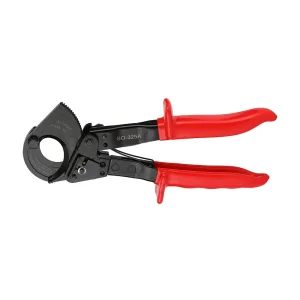
Expand your brand catalog with proven crimpers, quick-change magnetic jaws, and heavy-duty cable preparation cutters.
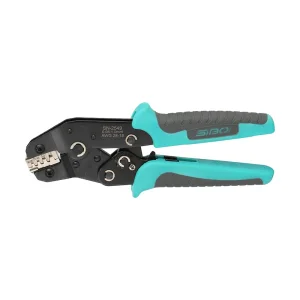
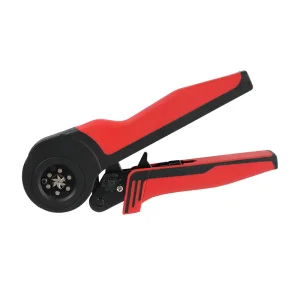
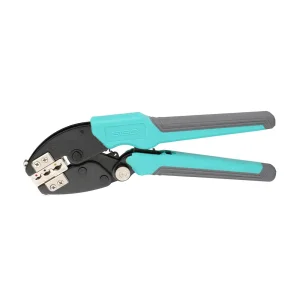
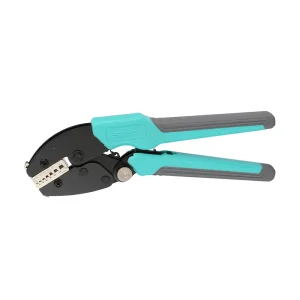
Whether you require custom die cavity development for proprietary high-current terminals, private label OEM distribution programs, or high-volume wholesale supply, our engineering team in Yueqing is ready to assist.
