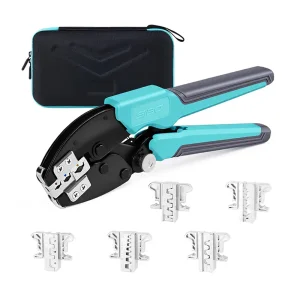
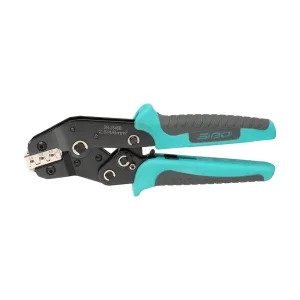
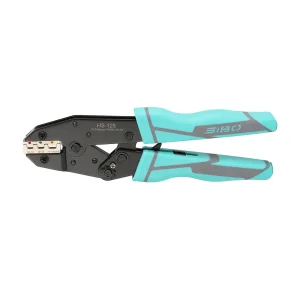
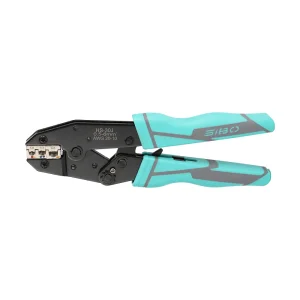
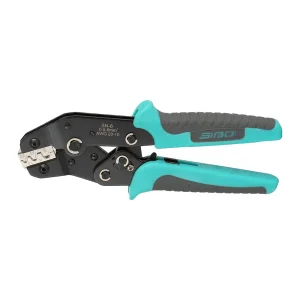
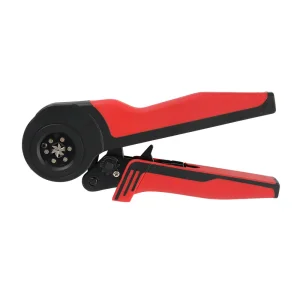
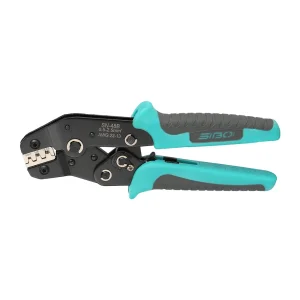
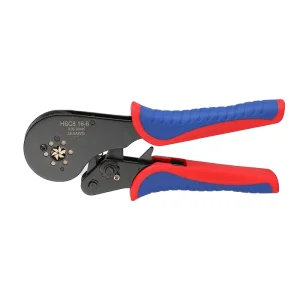
Engineered for calibrated pressure repeatability, micro-gap tolerance, and ergonomic mechanical leverage across industrial wiring ecosystems.
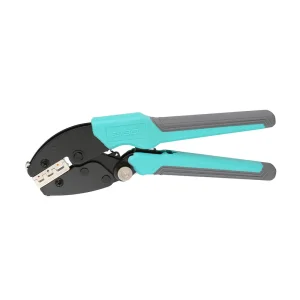
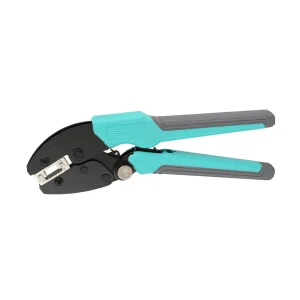
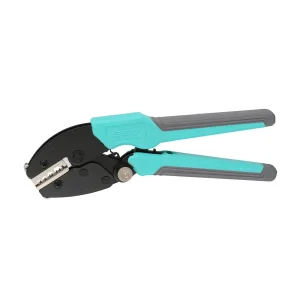
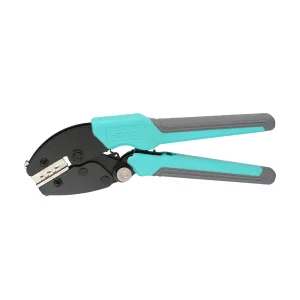
Analyzing procurement dynamics, total cost of ownership (TCO), and the strategic decentralization of terminal termination technologies across world markets.
Global electrical supply chains have pivoted toward cost-optimized tooling that balances extreme tensile pull-out strength with approachable acquisition costs. Chinese manufacturing hubs, centered around Yueqing, Zhejiang, process over 65% of the world's commercial hand crimpers, leveraging deeply integrated metal forging, stamping, and automated heat-treatment clusters.
Procurement teams for utility-scale solar arrays, tier-2 automotive harness assemblies, and switchgear maintenance operations are actively replacing premium legacy brands with engineered budget ratcheting crimpers. The driving factor is the narrowing performance gap: micro-finished carbon steel jaws and hardened ratchet linkages now deliver 50,000-cycle life expectancies at one-fifth the initial capital expenditure.
Budget crimping solutions no longer signify mechanical compromise. Modern Chinese manufacturing protocols integrate rigorous IEC 60352-2 (solderless crimped connections) and UL 486A-486B testing protocols, ensuring low electrical resistance, zero terminal embrittlement, and gas-tight metallurgical compression for demanding industrial and building environments.
Examining material innovations, modularity, and smart tooling dynamics driving the next generation of wire termination hardware.
Investment casting has transitioned to Metal Injection Molding (MIM) and advanced powder metallurgy. This leap yields sub-micron dimensional accuracy for cavity depths, virtually eliminating wire strand damage in micro-barrel non-insulated connectors.
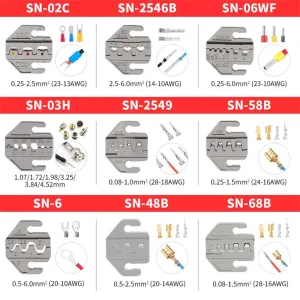
Tool-free magnetic retention slots eliminate thumbscrews and hex keys. Installers switch between insulated, non-insulated, ferrule, and solar cavities within seconds, optimizing operational speed without sacrificing jaw rigidity under high crimping force.
Repetitive strain injuries (RSI) are addressed through high-leverage eccentric pivot geometry and dual-durometer TPR/PP composite grips. Mechanical leverage reduces hand force requirements by up to 35% compared to conventional non-ratcheting pliers.
Modern budget crimpers adopt electro-deposited black oxide, zinc-nickel plating, and specialized phosphating treatments to withstand coastal, humid, and chemically aggressive operational environments without mechanism seizure or jaw rust.
Specific field configurations where calibrated mechanical ratchet mechanisms ensure terminal stability and high operational safety margins.
Installers operating on commercial rooftop and utility-scale solar projects rely on tools like the SO-2546B Pro to terminate MC4 and compatible PV connectors on 2.5mm², 4mm², and 6mm² cross-linked cables. A full ratchet cycle guarantees minimal contact resistance, preventing thermal runaway and catastrophic arc faults.
Enclosure assemblers terminate thousands of wire-end ferrules and insulated bootlace pins weekly. Using self-adjusting hexagonal and square ratcheting crimpers like the SO 16-6 series prevents loose copper strands from bridging adjacent terminals inside tight DIN-rail modular assemblies.
Locomotive control lines and marine switchboards encounter constant mechanical vibration and salt-mist corrosion. Ratchet-controlled B-crimp and double-indent profiles compress connector barrels into uniform cold-welded copper interfaces, safeguarding critical signals across harsh transport cycles.
Inside the precise engineering workflows that transform raw carbon alloy plate into high-durability, self-releasing ratchet crimping tools.
High-tensile structural carbon steel (AISI 1045 and 40Cr alloy) is blanked using high-tonnage precision progressive stamping dies to prevent micro-fissures along handle lever pivots.
Atmospheric mesh-belt furnace quenching yields jaw hardness ratings of HRC 42-48. Ratchet teeth receive localized high-frequency induction hardening, resisting rounding across high-stress usage.
An adjustable eccentric wheel mechanism allows fine-tuning of jaw closure pre-load. Each unit is calibrated prior to packaging, ensuring the ratchet teeth only disengage upon full mechanical closure.
Batch sampling utilizes optical coordinate measuring machines (CMM) and digital pull-force testing benches, ensuring every crimped profile meets or exceeds UL pull-out resistance thresholds.
How professional Chinese manufacturing ecosystems enable global distributors, retailers, and private label brands to maximize commercial margins.
We provide full-spectrum private labeling: customized two-tone dual-component handle injection molds, high-precision laser logo etching, and custom retail packaging (blister cards, hard-shell blow-molded cases, and Oxford bag combinations) engineered to your regional branding guidelines.
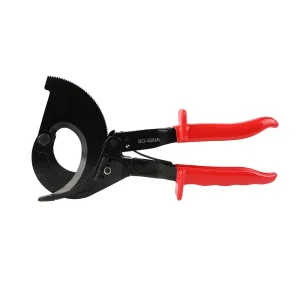
Navigating volatile market demand is simplified with low MOQ thresholds and flexible mixed-container consolidations. Combine ratchet crimpers, wire strippers, rotary cable cutters, and interchangeable die sets in unified shipments directly out of Ningbo or Shanghai ports.
Our Yueqing production lines adhere to ISO 9001 quality management benchmarks. Export tools are engineered to support end-market CE conformity, RoHS hazardous substances testing, and REACH chemical standards, securing seamless customs clearance across European and North American ports.
In-depth responses from our senior tool design engineers regarding performance, tolerances, and supply agreements.
Complete your catalog with specialized mini-pliers, self-adjusting ferrule hexagonal crimpers, and magnetic interchangeable die sets.