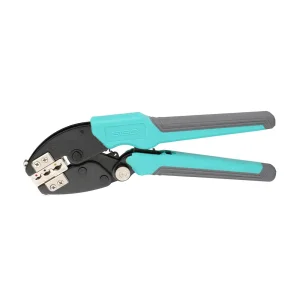
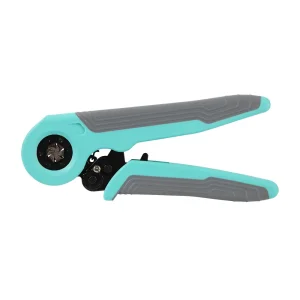
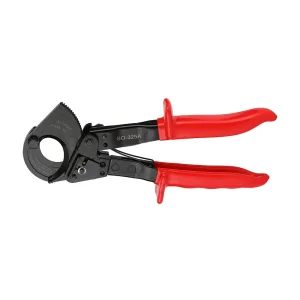
Verified factory-engineered solutions designed for multi-conductor cable lines, structured data cabling, and rigorous OEM/ODM telecom standardizations.
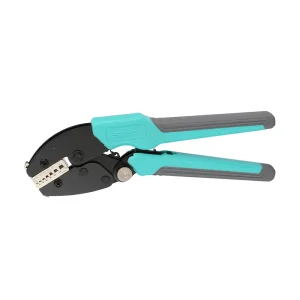
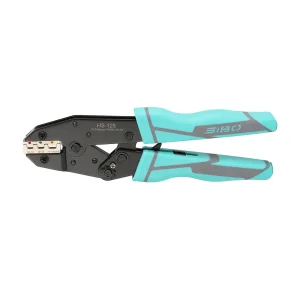
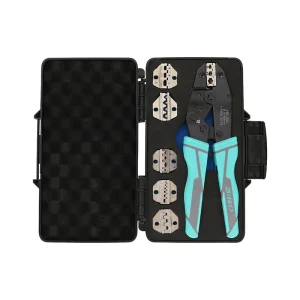
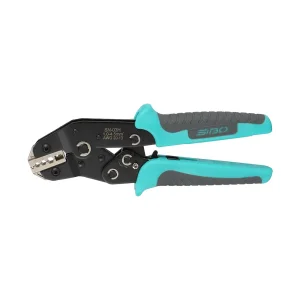
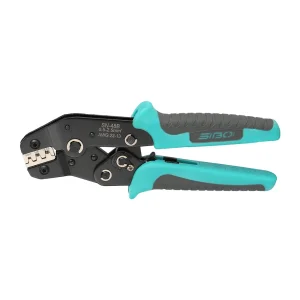
Addressing the shifting landscape of enterprise cabling, industrial IoT, and pass-through modular connector standards.
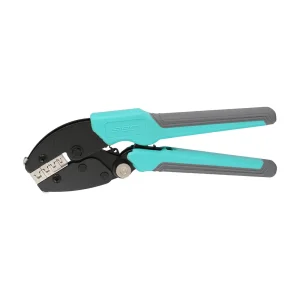
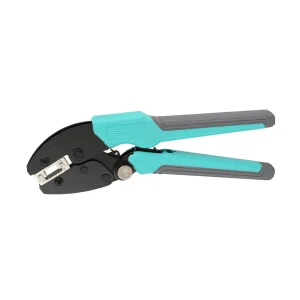
Traditional wire termination required multiple discrete tools for RJ45 (8P8C) and RJ11/RJ12 (6P4C/6P6C) connectors. Modern dual-cavity tooling incorporates both profiles into an ultra-rigid, parallel-action chassis. This geometric synchronization guarantees zero-deviation pin insertion, protecting internal contact pins against mechanical shear and lateral deformation during rapid cycling.
The global shift toward "Pass-Through" (EZ-style) RJ45 connectors has overhauled installer productivity. Dual-cavity crimpers now feature synchronized micro-flush cut blades, terminating 23-24 AWG solid conductors and shearing conductor excess flush with plug faces in a single stroke, preserving pair twist-rates directly to the contact point for optimal Near-End Crosstalk (NEXT) suppression.
Next-generation Power-over-Ethernet (PoE++ Type 4 up to 90W) and 10GbE network backbones mandate industrial STP/FTP shielded cable compatibility. China's top-tier manufacturing focuses on dual-cavity dies configured with adjustable external ground-clip crimping slots, preserving the mechanical and RF integrity of external metallic shielding jackets.
Direct technical criteria analyzed by B2B distribution channels, data center contractors, and telecom engineering firms.
Global procurement teams reject low-cost zinc-aluminum castings due to flex under repetitive cycle stresses. Modern dual-cavity RJ45 units leverage cold-rolled or laser-profiled high-carbon steel plates, vacuum heat-treated to 45-48 HRC, ensuring handle deflection remains under 0.05 mm across 30,000+ crimping cycles.
Full-cycle ratcheting ensures identical crimp height across shifts. Operators cannot release the plier until the internal ratchet teeth fully cycle, eliminating terminal pull-outs caused by fatigue and guaranteeing adherence to IEC 60352-2 mechanical crimp integrity standards.
Precision is non-negotiable when driving 50-micron gold-plated phosphor bronze contacts into solid copper conductors. Our dual-cavity dies are engineered using electro-discharge machining (EDM), maintaining tolerances within ±0.005 mm to prevent pin misalignments or fractured plastic latches.
Enterprise health and safety standards demand optimized grip dynamics. Dual-injection thermoplastic elastomers (TPE/TPR) reduce peak activation torque by over 30%, insulating hands from repeated mechanical shock while resisting oils, chemicals, and field abrasions.
Positioned inside Yueqing, Zhejiang—China's low-voltage electrical capital—leveraging complete industrial clusters, vertical automation, and agile OEM production.
Direct regional access to high-grade structural carbon sheet, custom die-cast alloy molds, and localized stamping infrastructure minimizes raw material lead times by up to 45% compared to non-clustered supply regions.
Automated machining centers and optical profile grinders shape tool assemblies directly from CAD models, ensuring continuous tool repeatability across massive export containers with minimal standard deviations.
Full engineering capabilities supporting laser logo engraving, custom pantone rubber handles, specialized blister packaging, and modular jaw adaptations designed for proprietary terminal configurations.
Meeting mission-critical network connection requirements across edge infrastructure, data centers, and extreme environments.
Technicians terminate high-density patch panels under intense time pressure. Dual-cavity pass-through tools trim and terminate in single-motion operations, preventing costly transmission attenuations in high-throughput spine-and-leaf network fabrics.
Factory floors with variable-frequency drives (VFDs) and high electromagnetic interference rely on shielded Ethernet (EtherCAT/PROFINET). Dual-cavity tooling establishes consistent 360-degree bonding between the metallic shield, drain wire, and industrial plug body.
In distributed telecom sites and 5G small-cell rollouts, crews must carry compact, highly resilient tools capable of withstanding moisture, variable climates, and continuous heavy duty without jaw shifting or pin misfires.
Key technical inquiries answered by SIBO engineering specialists for OEM brand managers and wholesale buyers.
A true dual-cavity tool incorporates distinct, dedicated precision-machined cavities within the primary head structure—typically engineered to support 8P8C (RJ45 Cat5e/Cat6/Cat6A) in one position and 6P4C/6P6C (RJ11/RJ12) or shielded ground-crimp clips in the secondary position. This eliminates the mechanical instability associated with snap-in adapter plates.
SIBO dual-cavity tools apply balanced vertical travel perpendicular to the connector face. This ensures that 2-prong or 3-prong contacts penetrate solid conductor cores without lateral sliding, while compressing stranded wires uniformly to create a gas-tight, oxygen-free contact interface.
Every production batch undergoes three-tier validation: 1) Hardness testing of the high-carbon body and blade cutting edges (58-62 HRC for cutters); 2) Optical micro-measurement of crimping die cavities under 20x magnification; and 3) Destructive wire-pull tension testing following terminal installation to confirm standard pull-force compliance per IEC 60352-2.
Yes. As a direct manufacturer based in Yueqing, China, we support end-to-end OEM and ODM projects. This includes two-tone handle molding with custom brand colors, high-contrast laser logo etching, customized replacement blade packs, custom retail blister cards, and tailored Oxford combination tool bag sets.
Versatile ratchet combinations, specialized ferrule pliers, and heavy cable processing equipment from our ISO-compliant factory.