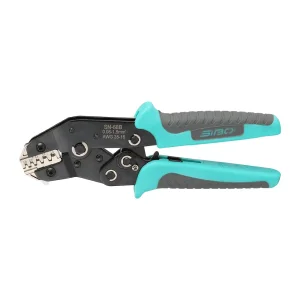
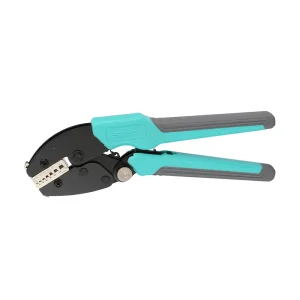
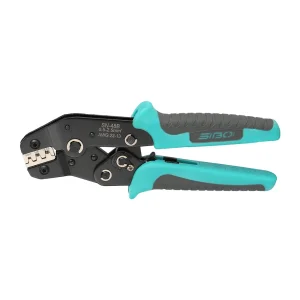
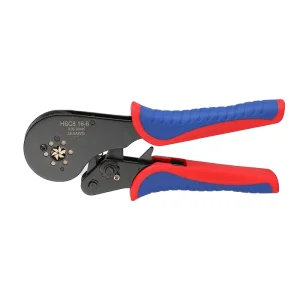
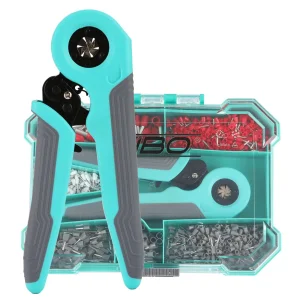
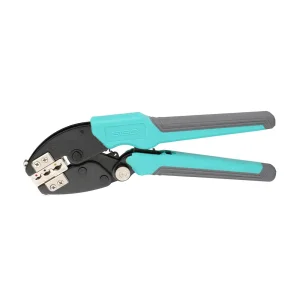
Engineered with hardened Cr-Mo alloy dies, calibrated ratcheting mechanisms, and precision self-regulating tolerances for utility solar installations and automated control systems.
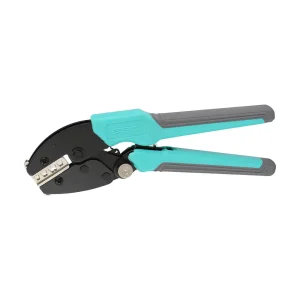
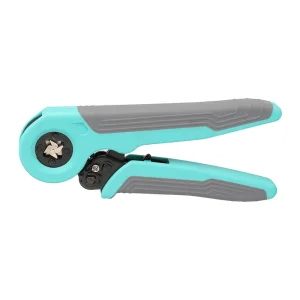
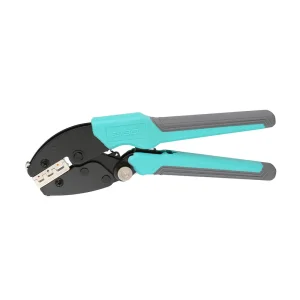
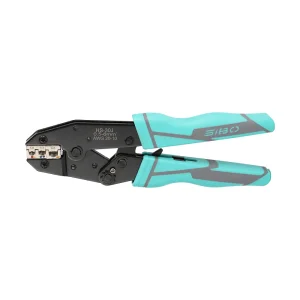
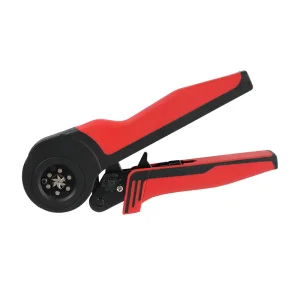
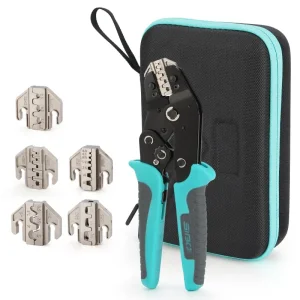
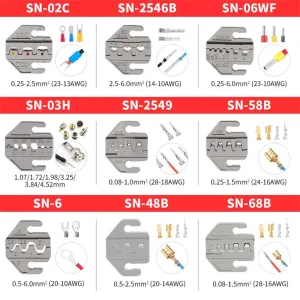
In the multi-gigawatt era of global solar infrastructure, the physical crimp junction represents the highest statistical failure point across the operational lifetime of Balance of System (BOS) components. While solar panels, inverters, and trackers undergo rigorous laboratory vetting, the manual interface between the PV conductor (H1Z2Z2-K, 62930 IEC 131, or USE-2) and the open-barrel or machined pin of an MC4-compatible connector is governed entirely by hand tools deployed under harsh ambient conditions. Procurement directors, EPC technical managers, and supply chain executives worldwide are transitioning away from commoditized hand tools toward calibrated, industrial-grade MC4 crimping systems.
When an international EPC firm manages utility installations exceeding 500 megawatts, over two million individual electrical crimps must be completed in dusty, thermally volatile environments. A failure rate of merely 0.05% translates to 1,000 localized points of catastrophic risk. Improper crimping leads to high contact resistance, inducing thermal hotspots exceeding 120°C, polymer sleeve deformation, dielectric breakdown, series arcing, and catastrophic ground faults. Consequently, tier-one institutional buyers now evaluate China MC4 crimper suppliers through a strict lens of material metallurgy, mechanical repeatability, die cavity geometry, and verified calibration protocols.
Controlled B-crimp and F-crimp profile geometries compress 99.9% annealed stranded copper strands into a monolithic gas-tight structure, eliminating void spaces and ambient oxidation under severe thermal cycles.
Integrated micro-tooth ratchet mechanisms maintain absolute handle lockup until full-stroke compression is reached, preventing short-stroking and under-crimping caused by field worker fatigue.
Precision CNC-wire-cut dies deliver uniform conductor compaction, consistently exceeding the mechanical pull-out force thresholds prescribed by IEC 60352-2 and UL 486A-B without severing fine conductors.
The global shift from legacy 1000V DC string topologies to high-capacity 1500V DC architectures has fundamentally heightened the electrical stress on crimp terminations. In 1500V systems, longer string layouts reduce combiner box counts but concentrate higher potential energy across each line. Under heavy cloud transitions or extreme inverter clipping, current spikes can trigger localized Joule heating if contact resistance exceeds milliohm boundaries.
Achieving a gas-tight crimp is not simply a matter of brute compression force; it requires hydro-mechanical balance. Excessive tonnage causes flash extrusion (ears) along the parting line of the crimping dies, compromising connector insertion into housing sleeves and splitting outer tin coatings. Insufficient pressure leaves internal inter-strand microscopic voids, facilitating capillary moisture ingress, sulfur-induced oxidation, and contact degradation. SIBO Tools engineers its dies to yield a Conductor Compaction Ratio (CCR) between 80% and 86%, proven to maximize mechanical shear strength while preserving electrical conductivity.
| Wire Gauge (mm² / AWG) | Standard Contact Profile | Min. Tensile Retention (IEC 60352-2) | Calibrated Crimp Height (mm) | Contact Resistance |
|---|---|---|---|---|
| 2.5 mm² / 14 AWG | Open Barrel B-Crimp / Machined | > 230 N | 1.75 ± 0.05 mm | < 0.18 mΩ |
| 4.0 mm² / 12 AWG | Open Barrel B-Crimp / Machined | > 310 N | 2.08 ± 0.05 mm | < 0.15 mΩ |
| 6.0 mm² / 10 AWG | Open Barrel B-Crimp / Machined | > 360 N | 2.42 ± 0.05 mm | < 0.12 mΩ |
| 10.0 mm² / 8 AWG | Heavy-Duty Lug / Machined Pin | > 450 N | 3.10 ± 0.08 mm | < 0.09 mΩ |
Yueqing Sibo Tools Manufacture Co., Ltd. operates in Yueqing, Zhejiang Province—the global epicenter of low-voltage electrical hardware manufacturing. Leveraging this geographic synergy, SIBO maintains comprehensive vertical integration, housing die design, multi-axis CNC wire-electrical discharge machining (EDM), vacuum heat treatment, and ratchet calibration under one quality management system.
The structural longevity of an MC4 crimper is governed by its material chemistry. Cheap market copies rely on sintered powdered iron or unalloyed medium-carbon steels that deform after fewer than 1,500 operations, leading to out-of-tolerance crimp heights. SIBO crimper jaws are milled exclusively from high-grade Chromium-Molybdenum (Cr-Mo) and AISI 4140 alloy structural tool steels.
Jaws are hardened in controlled atmosphere vacuum furnaces to 58–62 HRC, preventing deformation across tens of thousands of cycles while retaining structural toughness.
Die nests are profiled using slow-feeding wire electrical discharge cutting machines to ensure sub-micron cavity precision and smooth conductor roll radii.
Thermoplastic elastomer (TPE) overmolded onto high-strength carbon steel structural levers provides maximum transmission ratio while minimizing ergonomic strain.
A built-in stepped star-wheel eccentric disk allows fine mechanical force adjustments over the life of the tool, ensuring calibrated repeatability over 50,000 crimps.
By enforcing complete internal control over tooling geometry and hardening kinetics, SIBO ensures every crimp tool shipped from our Yueqing factory guarantees repeatable mechanical leverage ratios. This minimizes operator fatigue and guarantees that third-party audit inspectors encounter zero uncurled wings or fractured terminal tabs across vast solar arrays.
The photovoltaic field tooling sector is experiencing a structural paradigm shift driven by digital verification, increased automation, and emerging electrical codes. SIBO Tools maintains an active R&D team of over 300 engineering professionals focused on advancing solar connection ergonomics and data-driven field safety.
Future tool generations integrate micro-electromechanical pressure sensors and Bluetooth low-energy telemetry within the plier handles to log timestamped peak tonnage records for every crimp directly to EPC quality clouds.
Development of adaptive multi-geometry jaw dies capable of crimping genuine Stäubli MC4, MC4-Evo-2, Amphenol Helios H4, and Phoenix Contact Sunclix profiles without requiring die set changes.
Expanding ruggedized combination Oxford tool sets that incorporate solar cable stripping, ratcheting terminal compression, and housing tightening spanners within a synchronized calibration envelope.
Procuring crimping equipment from China requires rigorous alignment with global compliance mandates. SIBO Tools manufactures all solar crimpers under documented quality management workflows that comply with European CE directives, RoHS lead-free environmental standards, and ISO 9001 certified manufacturing parameters.
Our OEM/ODM engineering division works directly with electrical tool brands, solar module manufacturers, and regional supply chain wholesalers across Europe, North America, the Middle East, Japan, and Australia. SIBO provides complete private-label branding services, including dual-color injection handle designs, laser-etched brand identities, localized packaging, and customized die sets tailored to proprietary solar pin designs.
Critical engineering considerations, material selection guidelines, and operating protocols addressed directly by SIBO tool designers.
Explore specialized crimpers, self-adjusting ferrule tools, and multi-jaw sets manufactured in Yueqing to support electrical infrastructure and wire harness assembly.