Smart Manufacturing & Industrial Precision

China Smart Crimping Tool Factories & Engineering Services

A technical whitepaper and executive procurement guide exploring automated calibration, micro-stepping ratchet kinematics, and integrated OEM/ODM supply chain engineering directly from Yueqing, Zhejiang.

High-Precision Production Portfolio: Batch Series I

Engineered to international mechanical compliance standards (DIN EN 60352-2 / UL 486A-B). Explore factory-direct self-adjustable, ratchet, and modular interchangeable systems.
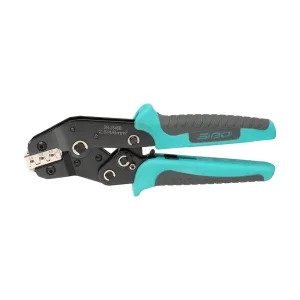
Self-Adjustable Crimping Pliers SO 10-4

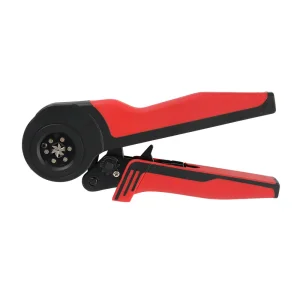
High-Quality Mini-Type Self-Adjustable Crimping Pliers SO 10-4 Precision Tool

Configure SO 10-4
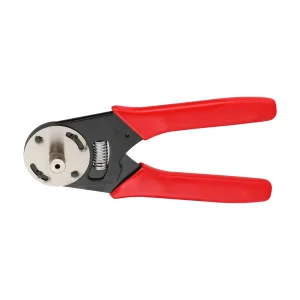
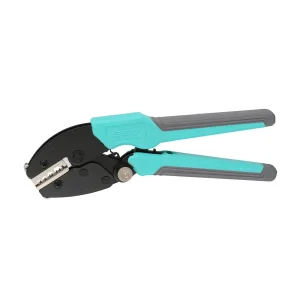
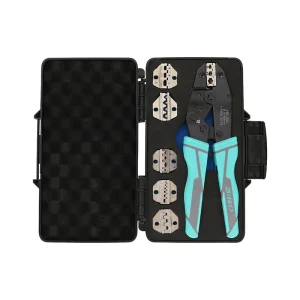
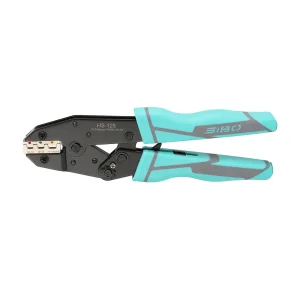
HS-30J Crimping Pliers Combination Tool 5 Jaws Set

Wholesale China HS-30J Crimping Pliers Combination Tool - 5 Jaws Multi-Die Set

Configure HS-30J
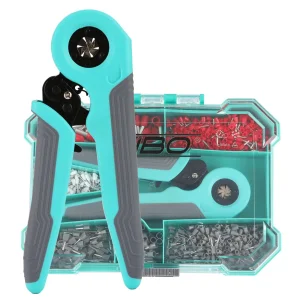
Mini Self-Adjustable Wire Crimping Tool Kit

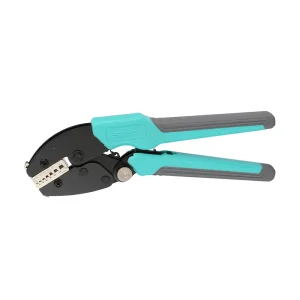
Mini Self-Adjustable Wire Crimping Tool Kit 10-6 / 10-4 Ratchet Pliers with Terminals

Order Tool Kit
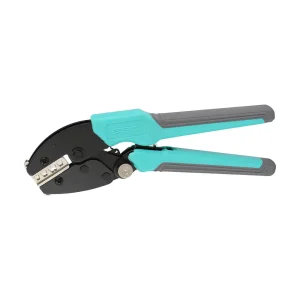
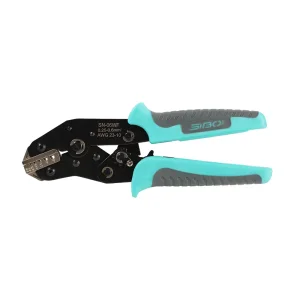
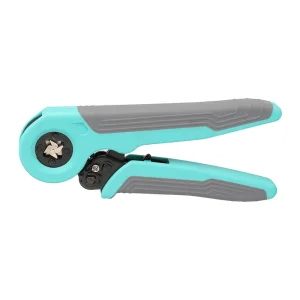
SN-06WF Mini European Style Crimping Pliers

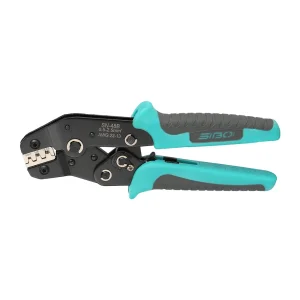
Wholesale SN-06WF Mini European Style Crimping Pliers Supplier & Precision Service

Configure SN-06WF

Macro-Industrial Landscape: The Shift Toward Smart & Deterministic Crimping

Why modern electrification mandates a migration from traditional compression hand tools to digitally calibrated and self-adaptive terminations.

Elimination of Operator Dependency

Manual crimp pliers without calibrated mechanical feedback induce catastrophic variability in wire harness production. An under-crimp creates micro-arcing and excessive contact resistance, while over-crimping fractures the copper strands, leading to conductor failure under mechanical vibration.

  • Eliminates human error via full-cycle ratchet interlocks
  • Calibrated release forces between 150N and 350N
  • Audible click indicators for definitive crimp completion

High-Voltage Renewables & E-Mobility

The aggressive expansion of 1500V DC utility-scale solar arrays and 800V EV architectures demands extreme dimensional stability. Micro-gap tolerances in MC4 and Deutsch terminals must prevent thermal dissipation and moisture ingress in high-temperature cycles.

  • Contact resistance guarantees below 0.25 mΩ
  • Tensile pull-out forces compliant with IEC 60352-2
  • Integrated strain relief without barrel deformation

Predictive Quality Assurance (Industry 4.0)

Global Tier-1 automotive and aerospace subcontractors require physical crimp validation before sign-off. Chinese smart tool factories lead the transition by pairing high-carbon steel mechanical pliers with optoelectronic calibration jigs for total batch repeatability.

  • Statistical Process Control (SPC) batch testing
  • Optical comparator validation for wire die cavities
  • Traceable batch micro-hardness verification (HRC 42-48)
0.02mm
CNC Die Profile Precision Tolerance
50,000+
Mechanical Full Ratchet Stroke Lifespan
100%
In-House Hardness & Torque Calibration
48H
Custom Rapid Prototyping Die Turnaround

The Yueqing Advantage: Precision Tooling & High-Density Supply Chains

Unpacking why Yueqing, Zhejiang Province stands as the unchallenged global epicenter for electrical crimping tools, precision die casting, and low-voltage electrical component integration.

Specialized Alloy Metallurgy

Yueqing tool manufacturers source high-purity alloy steels (such as 40Cr and 42CrMo) with controlled manganese and silicon fractions. This metallurgy prevents jaw deflection under maximum mechanical leverage.

Sub-Millimeter Wire-EDM

Die profile machining utilizes automated slow-speed Wire Electrical Discharge Machining (WEDM). This process achieves a pristine surface finish without micro-fracturing the structural steel core.

Integrated Ecosystem Density

Every process—from stamping blanks and continuous heat treatment furnaces to dual-compound TPR ergonomic handle injection—occurs within a compact 15-kilometer industrial corridor.

Streamlined Private-Label OEM

Modern factories provide full private-label services, including laser marking, client-specified handle durometers, custom high-density Oxford carrying bags, and barcode packaging in under 15 days.

Engineering Matrix: Mechanism Specifications & Industrial Standards

A cross-comparison of standard terminal profiles, mechanical kinematics, and quality testing thresholds across tool platforms.

Tool Mechanism Family Wire Cross-Section (mm² / AWG) Applicable Terminal Profile Kinematic Drive Method Tensile Pull Test Standard
Mini Self-Adjustable (SO 10-4 / HSC8) 0.08 - 10.0 mm² (AWG 28-8) End Sleeves / Wire Ferrules (DIN 46228) Quadrilateral Synchronous Cam Press DIN EN 60999-1
Modular Combination (HS-30J Pro) 0.5 - 6.0 mm² (AWG 20-10) Pre-Insulated Ring, Spade, & Quick-Disconnects Leverage-Multiplier Ratchet Linkage UL 486A-486B
Photovoltaic Specific (SO-2546C Pro) 2.5 / 4.0 / 6.0 mm² (AWG 14-10) MC4 & Compatible Solar Contacts Calibrated Hardened B-Crimp Locating Die IEC 62852 / TÜV Rheinland
Open-Barrel Wire Harness (SO-04BPro) 0.5 - 2.5 mm² (AWG 22-14) Molex, JST, AMP, & Faston Uninsulated Tabs Two-Stage Dual Step Conductor/Seal Roll SAE/USCAR-21 Rev 3
Closed Barrel Precision (D-Sub DT) 0.5 - 1.5 mm² (AWG 20-16) Deutsch DT, DTM Solid Copper Pins 8-Impression Synchronous Indenter MIL-DTL-22520G

Industrial Deployment: Real-World Engineering Environments

Examining field conditions and operational parameters across global industrial infrastructure where joint integrity cannot be compromised.

Grid Automation & Switchgear

In low- and medium-voltage control panels, loose wire connections cause high temperatures, phase imbalances, and system shutdowns. SIBO high-durability self-adjusting ferrule pliers make sure fine-stranded conductors seat smoothly into terminal blocks without fraying or hot spots.

Field Photovoltaic Engineering (EPC)

Utility-scale solar farms require field technicians to complete thousands of MC4 crimps daily under harsh desert or sub-zero conditions. SIBO PV ratchets deliver balanced mechanical leverage, cutting hand strain by 35% while keeping crimp heights within tight millivolt-drop tolerances.

Heavy Commercial Equipment

Construction and agricultural machinery operate under severe engine vibration, hydraulic pressure, and salt-spray exposure. Closed-barrel Deutsch crimpers use an 8-indent radial mechanism that grips solid pins firmly, locking out moisture and contaminants.

Global Procurement Playbook: Sourcing from Chinese OEM/ODM Leaders

A step-by-step checklist for industrial procurement officers, wholesalers, and hardware brand managers evaluating Chinese manufacturing partners.

1. Material Validation

Demand certified steel grade data sheets. Premium crimpers rely on vacuum-heat-treated carbon alloy jaws (HRC 42-48). Avoid lower-cost nodular cast irons that risk catastrophic stress cracking under high mechanical loads.

2. Ratchet Fatigue Cycles

Request lifetime testing logs. Industrial-grade ratchets must maintain tooth profiles and spring tension through at least 30,000 to 50,000 cycles without jaw play or early ratchet release.

3. Mechanical Advantage

Evaluate the tool's internal leverage design. Ergonomic linkages should deliver over 1,000N of crimping force at the jaws while requiring less than 250N of grip effort from the operator.

4. Full Traceability

Partner with factories operating under ISO 9001 certified quality management systems. Ensure every production run includes batch pull-test validation, optical die inspections, and raw material mill certificates.

Technical & Sourcing FAQ: Expert Engineering Insights

In-depth technical answers addressing the mechanics, standards, and production logistics of sourcing industrial crimping tools from China.

How do ratchet crimping tools guarantee a complete crimp cycle across production shifts?
Industrial ratchet crimping pliers use an internal pawl-and-gear mechanism that remains positively locked once handle closure begins. The tool cannot be opened until the handles are compressed past a pre-set mechanical limit, ensuring the jaws reach their target crimp height. This mechanical interlock completely removes operator fatigue and inconsistent squeeze pressure from the quality equation. For safety, an integrated emergency quick-release lever allows the technician to open the jaws if a terminal is misaligned or foreign material enters the die.
What is the key functional difference between quadrilateral and hexagonal ferrule crimping?
Quadrilateral (square) crimping—as delivered by models like the SO 10-4—produces a profile with four distinct flat contact faces. This geometry matches standard rectangular spring-clamp and screw-down terminal blocks, providing broad, even contact area that minimizes electrical resistance. Hexagonal crimping (produced by models like the SO 16-6) yields an almost round cross-section, making it ideal for tight, circular push-in terminal blocks. Both systems adjust dynamically to wire sizes between 0.08 and 16 mm² without requiring die adjustments.
How do Chinese factories maintain precise tolerances across custom die profiles?
At SIBO's Yueqing manufacturing facility, precision dies are machined using slow-speed CNC Wire Electrical Discharge Machining (WEDM) rather than standard high-speed milling. This process allows die cavities to hold tolerances within ±0.015mm. After machining, the tool-steel components undergo vacuum hardening followed by deep cryogenic stabilizing treatments to reach a uniform surface hardness of HRC 42-48. Every production run is validated using automated optical comparators to confirm correct anvil curvature, smooth wire-transition ramps, and accurate crimp heights before assembly.
What mechanical factors cause solar connector crimp joints to fail under field inspection?
Photovoltaic connector failures are usually traced back to three issues: incorrect crimp height, asymmetric roll on the open-barrel tabs, or strand shearing from mismatched die profiles. In a 1500V DC system, an improper crimp increases contact resistance, creating a thermal hot spot that degrades insulation and causes ground faults. The SIBO SO-2546C Pro series addresses this with dedicated locating nests for 2.5, 4.0, and 6.0 mm² PV cables, using a guided locator that holds the open-barrel contact steady during the entire stroke.
What are the standard lead times, MOQs, and engineering processes for custom OEM/ODM orders?
For established tool designs requiring custom brand colors, laser-engraved client logos, and retail packaging, our typical minimum order quantity (MOQ) is 500 units, with a 20 to 30 day production turnaround. For complete ODM projects involving bespoke die geometry or custom handle ergonomics, our R&D engineering team provides 3D STEP drawings within 72 hours, rapid-prototyped functional samples via wire-EDM within 7 working days, and finished mass-production tooling within 25 days following client approval.

High-Precision Production Portfolio: Batch Series II

Specialized micro-electronics, heavy-duty automotive, open-barrel, and industrial connector systems engineered for demanding industrial tasks.
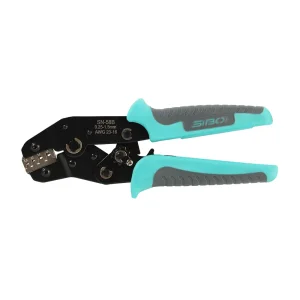
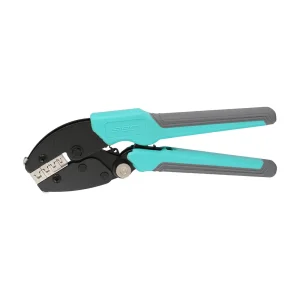
Self-Adjustable Button Hand Crimping Tool SO 16-6 AWG 28-5

Wholesale Self-Adjustable Button Hand Crimping Tool SO 16-6 AWG 28-5 Ferrules

Configure SO 16-6
SN-48B Crimping Pliers for Non-Insulated Open Barrel

High-Quality SN-48B Crimping Pliers for Non-Insulated Open Barrel Terminals

Configure SN-48B
SO-10WF Pro Ratchet Crimping Tools for Ferrules

SO-10WF Pro Ratchet Crimping Tools for Insulated and Non-Insulated Ferrules

Configure SO-10WF