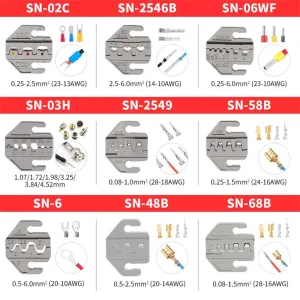
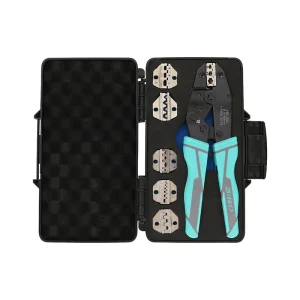
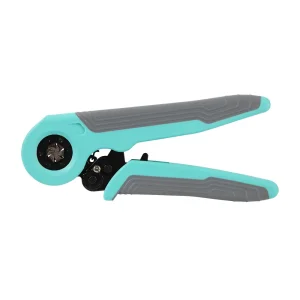
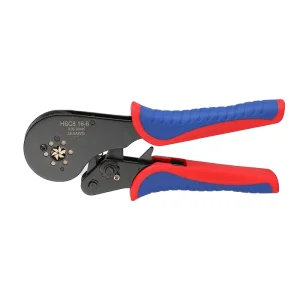
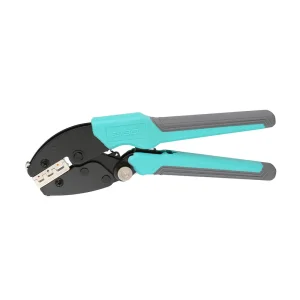
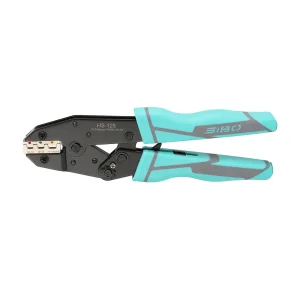
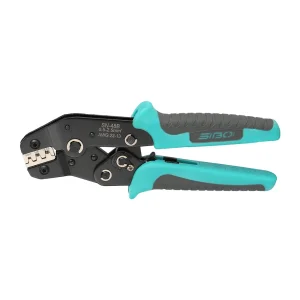
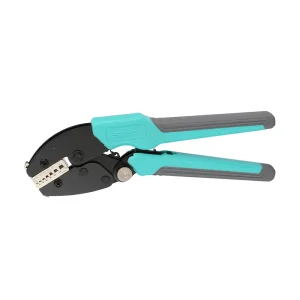
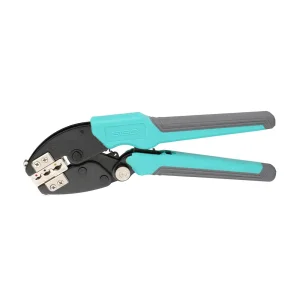
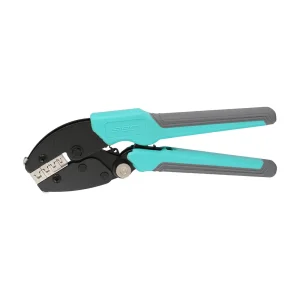
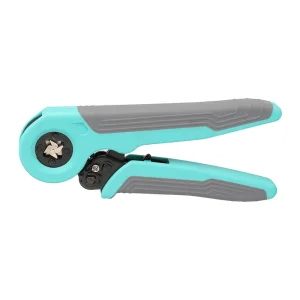
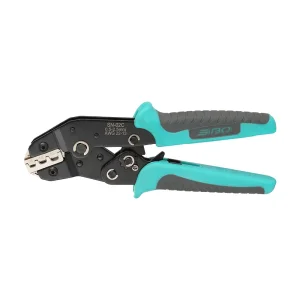
Explore standard and customizable crimping pliers built with full-cycle ratchet mechanisms, high-strength alloy dies, and ergonomic leverage design.
A deep engineering overview of contact resistance mitigation, metallurgical compaction, and international compliance across high-reliability wire terminations.
In modern electrical systems, the integrity of an electrical circuit depends directly on the mechanical stability and electrical conductivity of terminal connections. Ratchet crimper tools have evolved from rudimentary manual squeezing pliers into scientifically calibrated precision instruments. The incorporation of a full-cycle ratchet mechanism guarantees that the crimping dies reach their ultimate mechanical compression stroke before the tool releases, completely eliminating operator variability and human error.
Whether processing DIN 46228 end ferrules, open-barrel automotive terminals, or high-voltage photovoltaic connectors (MC4), the dynamic geometry of the jaw profile must accommodate elastic spring-back of the terminal body while cold-forming copper strands. Industrial equipment assemblers and OEM tool brands rely on China-based high-precision suppliers to manufacture crimping systems adhering to stringent ISO 9001, UL 486A-B, and IEC 60352-2 mechanical tensile and voltage drop criteria.
Unmatched supply chain integration, precision tool-steel metallurgy, and rapid prototyping capabilities provide international procurement directors with an undeniable competitive advantage.
Yueqing is world-renowned as China's low-voltage electrical capital. Having localized access to millions of terminal iterations, alloy suppliers, and testing laboratories allows our factories to test and optimize crimper die geometry against real-world terminals in real time.
Modern Chinese crimper manufacturing utilizes high-grade tool steel (such as SCM440 and Cr12MoV), vacuum heat treatment, and multi-axis slow-wire Electrical Discharge Machining (EDM). This produces die cavities with extreme hardness (HRC 42-48) that resist abrasion over tens of thousands of cycles.
From custom laser-etched jaw nomenclature, company color matching for dual-component TPR/PP handles, customized blister or Oxford bag kit assemblies, to bespoke die geometry development for specialized connectors, Chinese suppliers deliver rapid tooling iterations within 2 to 4 weeks.
How automation, lightweight ergonomic engineering, and multi-protocol versatility are shaping the next generation of wiring hand tools.
Maintenance engineers increasingly reject carrying five individual pliers into tight utility installations. The market is trending aggressively toward tool frames with magnetic or push-button toolless quick-release die mechanisms that allow instant swaps between ferrule, insulated, and solar dies without screws.
Traditional manual pliers required operators to select precise slot cavities. Next-gen four-mandrel and six-mandrel self-adjusting crimpers automatically sense wire ferrule cross-sections from 0.08mm² to 16mm², forming symmetrical, compact cross-sections ideal for tight terminal blocks.
Repetitive strain injuries (RSI) are a major concern in production-line wiring. Contemporary ratchet designs incorporate compound toggle linkage systems that amplify hand-grip force by up to 300%, reducing operating effort to under 20 kgf even during maximum wire diameter crimping operations.
From harsh utility-scale solar fields to micro-signal telecommunication switches, engineered ratchet crimpers guarantee life-safety critical electrical integrity.
Field installations of 1500V DC solar systems require zero-defect terminations on 2.5mm², 4mm², and 6mm² cables. MC4-compatible ratchet crimpers ensure consistent conductor compaction that prevents hot-spot formation and long-term PV arc faults.
Switchboard and PLC wiring demands thousands of ferrule crimps per cabinet. Self-adjusting hexagonal crimpers prevent terminal splaying, ensuring wires fit seamlessly into high-density screw or push-in spring clamps with low contact resistance.
Automotive electrical harnesses rely heavily on open-barrel stamped contacts. Using B-type roll-crimper dies, the tool shapes both conductor core wings and outer insulation strain reliefs in a single ergonomic compression motion.
High-frequency data switching hubs require micro-terminal precision to avoid signal degradation. Miniature self-adaptive ratchet tools prevent wire shear on microscopic conductors down to 0.08mm² (AWG 28).
Addressing supply chain friction, private labeling, standard compliance, and batch uniformity for global hardware tool importers and hardware retail giants.
Professional procurement teams demand statistical process control (SPC). Sibo Tools implements tensile break testing (pull-off force in Newtons), micrographic cross-section cut-away inspection, and Rockwell hardness testing before dispatching export containers.
Distributors maximize profitability by offering complete termination systems rather than standalone pliers. We engineer comprehensive Oxford cloth bag combinations, rugged BMC blow-mold cases, and multi-cavity sets containing specialized pliers, quick-change jaws, and curated assortments of certified terminals.
Global enterprise buyers must meet international compliance standards. Our manufacturing facilities strictly adhere to environmental regulations, RoHS/REACH chemical safety criteria for tool grip polymers, and provide flexible consignment scheduling to buffer shipping bottlenecks.
Comprehensive answers curated by manufacturing engineers and technical sales directors for procurement decision-makers.
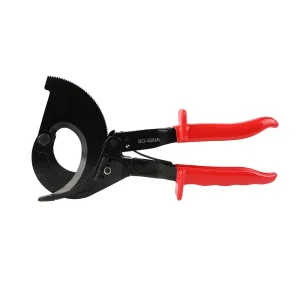
Complete your product catalog with high-demand professional series tools, open-barrel crimpers, and heavy-duty cable cutting shears.