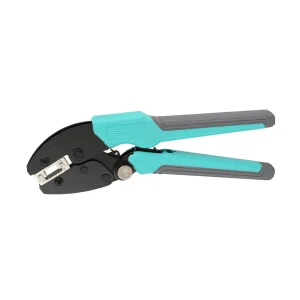
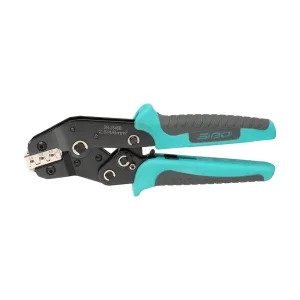
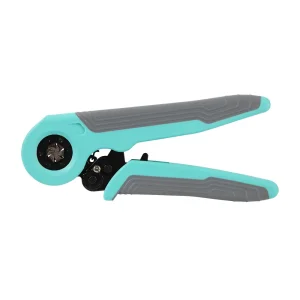
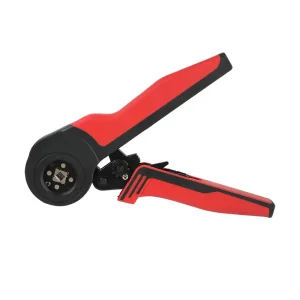
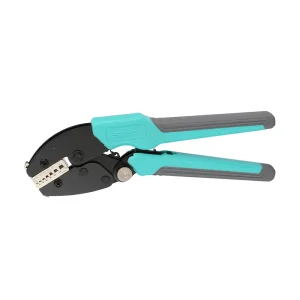
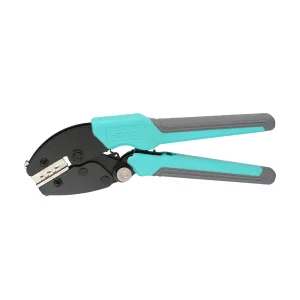
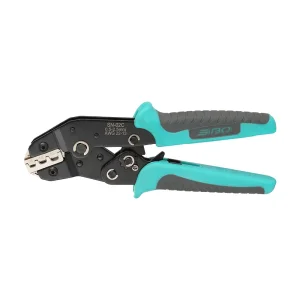
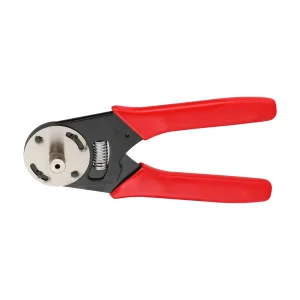
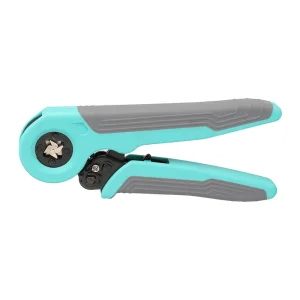
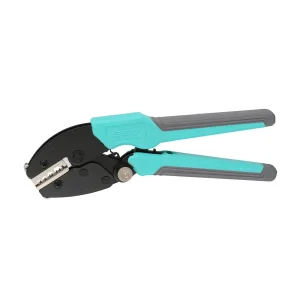
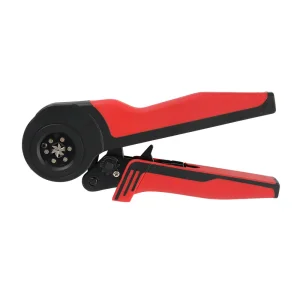
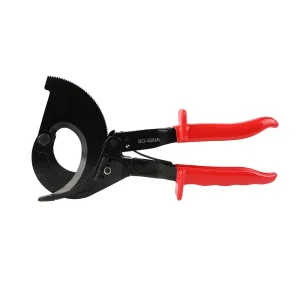
Engineered with EDM precision dies, fatigue-resistant lever transmissions, and auto-release mechanisms to meet stringent DIN, EN, and US tensile standards.
Why Tier-1 industrial buyers, global hardware tool brands, and infrastructure contractors partner with SIBO Tools in Zhejiang Province for custom wire rope and steel cable crimper production.
Situated within Yueqing—the low-voltage electrical capital of China—our factory directly sources metallurgical-grade 42CrMo, AISI 4140, and high-carbon SK5 tool steels. Complete vertical integration spans wire EDM profile cutting, vacuum carburizing heat treatment, CNC die cavity grinding, to anti-corrosive electroplating, drastically reducing cycle times by 40%.
Cable swaging demands precise geometric compression without micro-fracturing sleeves or shearing strands. Our five-axis machining centers maintain die tolerances within ±0.005mm. Every custom die set undergoes non-destructive optical coordinate measurement and hydraulic pressure testing to guarantee zero slippage under maximum load ratings.
Leveraging high-throughput automated stamp forging, progressive blanking presses, and robotic assembly stations, we achieve unbeatable economies of scale. Overseas distributors achieve 30% to 45% margin expansions while delivering tool life cycles exceeding 50,000 continuous full-ratchet crimp cycles without calibration drift.
The swaging and mechanical fastening industry is shifting toward smart ergonomics, high-strength composite alloys, and self-regulating force control.
Traditional non-ratcheting pliers rely on variable operator manual force, causing disastrous cold flow variations and joint pull-outs. Modern designs integrate high-tooth ratchets that refuse to open until calibrated terminal deformation pressure is met.
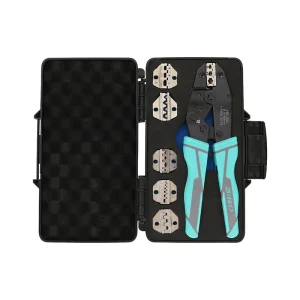
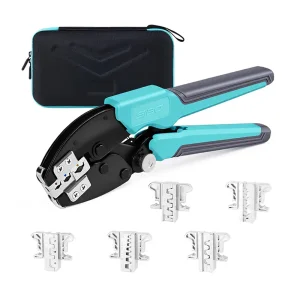
Maintenance technicians demand zero-tool die transitions. SIBO's patented quick-change magnetic jaws allow users to shift between stainless steel wire ferrules, oval copper sleeves, and hourglass aluminum stops within 5 seconds without allen wrenches.
Repetitive strain injuries (RSI) are a major occupational concern in electrical harness assembly. Modern compound-action toggles deliver up to 1:30 mechanical advantage, reducing grip force requirements from 450N to under 180N using dual-component TPR handles.
For offshore rigging, PV arrays, and architectural stainless steel balustrades, crimping jaws now leverage multi-layer titanium nitride (TiN) and Teflon-impregnated nickel finishes that resist saltwater mist corrosion and premature die scoring.
From aerospace wire harness control lines to utility-scale commercial photovoltaic installations, explore how crimp profiles are matched to rigorous field demands.
| Industry Sector | Typical Cable & Terminal Specification | Required Crimping Profile | SIBO Tool Solution & Advantage |
|---|---|---|---|
| Photovoltaic & Solar EPC | 2.5 / 4.0 / 6.0 mm² PV1-F copper stranded cables, MC4 contacts | Precision F-Crimp / B-Crimp with insulation strain relief | SO-2546B Pro / SN-2546B: Calibrated crimp height maintains <0.5mΩ contact resistance, preventing thermal runaway and micro-arcing. |
| Architectural & Marine Rigging | 1/16" to 3/8" 316 Stainless Steel Wire Rope, Duplex Oval Sleeves | Full-contact round or oval swaging die set | Hydraulic & Lever Swagers: Exceeds 95% of breaking strength rating (MBL) per EN 12385 guidelines with uniform perimeter pressure. |
| Automotive & Wire Harnesses | D-Sub, Deutsch DT/DTM connectors, 20-16 AWG closed barrels | 4-Indent 8-step precision swage crimp | Closed Barrel Crimper Series: Prevents wire damage while achieving gas-tight cold welds resistant to high-vibration engine bay conditions. |
| Industrial Control & Switchgear | DIN 46228 Wire-end ferrules, single & twin conductors up to 16 mm² | Square (4-jaw) or Hexagonal (6-jaw) concentric swage | SO 10-4 / SO 16-6 Self-Adjusting Pliers: Uniform 360-degree compression ensures terminal blocks receive low-resistance contact with zero frayed strands. |
| Power Distribution & Utilities | Non-insulated copper lugs, heavy-duty electrical terminals up to 500 MCM | Deep indent & hex compression die profiles | SO-10 Pro & Heavy Ratchet Cutters: Clean shearing via hardened blades (FST-520A) followed by unyielding mechanical ratchet swaging. |
A transparent, milestone-driven development process designed for global wholesale importers, catalog brands, and defense contractors.
Send your 2D/3D CAD drawings or physical terminal samples. Our tooling engineers review draft angles, cavity wall clearances, mechanical leverage ratios, and steel selection within 48 hours.
Rapid CNC EDM machining produces physical validation samples within 15 working days. Prototypes undergo microsection cross-sectioning (crimp compaction analysis) and pull-out tensile testing.
Personalize your tool lineup with custom dual-color handle moldings, laser-etched corporate logos, calibrated serial numbers, and heavy-duty Oxford zip cases or blister packaging tailored for retail shelves.
Full production runs are governed by rigorous ISO 9001:2015 controls. Every lot is accompanied by steel mill chemical analysis, Rockwell hardness verification, and batch pull-test validation reports.
Detailed technical answers addressing mechanical swaging, wire tensile tolerances, and OEM commercial terms.
Proper crimp compression relies on sleeve wall thickness, cable metallurgical core (7x7, 7x19, or 1x19), and wire alloy. To prevent structural crushing of internal steel strands while avoiding cable slip, the optimal swaged sleeve cross-section reduction should be between 20% and 28%. We analyze sleeve outside diameter (OD) and conductor compaction under optical microscopes to machine dies that achieve 100% rated cable breaking strength.
We use distinct specialized metals: tool frame handles are laser-cut from high-yield structural carbon steel (such as Q235B or 50# carbon steel) with manganese phosphating to prevent buckling under 500N manual leverage. The crimping jaws and critical die inserts are forged from 42CrMo or SKD11 tool steel, heat-treated in vacuum furnaces to HRC 58-62 for zero deformation after tens of thousands of cycles.
Generally, no. Stainless steel wire rope sleeves require high-tonnage compressive swaging that plasticizes thick-walled aluminum or copper ferrules into the wire strands. Insulated electrical terminals demand dual-stage stepped crimping: the front cavity compresses the copper barrel while the rear cavity creates an insulation strain relief collar without slicing the nylon jacket. Our magnetic quick-change jaw tools (like the Quick Replacement Crimper Set) provide an ideal hybrid solution.
For standard SIBO inventory models with custom laser-etched branding, our MOQ starts at 500 units with 20-25 days lead time. For bespoke ground-up OEM/ODM tooling requiring custom die profile tooling and unique handle injection molds, MOQ is typically 1,000 to 2,000 pieces. Pilot tooling takes 15-20 days, and mass production follows in 30 days after initial sample sign-off.
Clean non-deforming shearing equipment and specialty crimpers ensuring burr-free conductor prep and reliable field assembly.