Calibrated tolerance thresholds beneath ±0.02mm across high-density wire terminations, specialized photovoltaic lugs, and heavy electrical conductors.
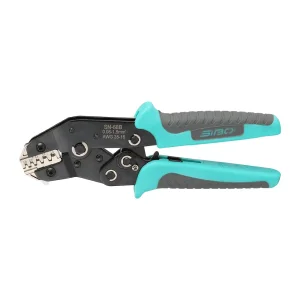
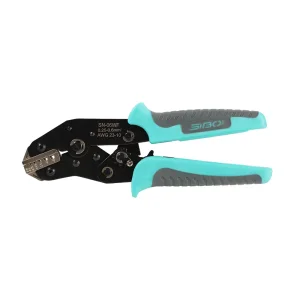
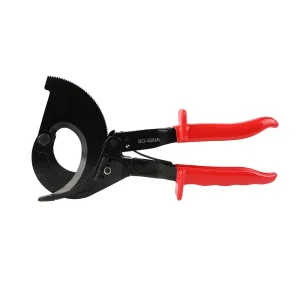
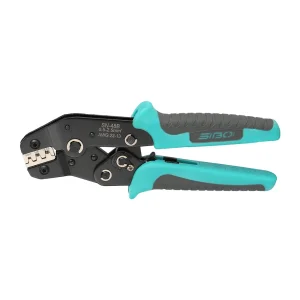
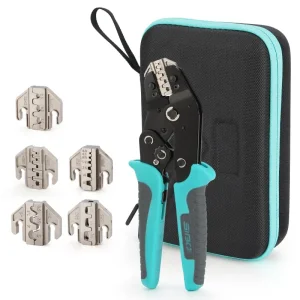
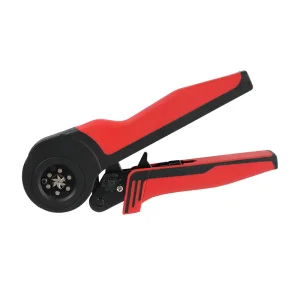
Modern electrical interconnects demand a transition from manual estimation to precision metallurgy. The crimping tool is no longer a simple mechanical lever; it is a calibrated micro-forge that dictates circuit continuity, micro-ohmic contact impedance, and mechanical fatigue life under thermal fluctuations.
SIBO tool frames utilize cold-rolled 42CrMo and 50CrV4 spring-grade chrome-vanadium structural steel. Under a 12-ton hydraulic press test, zero elastic deformation ensures die parallelism is maintained down to 18 microns, preventing asymmetrical crimp flash and localized wire shearing.
With the solar PV sector scaling to 1500V DC bus architectures and commercial electric vehicles operating past 800V, slight crimp imperfections result in severe thermal runaways. Our patented SO-2546 and hexagonal profiles achieve cold-gas exclusion zones conforming strictly to IEC 60352-2 standards.
Global tier-one distributors require traceable raw material supply chains. We perform ultrasonic non-destructive flaw detection on every batch of forgings, guaranteeing zero micro-cracks during high-impact crimping operations across extreme thermal zones (-40°C to +85°C).
Headquartered in Yueqing, Zhejiang—the epicenter of low-voltage electrical apparatus worldwide—Yueqing Sibo Tools Manufacture Co., Ltd. integrates automated multi-axis CNC tooling, vacuum carburizing thermal furnaces, and synchronized assembly chains to eliminate third-party processing latency.
We run twin horizontal vacuum heat treatment lines where die cavities reach surface hardness metrics of HRC 58-62, with core toughness retained at HRC 42-45. This dual-hardness architecture prevents brittleness and cracking during repetitive high-load crimping on nickel-plated terminals.
Each crimping mechanism incorporates an adjustable eccentricity dial matched with a heavy-duty mechanical leaf spring. This ensures consistent ratchet release only when complete physical closure is accomplished, entirely mitigating operator fatigue errors.
Direct geographic proximity to raw material producers in the Yangtze River Delta guarantees continuous, zero-lead-time access to refined tool steels, alloy coatings, and TPR ergonomic grips, isolating overseas buyers from supply interruptions and sudden price spikes.
From extreme sub-zero railway trackside wiring to scorching utility-scale solar farms in Nevada and high-vibration aerospace test benches, SIBO crimper tools are purpose-engineered for demanding operational environments.
Deploying SO-2546B Pro and SO-2546C Pro units across multi-gigawatt PV fields. Delivers uniform B-crimps on multi-contact pins, completely eliminating micro-arcing vulnerabilities and maintaining circuit performance in high-humidity solar arrays.
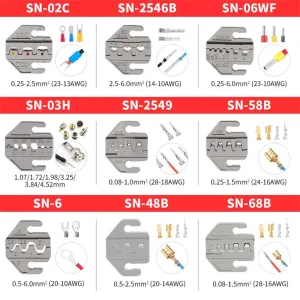
Precision non-insulated open-barrel tools like the SN-48B and SN-68B curl conductor tabs and insulation wings in a single stroke, delivering flawless bell-mouth entries and exceeding OEM-specified terminal tensile retention pull-tests.
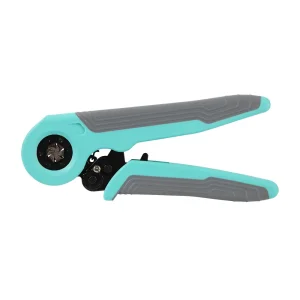
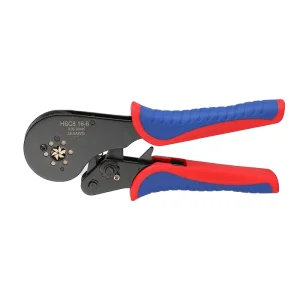
Hexagonal and self-adjusting ferrule crimping pliers (HSC8 series & SO-10-6) distribute compression force across 360 degrees, ensuring low-resistance insertion into spring-cage terminals across compact PLC control panels.
Explore our specialized interchangeable jaw sets, miniature self-adaptive tools, and industrial lug solutions built for precision-demanding contractors.
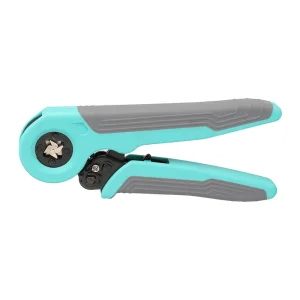
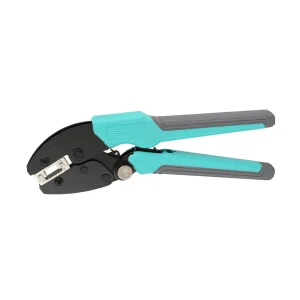
Answers to key engineering, validation, and purchasing queries addressed by SIBO's Yueqing technical support division.
We employ controlled vacuum carburizing on high-grade Chromium-Molybdenum (42CrMo) and Cr12MoV die steels. This process produces an optimal metallurgical gradient: a diamond-hard exterior wear shell (HRC 58-62) with high impact core toughness (HRC 42-45), effectively preventing micro-fissure propagation during high-cycle industrial operations.
SIBO ratcheting tools use an internal full-cycle pawl and cam system. The mechanism cannot reverse or disengage until the die set reaches its calibrated mechanical dead stop. This mechanical interlock ensures consistent terminal compression regardless of operator fatigue or varying grip strength.
Yes. Using wire-cut EDM and high-speed CNC centers, we develop custom die geometries directly from your terminal step files or physical contact samples. We optimize the die cross-section to balance pull-out tensile strength against conductor strand integrity, and supply pre-production validation cross-section photos upon request.
All production lots are sampled under ISO 2859-1 AQL inspection standards. Verification protocols include terminal pull-off retention testing (DIN EN 60352-2), optical crimp height validation, plating salt-spray corrosion trials (ASTM B117), and full mechanical ratchet cycle tests before export release.
