Calibrated mechanical ratchet mechanisms, drop-forged alloy steel jaw matrices, and repeatable crimping profiles verified to DIN EN 60352-2 pull-out extraction thresholds.
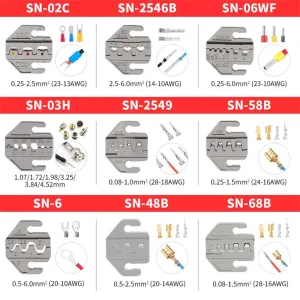
4mm slot jaw matrix engineered for compact terminal junctions, insulated sleeves, and fine-conductor assemblies.
Explore Engineering Specs
SN-series calibrated pressure jaw frame optimized for low-resistance open and closed terminal terminations.
Explore Engineering Specs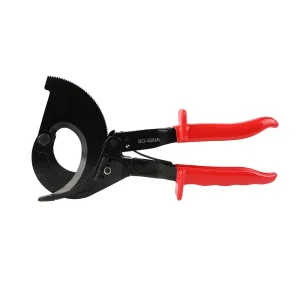
Heavy-duty high-leverage shearing system for zero-crush cutting of copper and aluminum power feed lines.
Explore Engineering Specs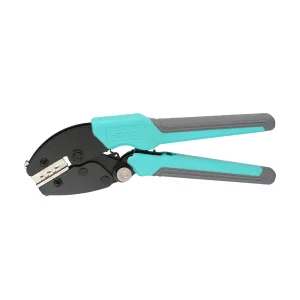
Specialized PV solar pin contacts for MC4-compatible installations across 2.5, 4.0, and 6.0 mm² cabling.
Explore Engineering Specs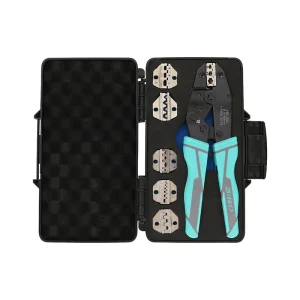
Modular quick-swap die system with 5 interchangeable jaw profiles for universal field maintenance.
Explore Engineering Specs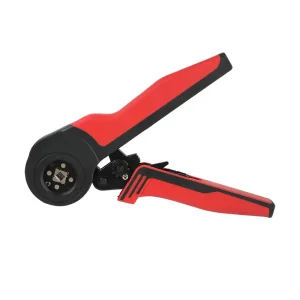
Square-profile self-adjusting ferrule crimper handling 0.08–16 mm² wire ferrules automatically.
Explore Engineering Specs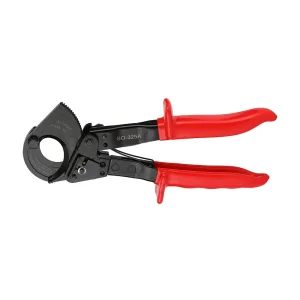
Compact ratcheting transmission enables one-handed slicing of armored copper-aluminum conduits up to 240mm².
Explore Engineering Specs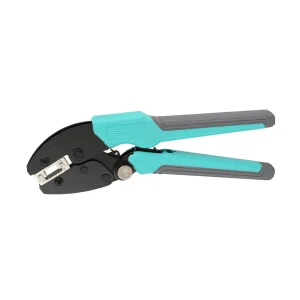
Heavy-duty lug crimper featuring ergonomic dual-component handle geometry and forced ratchet release.
Explore Engineering SpecsFrom basic hand compression pliers to synchronized micrometric ratchet assemblies: Why modern global electrical infrastructure demands zero-defect metallurgical compaction.
In electrical power distribution, renewable energy generation, automotive manufacturing, and high-frequency communication architectures, the mechanical wire crimp is no longer treated as a simple hardware connection. It is recognized as a precision cold-welded metallurgical interface. Modern electrical standards—including DIN EN 60352-2, UL 486A-486B, and SAE AS7928—mandate that a compliant crimp must eliminate all internal gas pockets between stranded conductors and the terminal sleeve. Failure to achieve this gas-tight compaction results in accelerated atmospheric oxidation, localized ohmic heating, voltage drops, and catastrophic arc-fault thermal events.
As Yueqing Sibo Tools Manufacture Co., Ltd. (SIBO Tools) expands its research and manufacturing footprint in Yueqing, Zhejiang—the global capital for low-voltage electrical apparatus—we analyze the industrial trajectory transforming hand tools into precision engineering instruments. Today’s industrial procurement officers, Tier-1 harness builders, and distributor brands encounter unprecedented demands driven by electrification, 1500V DC utility-scale photovoltaic farms, electric vehicle (EV) battery management architectures, and automated industrial switchgear. This technical white paper provides the structural blueprints, metallurgical data, and operational guidelines necessary to source, validate, and scale high-reliability crimping solutions worldwide.
Utility-scale solar arrays operating up to 1500V DC require strict contact resistance control (<0.25 mΩ) on MC4 and solar connectors to eliminate hotspot formation and string energy yield losses over 25+ years.
Automotive wire harness assemblies subjected to multi-axis mechanical vibration require precision B-crimp geometry on open-barrel connectors and tight conductor crimp height (CCH) tolerance within ±0.03 mm.
High-density PLC wiring, push-in spring terminal blocks, and compact switchgear require square and hexagonal self-adjusting ferrule crimping to ensure maximum contact surface and zero strand fraying.
Navigating the hidden costs of tool degradation, jaw clearance deviation, and uncalibrated hand forces in high-throughput assembly operations.
For international sourcing directors, master tool distributors, and industrial contract manufacturers, tool procurement extends far beyond initial unit price. The Total Cost of Ownership (TCO) in crimping tools is dominated by field failure liabilities, operator ergonomic fatigue claims, warranty claims caused by terminal slip-out, and regulatory re-certification delays. When evaluating Chinese manufacturing suppliers, Tier-1 buyers focus on four definitive quality checkpoints:
Integrated ratchet must never disengage prematurely until the jaw closure completes the designated compression cycle, eliminating human variance and operator fatigue under high production volumes.
Forged tool steel dies (such as 42CrMo or AISI 4140) vacuum heat-treated to HRC 42–48 ensure cavity edges maintain precise radiused corners over tens of thousands of cycles without chipping or flaring.
Every die profile must be empirically calibrated to meet or exceed tensile force limits under IEC 60947-7-1 and UL 486A without cutting individual copper strands during the deformation process.
Compound leverage mechanical linkages reduce peak manual hand gripping force by 35%–48%, satisfying European occupational health thresholds (EN 1005-2) for repetitive manual strain mitigation.
| Wire Gauge (AWG / mm²) | IEC 60999-1 Min Pull Force (N) | UL 486A-486B Min Pull Force (N) | SIBO Tool Tested Mean (N) | Compaction Density (%) |
|---|---|---|---|---|
| 22 AWG (0.34 mm²) | 15 N | 35 N | 52 N | 91.4% |
| 18 AWG (0.75 mm²) | 30 N | 60 N | 88 N | 93.2% |
| 14 AWG (2.50 mm²) | 50 N | 150 N | 215 N | 94.8% |
| 10 AWG (6.00 mm²) | 80 N | 360 N | 485 N | 96.1% |
| 6 AWG (16.00 mm²) | 100 N | 600 N | 820 N | 97.5% |
Tailored crimping profiles matched to specific conductor insulation materials, operating environments, and mechanical stresses.
Photovoltaic installations operate under intense UV exposure, wide thermal swings (-40°C to +90°C), and continuous 1500V DC loads. Loose or uneven crimps inside connector housing cause localized arcs, damaging combiners and inverter stages.
Automotive sub-assemblies require high structural resistance against continuous vibration, oil contamination, and temperature cycles. Open-barrel disconnects and Deutsch connector solid pins mandate pristine mechanical compaction.
Modern DIN-rail switchboards utilize push-in spring clamp terminals demanding perfectly shaped end-sleeves (ferrules). Round or oversized crimps jam spring cages, creating intermittent contact faults.
From CAD cavity simulation to vacuum heat treatment and optical comparator validation: Yueqing Sibo Tools' end-to-end manufacturing process.
The operational lifespan of a crimping tool is fundamentally determined by metallurgy and machining tolerances. A sub-millimeter die cavity distortion causes uneven brass or copper flow during deformation, shearing fine multi-strand wire filaments or splitting the seam of insulated sleeves. At SIBO Tools, all core stress-bearing components undergo a 5-stage manufacturing cycle:
Die profiles are shaped using computer-controlled low-speed wire Electrical Discharge Machining (EDM). This achieves cavity profile tolerances within ±0.015 mm and eliminates thermal stress cracks typical of conventional stamping.
Alloy steel jaws undergo vacuum furnace quenching followed by sub-zero cryogenic stabilization. This yields uniform Rockwell hardness (HRC 44–47) throughout the working core, preventing premature groove wear.
An adjustable eccentric adjustment disc is integrated into every ratchet frame. As mechanical joints undergo long-term wear after tens of thousands of cycles, technicians can readjust the baseline crimp load in seconds.
Direct factory collaboration: Custom die configurations, specialized kit sets, private labeling, and rapid tooling turnaround.
Located in Huanghua Town, Yueqing City, Zhejiang Province—the epicentre of China's electrical apparatus industry—Yueqing Sibo Tools Manufacture Co., Ltd. sits at the heart of an integrated supply ecosystem. With instant access to specialized high-carbon alloy rolling mills, localized surface plating chemistry, and terminal test laboratories, SIBO Tools shortens standard OEM prototype lead times by over 45% compared to non-clustered factories.
Whether you require custom two-component TPR handle grips molded in your corporate pantone colors, bespoke laser marking with QR batch traceability, or turnkey Oxford bag combination tool kits, our engineering staff handles technical execution with structured Project Lifecycle Management (PLM):
Engineering tailored die cavities designed around proprietary terminal pins, rare wire cross-sections, or proprietary customer automotive connectors.
Oxford fabric zippered kits housing multi-jaw quick-release pliers, wire strippers, ratchet cable cutters, and organized connector terminal assortments.
Permanent fiber-laser logo etching, custom dual-injection molded handle grips, printed blister cards, color boxes, and barcode-ready export packaging.
FOB Ningbo / Shanghai, CIF, and DDP processing with full export documentation, Certificate of Origin, RoHS/REACH compliance declarations, and pallets.
Rigorous quality control frameworks protecting distributors from liability across European, North American, and Asia-Pacific markets.
In highly regulated markets like Germany, the United States, Japan, and the UK, hand tools used in electrical installations must demonstrate verified compliance with consumer safety and hazardous substance guidelines. SIBO Tools maintains an internal quality management protocol adhering strictly to ISO 9001 principles. Every batch of tools produced in our Yueqing facility is cataloged with batch material mill certificates, surface plating thickness inspections (guaranteeing >96 hours of salt spray resistance under ASTM B117), and handle polymer testing under EU REACH and RoHS Directives (SVHC screening).
To support global brand owners with after-sales operations, SIBO Tools offers localized replacement die packs, calibration gauge pins, and comprehensive exploded-view maintenance guides for tool reconditioning. This long-term product support empowers distributors to sell with complete confidence.
Pioneering sensor-assisted micro-ratchets, lightweight aerospace alloy frames, and digital cycle verification.
Integrating low-power mechanical and digital micro-switches inside handles to record total completed cycles, signaling preventive maintenance and recalibration intervals for ISO-certified shop floors.
Developing drop-forged aircraft-grade titanium-aluminum alloy body frames that reduce overall hand tool weight by 40% while preserving extreme torsional rigidity under heavy mechanical loading.
Transitioning handle grip manufacturing toward circular, recyclable thermoplastic elastomers (TPE) derived from post-industrial bio-feedstock, lowering carbon footprint across OEM supply chains.
Authoritative answers on die calibration, mechanical ratchets, solar connector tooling, and high-volume OEM ordering.
Ratchet crimping pliers utilize a precision fixed-cycle mechanical gear linkage designed around discrete, dedicated die cavities. Each cavity is precision-profiled to compress a specific wire gauge and terminal type (e.g., Red 0.5–1.5 mm², Blue 1.5–2.5 mm², Yellow 4–6 mm² pre-insulated terminals). The internal ratchet will not unlock until full downward travel is attained, guaranteeing 100% repeatable compaction height for standardized high-volume assembly lines.
Self-adjusting crimping pliers incorporate floating multi-segment jaw blades (typically 4 or 6 synchronized jaws) that automatically conform to the insertion diameter of wire-end ferrules ranging from 0.08 mm² to 16 mm². Instead of requiring the operator to select a specific nest, the tool adapts automatically to the conductor mass, producing a consistent square or hexagonal profile. For panel builders handling diverse multi-gauge control wiring, self-adjusting tools dramatically accelerate productivity.
The SIBO SO-2546 Pro series (including the SO-2546B Pro and SO-2546C Pro) is custom-engineered specifically for MC4-compatible open-barrel and closed pin contacts on 2.5 mm², 4.0 mm², and 6.0 mm² (14–10 AWG) solar cables. These tools incorporate dedicated locator pins to hold the metal contact at the exact insertion depth, ensuring the conductor crimp and the insulation support wings fold inward symmetrically.
Maintaining a micro-ohm resistance (<0.25 mΩ) across PV joints is essential to prevent hot-spot formation and fire hazards in 1500V DC installations. SIBO solar tools are factory-tested to maintain pull-out forces exceeding 310 N for 4.0 mm² and 450 N for 6.0 mm² solar leads, fully complying with IEC 62852 standards.
Selecting the correct tool depends directly on terminal geometry and insulation design:
To expedite the engineering review and quotation process, prepare:
SIBO Tools implements a Closed-Loop Quality Verification System: Raw steel alloys undergo chemical spectrographic analysis upon delivery. Forged dies are processed via computer-controlled slow wire EDM, then vacuum heat-treated to verify HRC 44–47 core hardness. Assembled hand tools undergo 100% mechanical stroke testing, followed by automated tensile pull-out tests and optical metallographic cross-sectioning (crimp cross-section micrography) to inspect the compaction density of stranded copper before international packaging and dispatch.
Expanding your commercial inventory with high-reliability micro-pliers, solid-contact Deutsch crimpers, and modular jaw sets.
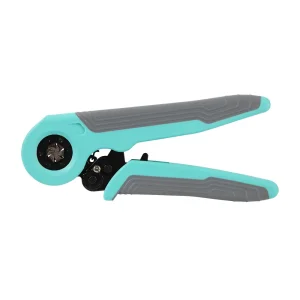
Ultra-compact hexagonal self-adjusting ferrule crimper for high-density wiring between 0.08–10 mm².
Explore Engineering Specs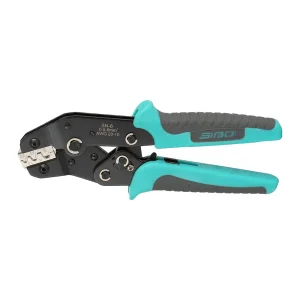
Heavy-duty precision crimper for non-insulated connectors with high compound mechanical transmission leverage.
Explore Engineering Specs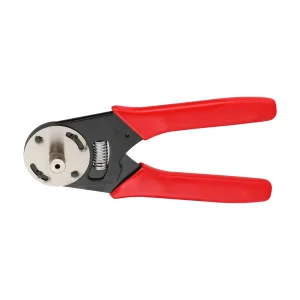
4-indent 8-impression precision crimper designed for solid barrel contacts across 20–16 AWG wire harness builds.
Explore Engineering Specs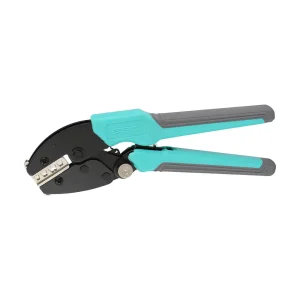
Standardized utility-scale solar PV pin connector tool with pre-calibrated pressure release mechanisms.
Explore Engineering Specs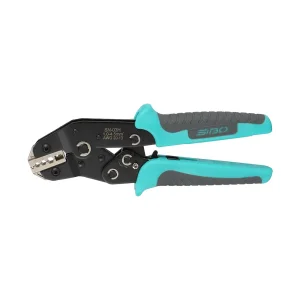
Mini European geometry pliers offering exceptional ergonomic control in restricted control panel spaces.
Explore Engineering Specs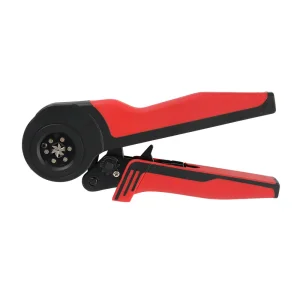
Hexagonal push-button adjustable ferrule tool covering AWG 28–5 (0.08–16 mm²) wire-end ferrules.
Explore Engineering Specs
Interchangeable 4mm slot replacement jaw set precision-ground for quick modular swapping on SN pliers.
Explore Engineering Specs
High-volume export edition solar connector crimper with hardened locator shoes and non-slip ergonomic grips.
Explore Engineering SpecsCollaborate directly with Yueqing Sibo Tools' senior technical engineers. Whether optimizing terminal pull-out force tolerances or developing custom private-label hand tool sets, our factory delivers verified engineering excellence.
