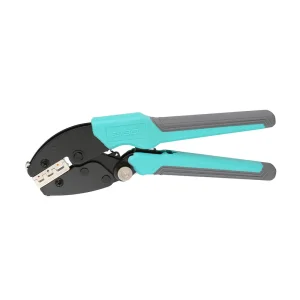
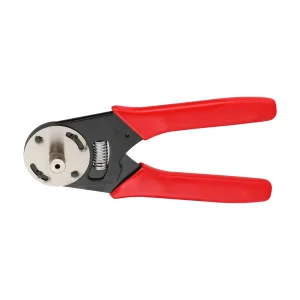
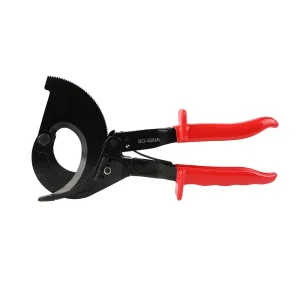
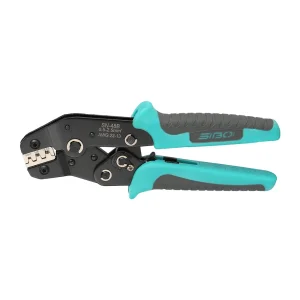
Explore our industrial-grade ratchet mechanisms and modular die profiles engineered for micro-resistance electrical conductivity.
How modern manufacturing addresses the demands of higher wire densities, ultra-pure copper conductors, and extreme operating environments.
Traditional die manufacturing frequently suffers from micro-fissures under cyclical 50kN loads. Advanced production lines now leverage vacuum-melted chromium-molybdenum (CrMo) and AISI 4140 alloy steels, processed via computer-controlled heat treatment to hit 48-52 HRC surface hardness while retaining ductile core stability.
Modern electrical installations cannot tolerate irregular crimp profiles. Slow-wire Electric Discharge Machining (EDM) ensures terminal nesting pockets are held within ±0.005mm tolerances, preventing micro-shearing of multi-strand wires during B-type open barrel crimping cycles.
With smart factory manufacturing integrating across tier-one wire harness facilities, mechanical hand crimpers are adopting integrated strain gauges and digital cycle recorders to verify that full-cycle ratchet pressure curves match exact ISO pull-out forces.
Evaluate mechanical specifications against international testing benchmarks to reduce warranty liabilities in commercial switchgear and renewable projects.
| Terminal Architecture | Common Industry Cross-Section | Critical Crimp Dimension Metric | International Standard Reference | Target Mechanical Pull-Out Force |
|---|---|---|---|---|
| Pre-Insulated (Vinyl/Nylon) | 0.5 mm² – 6.0 mm² (22-10 AWG) | Insulation Ring Retention & Core Height | UL 486A-486B / DIN EN 60352-2 | ≥ 100 N – 360 N depending on AWG |
| Open-Barrel Contacts | 0.08 mm² – 2.5 mm² (28-14 AWG) | B-Crimp Width & Bell-mouth Flare | SAE/USCAR-21 / IEC 60512-16-4 | ≥ 58 N – 220 N retention |
| Solar Photovoltaic (MC4) | 2.5 mm² – 6.0 mm² (14-10 AWG) | Gas-tight compaction & low contact milliohms | TÜV 2 PfG 2381 / UL 6703 | ≥ 310 N constant pull strength |
| End-Sleeve Wire Ferrules | 0.25 mm² – 16.0 mm² (24-5 AWG) | Trapezoidal / Hexagonal Surface Contact | DIN 46228 Part 1 & 4 | Gas-tight cross-section closure |
Engineered solutions deployed across telecommunications, panel construction, mass transit, and field commissioning.
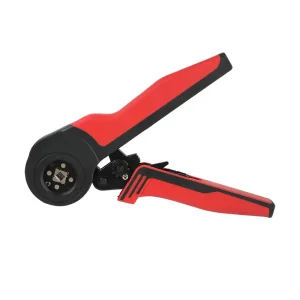
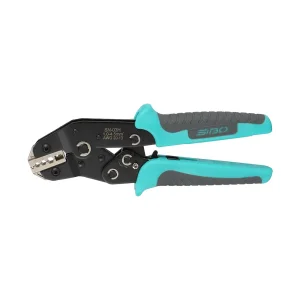
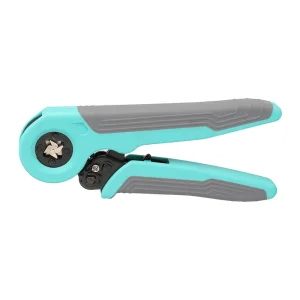
Automated distribution boards and high-vibration control cabinets demand zero loose strands. Self-adjusting ferrule crimpers like the SO 16-4 provide 360-degree uniform hexagonal indentations that completely mitigate arcing risk in DIN-rail terminal blocks.
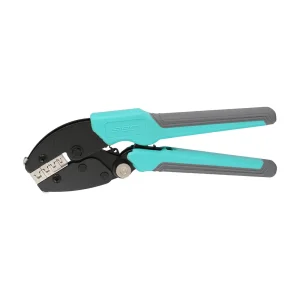
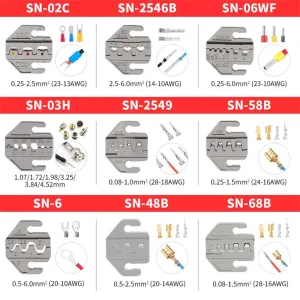
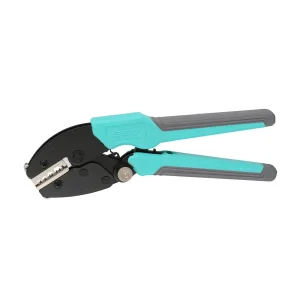
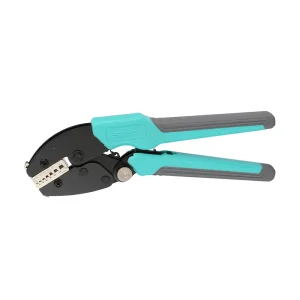
Photovoltaic field failures predominantly trace back to manual connector crimping defects. Our specialized SO-2546B Pro series delivers calibrated, full-cycle stroke stops that maintain micro-ohm contact resistance across harsh thermal expansion cycles.
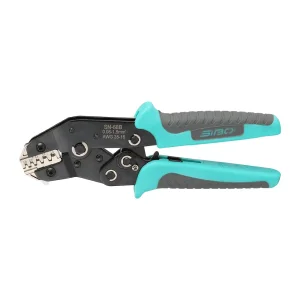
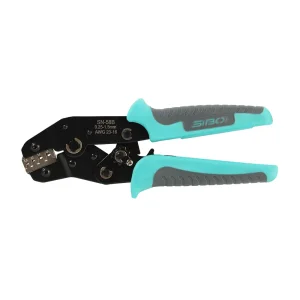
High-speed vibration and temperature cycling in automotive engine compartments necessitate B-crimp shapes with controlled bell-mouth formation. Die crimpers like the SN-48B and SN-68B guarantee mechanical bite without severing individual tinned wire strands.
We bridge cross-border tooling procurement through rigorous factory testing and end-to-end supply stability.
Every batch of ratchet mechanisms undergoes tensile pull-off testing on digital tensiometers up to 5000N. Micro-section polished cross-cuts verify gas-tight voidless bonding between terminal barrels and stranded conductors.
We empower regional electrical tool wholesalers and brand owners through flexible Private Label solutions: laser-etched jaw markings, pantone-matched dual-compound TPR handles, and custom tool pouch configurations tailored for local distributors.
Our complete manufacturing pipeline maintains traceability adhering to EU RoHS directives, REACH standards, and conflict-free mineral declarations, ensuring frictionless transit through European and North American customs clearance.
Where electrical connection tooling is headed: lighter materials, compound mechanical leverages, and modular magnetic toolholders.
Optimizing mechanical toggle linkage pivots to deliver a 30% reduction in peak hand gripping strain. This mechanical advantage drastically decreases repetitive strain injuries (RSI) across full-day assembly plant shift workers.
Eliminating clumsy set screws. New quick-swap magnetic slot jaws allow electricians to toggle between ferrule, insulated spade, and open-barrel cavities in seconds without needing secondary hex keys or drivers.
Embedding discrete 2D Data Matrix codes directly on individual die pockets via micro-laser marking. Allows optical scanning stations on automated harness lines to confirm matched die-and-wire recipes automatically.
Direct engineering answers to resolve common inquiries about mechanical ratings, custom tooling, and manufacturing parameters.
Explore interchangeable jaw sets, European mini-crimpers, and compact self-adjusting pliers directly from our Yueqing factory floor.