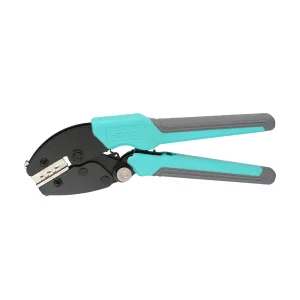
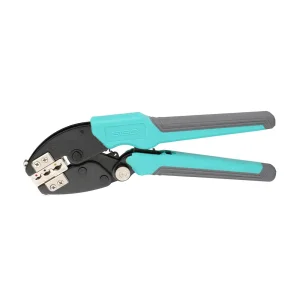
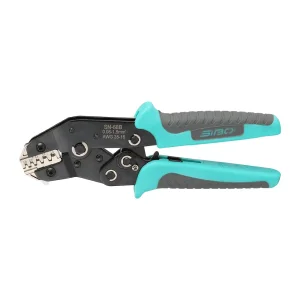
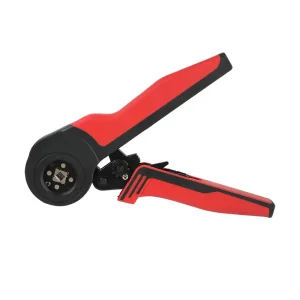
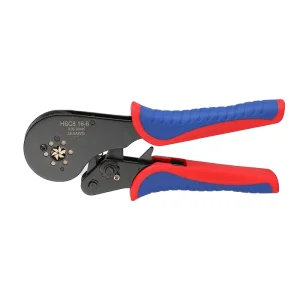
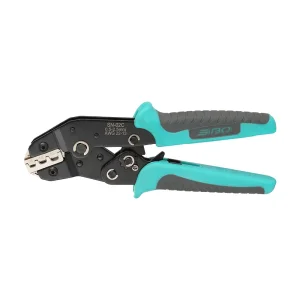
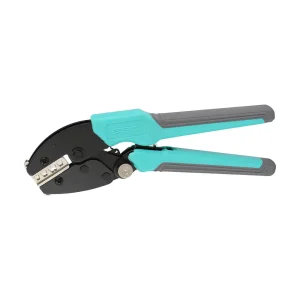
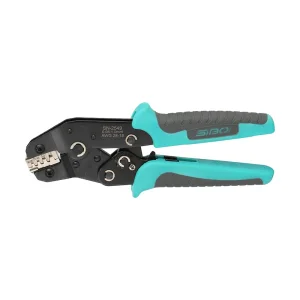
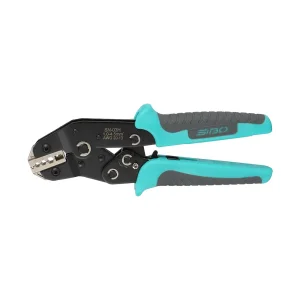
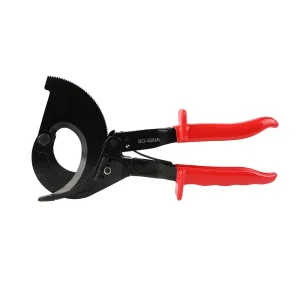
High-Quality Electric Crimper Supplier & Suppliers
Global Engineering Excellence in High-Precision Ratchet, Automatic & Industrial Electro-Hydraulic Wire Crimping Solutions Engineered in Yueqing Hub
Direct Sourcing Lineup
High-Precision Industrial Wire Crimpers
Verified terminal-matched tool configurations manufactured for industrial distribution, high-voltage wiring, and mission-critical solar PV installations.
The Global Shift: Manual to High-Duty Electric Crimpers
Electrification across renewable energy, electric vehicle infrastructure, and advanced building intelligence demands automated accuracy over legacy hand-compression methods.
Grid Modernization & Solar EPC
Global utility-scale solar installations require millions of terminations per plant. With micro-inverters and DC string arrays operating at up to 1,500V, crimp defects trigger critical thermal fires and operational downtime. Industrial electric crimpers guarantee standardized cycle depth, preventing over-crimp sheath fractures or loose-contact arcing across multi-megawatt systems.
Automotive Harness & EV Battery Packs
Electric mobility applications require high-voltage shielding, battery busbar lugs, and dynamic data pin arrays. Modern battery harness fabrication lines implement self-adaptive electric and electro-hydraulic crimping systems capable of logging micro-displacement metrics to meet ISO 19642 and USCAR-21 automotive pull-out specifications.
Switchgear & Control Automation
Industrial PLC cabinets and power distribution boards hold dense clusters of ferrule and spade connectors. Electric crimpers with self-adjusting mechanisms ensure uniform hexagonal or trapezoidal compression geometries across wire cross-sections from 0.08mm² to 35mm², eliminating technician strain and field installation discrepancies.
Manufacturing Capability Matrix
Precision Engineering & Factory Scale
Centrally located in Yueqing, China's core manufacturing base for low-voltage electrical components, our facility delivers end-to-end metallurgical control and automated tooling repeatability.
1,000+
Factory Area (m²)
2,000+
Custom OEM/ODM Dies
30+
CNC Machining Centers
<0.02mm
Die Cavity Tolerance
Supply Chain Competitiveness
The Yueqing Advantage: Industrial Cluster Efficiency
Sourcing directly from an integrated hardware manufacturing hub cuts R&D cycle times, lowers procurement expenditure, and provides unparalleled die customization adaptability.
In-House Tool-Grade Metallurgy
Our production implements high-grade alloy carbon tool steel (AISI 4140 and 60Si2Mn) combined with multi-stage vacuum heat treatments. Jaws and mechanical linkages achieve a surface hardness rating of HRC 42-48, maintaining micro-cavity integrity over 50,000 continuous compression cycles without dimensional distortion.
Complete Vertical Synergy
Yueqing houses the world's most concentrated cluster of low-voltage electrical producers. From rapid precision casting, electro-discharge wire cutting (EDM), surface phosphating, to custom bi-material handle molding, entire product lineages transition from engineering CAD models to field prototypes in under 14 days.
Rigid Calibration Protocols
Every batch of electric and ratcheting tools passes optical coordinate measuring inspection (CMM) and dynamic tensile pull-off testing (IEC 60352-2 / UL 486A-B compliant). Calibrated mechanical cams prevent premature cycle termination, delivering zero-defect connections to international brand distributors.
Technical Comparison
Engineering Benchmarks: Crimp System Profiles
Procurement teams require hard analytical metrics to evaluate lifecycle ROI, production speed, and quality certification thresholds.
Evaluation Parameter
Legacy Manual Pliers
Full-Cycle Ratchet Tools
Precision Electric / Electro-Hydraulic
Cycle Consistency
Variable (Operator dependent)
High (Fixed release threshold)
Ultra-High (Electronic micro-sensor control)
Labor Velocity
150–250 crimps / hr
350–500 crimps / hr
900–1,400+ crimps / hr
Ergonomic Strain Index
High (Frequent Repetitive Strain)
Medium (Assisted leverage design)
Near Zero (One-touch trigger activation)
Contact Resistance Stability
Fluctuating (±15% variance)
Consistent (meets basic IEC standards)
Optimized (<2% variance across batch runs)
Ideal Usage Profile
Emergency field repairs
Electricians & switchgear installation
OEM mass production, EV harnesses, PV farms
Future-Ready Engineering
Emerging Industry Trends Shaping Tool Architecture
The transition toward Industry 4.0 factory automation has completely redesigned the expectations placed on wire termination systems.
IoT Data Logging
Next-gen electric crimpers now integrate Bluetooth modules that record crimping force curve profiles, cycle timestamps, and terminal counts for complete aerospace traceability.
Rapid Quick-Release Jaws
Magnetic and pinless jaw designs allow operators to swap between MC4 solar profiles, ferrule hexes, and non-insulated lugs in under three seconds without external hex wrenches.
Ergonomic Weight Optimization
Advanced brushless DC motors and carbon fiber reinforced chassis drop tool weight below 1.2 kg, cutting repetitive motion injuries in high-density panel wiring plants.
Smart Duty-Cycle Management
On-board firmware safeguards lithium power packs against micro-voltage surges and thermal throttling during uninterrupted multi-shift contract manufacturing operations.
Technical Clarifications
Frequently Asked Questions on Electric Crimpers & Die Engineering
Comprehensive engineering insights for global electrical distributors, procurement managers, and harness manufacturers.
What is the technical difference between ratchet crimping pliers and self-adjusting crimpers?
Ratchet crimping pliers utilize a mechanically linked full-cycle ratchet assembly that stays fully locked until complete jaw closure is attained. They use fixed-dimension machined cavities specifically calibrated for designated terminal sizes (e.g., color-coded red/blue/yellow terminals). In contrast, self-adjusting crimpers incorporate floating cam or multi-segment wedge dies that dynamically adapt to any inserted wire diameter within a specified range (commonly 0.08–16mm² for ferrules), guaranteeing uniform square or hexagonal cross-sectional pressure without manual tool adjustments.
Which SIBO tools are specifically recommended for standard MC4 solar PV contacts?
Our SO-2546 Pro series (specifically the SO-2546B Pro and SO-2546C Pro) is engineered exclusively for standard photovoltaic contacts across 2.5 mm², 4.0 mm², and 6.0 mm² (AWG 14/12/10) solar cables. The hardened steel dies maintain micro-toleranced B-crimp geometry that tightly forms the terminal barrel around multistrand solar wire, delivering exceptionally low contact resistance (<0.25 mΩ) and passing UL 486A-B pull-out retention benchmarks.
How do you choose between tools for insulated, non-insulated, and open-barrel terminals?
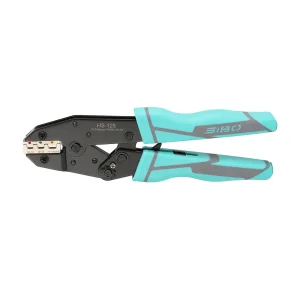
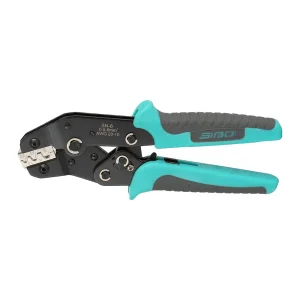
The choice is dictated strictly by terminal geometry: (1) Pre-insulated vinyl/nylon terminals require smooth, radiused cavities (such as the SO-30J and SO-125) that compress the copper barrel without tearing the outer insulation jacket. (2) Non-insulated ring/fork lugs require high-pressure indent or nesting dies (such as the SO-10 Pro) that exert point-load compaction into solid or stranded conductors. (3) Open-barrel stamped pins (Molex, JST, AMP) necessitate precision stepped dual-folding dies (such as the SN-68B or SO-04BPro) to execute simultaneous wire core roll-crimping and strain-relief insulation crimping.
What are the primary OEM/ODM private-label capabilities available for tool brands?
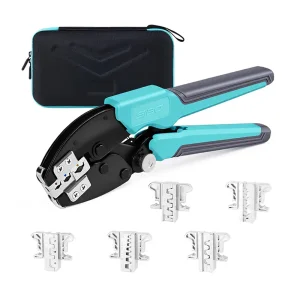
As a direct manufacturer, Yueqing Sibo Tools provides end-to-end white-label and ODM solutions: dual-color ergonomic handle injection mold customization with proprietary brand colors, precision laser etching of corporate logos on tool bodies, bespoke die cavity EDM wire profiling matching proprietary terminal models, custom Oxford zipper canvas carry bags, and certified retail packaging tailored to international shelf retail specifications.
What specific engineering metrics must be supplied before requesting quote samples?
To guarantee the correct die profile on first review, provide: (1) Terminal brand, part number, and technical drawing; (2) Wire cross-sectional area range (in mm² or AWG) along with conductor class (flexible vs. solid); (3) Target application environment (solar, automotive harness, switchboard); (4) Annual projected volume and packaging preferences. This allows our metallurgical engineers to configure pre-calibrated samples calibrated to your precise pull-out force tolerances.
Complete Tool Portfolio
Heavy-Duty Ratchet Plier & Cable Cutter Series
Explore our export-grade crimping systems, mini European-style pliers, and high-leverage cable cutters engineered for uninterrupted industrial duty.