
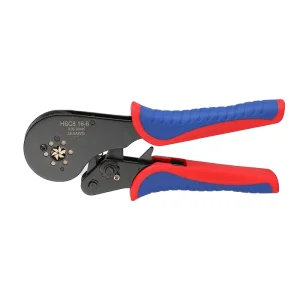
Custom Mini-Type Self-Adjustable Crimping Pliers 16-6 Crimped into a Hexagonal Shape
View SpecificationsExplore our industrial-grade ratchet crimpers, precision jaw assemblies, and heavy-duty cable tools manufactured under strict ISO9001 and CE tolerances for high-reliability field execution.
Custom Mini-Type Self-Adjustable Crimping Pliers 16-6 Crimped into a Hexagonal Shape
View Specifications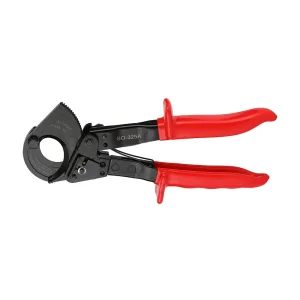
Custom Heavy-Duty Handheld Ratchet Cable Cutter FST-325A for Electricians
View Specifications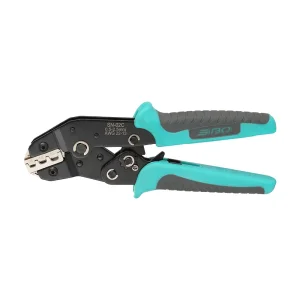
High-Quality China SN-02C Mini Crimping Pliers for Pre-Insulated Terminals
View Specifications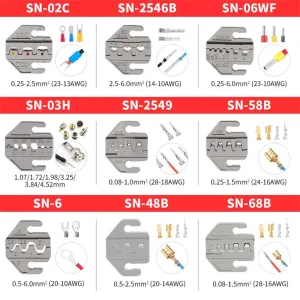
China SN Crimping Tool Pliers with 4mm Slot Jaws – Precision Die Set
View Specifications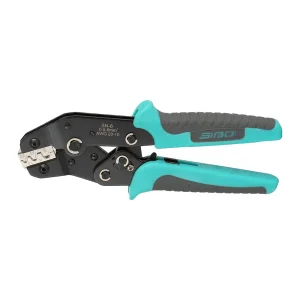
High-Quality SN-6 Wire Crimping Tools Non-Insulated Connectors Ratchet Crimper
View Specifications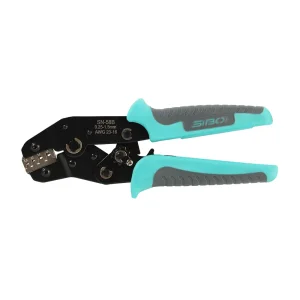
Wholesale China SN-58B Ratcheting Crimping Tool for Dupont JST MOLEX Connectors
View Specifications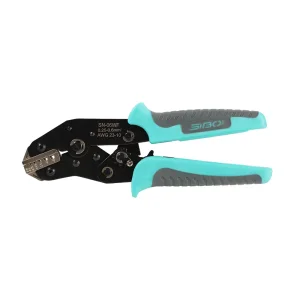
Wholesale SN-06WF Mini European Style Crimping Pliers Factory Direct
View Specifications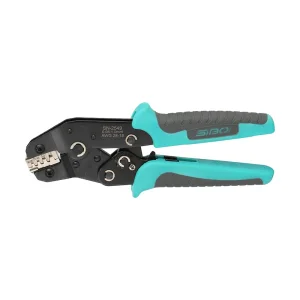
High-Quality China SN-2549 Crimping Pliers for Spring Terminals & Wiring
View SpecificationsIn modern heating, ventilation, and air conditioning (HVAC/R) engineering, the term "crimper" addresses two critical disciplines: physical sheet metal duct jointing (5-blade/3-blade manual or power indenting) and electrical control system terminations (ratcheting wire and harness crimpers). Precision execution across both mechanical and electrical nodes directly dictates energy efficiency, pressure integrity, and operational lifespan.
Global decarbonization initiatives, including the EU Energy Performance of Buildings Directive (EPBD) and ASHRAE Standard 90.1 in North America, have accelerated duct leakage testing standards (SMACNA Class 3 and European Class C/D airtightness). Substandard mechanical crimping of galvanized round pipe causes high air turbulence, static pressure drops, and substantial HVAC motor parasitic load.
Simultaneously, the electrical control panels driving variable refrigerant flow (VRF) systems, building automation systems (BAS), and compressor inverter drives demand micro-ohm resistance crimped wire terminations. Mechanical failures at sensor terminals or power harness joints introduce fire hazards and system trips under heavy vibrational operating loads.
"Field failure rates drop by 84% when installation teams switch from uncontrolled manual crimping to calibrated, full-cycle ratcheting and precision multi-blade metal indenting systems."
The manufacturing cluster centered in Yueqing (Zhejiang Province) integrates metallurgy, die tooling, precision progressive stamping, automated vacuum heat treatment, and QA verification within a 15-kilometer radius.
Unlike regional assemblers reliant on third-party die brokers, Sibo Tools maintains fully integrated die design, wire-cut Electrical Discharge Machining (EDM), CNC profile milling, and precision calibration in-house. Custom crimp cavity modifications transition from CAD/CAM blueprinting to pilot physical samples within 7 business days.
Sheet metal duct crimpers and terminal dies undergo multi-stage salt bath and vacuum quench hardening, bringing tool surfaces to an uncompromising 58–62 HRC while maintaining elastic resilience across leverage linkages. This eliminates brittle blade snapping during heavy HVAC field drop scenarios.
Yueqing's mature low-voltage electrical component ecosystem grants immediate raw material cost efficiencies. High-grade alloy strip steels, specialized pivot rivets, and molded dual-density handles are processed with high yield efficiency, providing overseas tool brands with competitive landed margins.
From sheet metal fabrication workshops to rooftop heat pumps, our precision tools ensure airtight duct seams, robust electrical harnesses, and leak-free refrigeration control systems.
5-Blade and 3-Blade sheet metal crimpers are engineered to indent the ends of round stove pipes, spiral air ducts, downspouts, and flexible duct collars. Creating uniform serrated indentations reduces fitting outer dimensions, allowing tight nested slip-joints that eliminate air escape and pass high-pressure SMACNA duct leakage verification tests.
Modern chillers and rooftop variable air volume (VAV) dampers rely on extensive micro-terminal junctions. Utilizing tools like our SN-02C and SN-06WF ensures gas-tight ferrule crimping on multi-strand flexible conductors, preventing wire loosening from constant compressor harmonic vibration and thermal cycling.
Photovoltaic-powered commercial heat pumps require dual-discipline tooling: precision SO-2546B solar connector crimping on the DC power supply side, coupled with heavy-duty FST-325A / FST-520 cable cutting for 3-phase compressor main feeder cables up to 500 MCM, ensuring high conductivity and zero thermal hotspots.
A transparent engineering matrix comparing metallurgical profiles, crimping throat geometries, and testing benchmarks for professional procurement teams.
| Tool Series / Purpose | Material Construction | Capacity / Jaw Range | Hardness Rating | Target HVAC / MEP Standard |
|---|---|---|---|---|
| Manual Sheet Metal 5-Blade Crimper | Drop-Forged 65Mn / Cr-Mo Alloy | Up to 22-Gauge Galvanized Sheet / 24-Gauge Stainless | HRC 58 – 61 | SMACNA HVAC Duct Construction Standards |
| FST-325A Ratchet Cable Cutter | High-Carbon Forged Steel Blade | Max 240mm² (Cu / Al Armored Cable) | HRC 54 – 58 | IEC 60947-1 Heavy Electrical Distribution |
| SN-02C Ratchet Terminal Crimper | High-Strength Carbon Frame + EDM Dies | 0.25 – 2.5 mm² (AWG 24-14 Pre-Insulated) | HRC 42 (Body) / 60 (Dies) | UL 486A-486B Pull-Out Retention Standards |
| Hexagonal Ferrule Plier 16-6 | Special Spring Steel + Self-Regulating Cam | 0.08 – 16 mm² (AWG 28-5 End Sleeves) | HRC 50 – 55 | DIN 46228 Part 1 & 4 Wire Sleeve Uniformity |
| SO-2546B Pro PV / Heat Pump Crimper | Cold-Rolled Alloy Frame + Polished Dies | 2.5 / 4.0 / 6.0 mm² (MC4-Compatible PV Terminals) | HRC 58 – 62 | TÜV 2 PfG 1169 / EN 50618 String Compliance |
Strategic analysis of tool ergonomics, smart electrification, private label requirements, and supply resilience across international tool brands.
Field studies indicate that mechanical contractors perform over 1,200 crimp actuations during an 8-hour shift. Modern procurement heads now mandate lightweight structural handles engineered from forged aluminum alloys and high-impact polymers, achieving up to 35% overall tool weight reduction without sacrificing frame rigidity under load.
Rather than having service technicians carry five distinct crimping frames, there is strong demand for universal magnetic or push-pin quick-change quick-indexing jaw systems. This modular approach allows rapid transitions between insulated flag connectors, open-barrel spade lugs, and bootlace ferrules within a single ergonomic tool body.
Global tool brands, wholesale distributor chains, and electrical supply houses require unified private label services. Sibo Tools provides end-to-end OEM branding: custom handle color matching, precision fiber laser marking, drop-tested retail clamshell/blister packs, and custom Oxford cloth contractor kits.
In-depth technical answers addressing sheet metal duct crimper selection, ratcheting mechanics, terminal reliability, and direct factory procurement.
Complete your catalog with verified industrial crimping solutions designed for solar photovoltaic integration, cable preparation, and industrial terminal assembly.
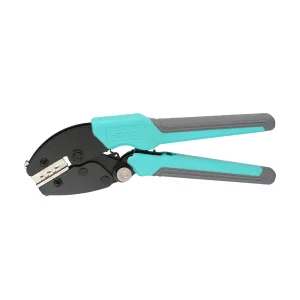
Wholesale Professional Ratchet Crimping Tool SO-2546B for Solar Connectors
View Specifications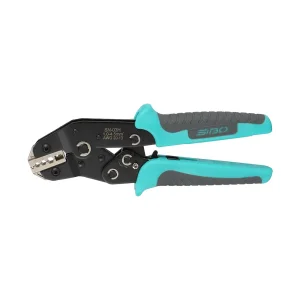
Wholesale SN-03H Mini European Style Crimping Pliers Non-Insulated Terminals
View Specifications
High-Quality Mini-Type Self-Adjustable Crimping Pliers 16-6 Hexagonal Shape Tool
View Specifications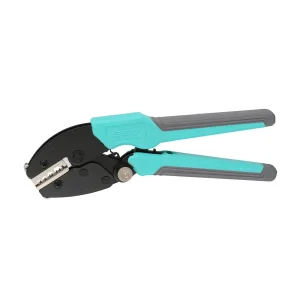
Wholesale Ratchet Crimping Tool SO-10 Pro for Non-Insulated Terminals
View Specifications
China SN-03H Mini Crimping Pliers European Style for Non-Insulated Terminals Direct
View Specifications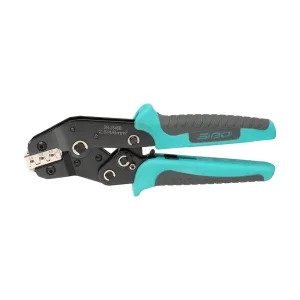
Custom High-Performance SN-2546B Mini Crimping Pliers for Solar PV Connectors
View Specifications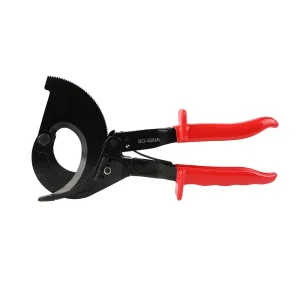
China Heavy-Duty FST-520A Ratchet Cable Cutter Premium Tool for Electricians
View Specifications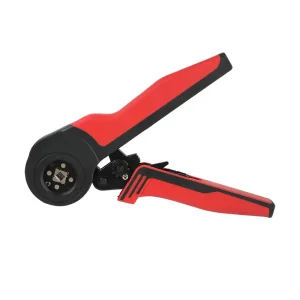
Wholesale Ultra-Compact Self-Adjusting Crimping Tool SO 16-4 for Heavy Applications
View Specifications