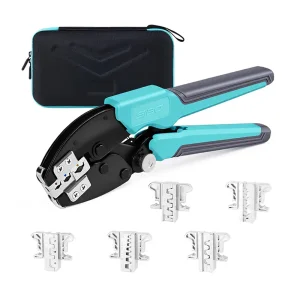
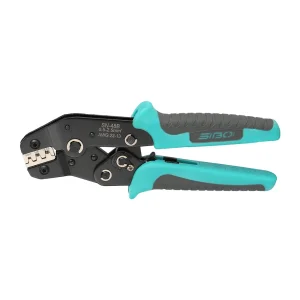
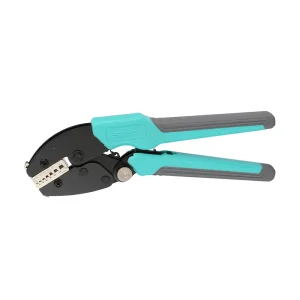
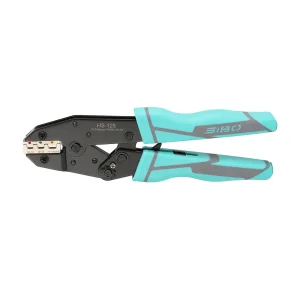
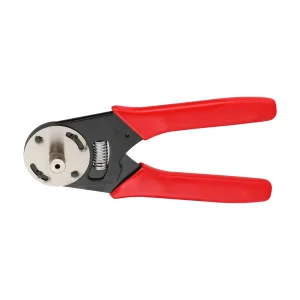
Engineered for mission-critical electrical installations across PV energy, automated harness production, switchgear panels, and high-density industrial control cabinets.
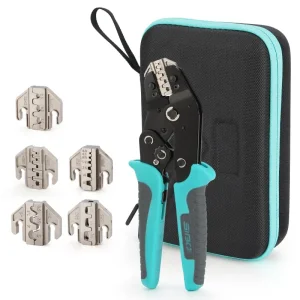
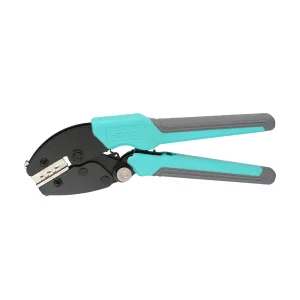
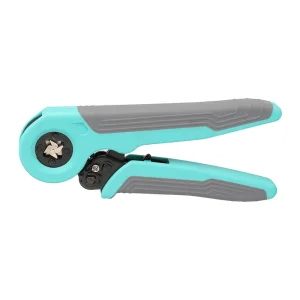
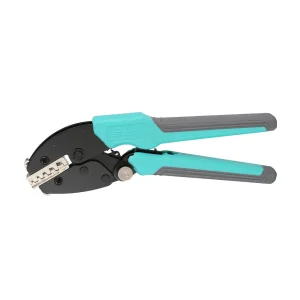
Why modern electrification demands micro-calibrated crimp profiles to prevent structural thermal degradation and catastrophic field failures.
In high-reliability industrial engineering, an electrical termination is not merely a mechanical junction—it is a functional conductor operating under complex thermal, galvanic, and physical strain. Inadequate crimping accounts for an estimated 32% of electrical panel heat buildup, intermittent control signal artifacts, and catastrophic arc-fault triggers. As the world accelerates toward widespread renewable energy integration, electric vehicle (EV) fleet infrastructure, and automated industrial plants, the requirement for precision-engineered crimping pliers has transitioned from a routine procurement item into a critical design vector.
Precision crimping relies on the phenomenon of cold-weld molecular fusion under controlled plastic deformation. When the crimper jaws close, compressive pressure must overcome the yield strength of both the wire conductor (typically electrolytic copper) and the terminal sleeve. As copper strands are compacted, microscopic surface oxide layers shatter under frictional shear, enabling pure metal-to-metal contact devoid of oxygen and atmospheric moisture. The result is a gas-tight joint that defies oxidation, thermal expansion mismatches, and mechanical vibration over decades of service life.
A rigorous analytical model for Tier-1 electrical contractors, OEM tool brands, and industrial distribution networks.
Direct tooling procurement accounts for less than 1.8% of aggregate lifecycle cabling costs. Inferior crimpers that yield inconsistent crimp heights create catastrophic downstream warranty claims, rework downtime, and site reinspections. SIBO high-tensile steel crimpers guarantee repeatable dimensional tolerances across tens of thousands of cycles.
Operator fatigue is the primary culprit behind under-crimped joints in high-volume panel assembly. SIBO's integrated ratchet mechanisms incorporate a non-bypassable mechanical interlock that strictly prohibits jaw release until full dead-center travel is achieved, eliminating operational variability from manual assembly lines.
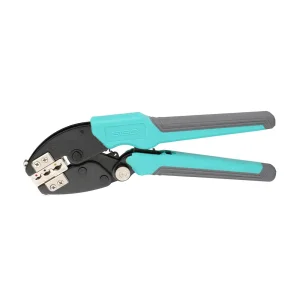
Global distributors demand SKU consolidation without sacrificing application breadth. SIBO's patented quick-change and magnetic locking jaw assemblies allow field technicians to pivot between insulated terminals, open-barrel automotive pins, solar MC4 couplers, and end ferrules using a single high-leverage ergonomic frame.
The mechanical and material engineering behind SIBO's Yueqing manufacturing ecosystem.
Precision crimping tools operate under immense stress: frame deflection of even 0.05 mm during final compression can alter crimp height sufficiently to breach international pull-out force thresholds. Yueqing Sibo Tools Manufacture Co., Ltd. addresses this mechanical demand by deploying drop-forged high-carbon alloy structural steels, precision CNC-machined pivot linkages, and wire electrical discharge machining (Wire-EDM) for die fabrication.
| Structural Component | Material Specification | Thermal / Surface Treatment | Functional Performance Role |
|---|---|---|---|
| Load-Bearing Tool Frame | AISI 4140 Chromium-Molybdenum / High-Carbon Alloy | Multi-stage Oil Quench + Temper (HRC 42–46) | Zero elastic frame deflection under maximum mechanical compression leverage. |
| Precision Crimping Dies | SKD-11 / D2 Premium Tool-Grade Die Steel | Vacuum Hardening + Sub-Zero Cryo (HRC 58–62) | Extreme wear resistance against abrasive copper strands and phosphor-bronze tabs. |
| Ratchet Pawl & Cam Assembly | 40Cr Structural High-Strength Steel | Carbonitriding & Micro-Polishing | Smooth mechanical engagement; withstands 50,000+ full-compression release cycles. |
| Ergonomic Grip Shells | Dual-Compound Thermoplastic Elastomer (PP+TPR) | High-Pressure Bi-Color Injection Molding | Chemical, oil, and hydrocarbon resistance; optimized hand force transfer curve. |
Unlike budget stamping methods that result in die cavity tapering and dimensional drift, SIBO dies undergo slow-feed Wire-EDM wire cutting followed by microscopic diamond paste polishing. This achieves an inner surface roughness below Ra 0.4 μm. As a result, terminals release smoothly post-crimp without surface galling, zinc tearing, or protective plating peel-off.
Engineered to satisfy exacting specifications across global commercial, energy, and transportation sectors.
Photovoltaic installations operate under high DC voltages (up to 1500V) and aggressive environmental conditions. The SIBO SO-2546 Pro Series features specialized MC4-type dies engineered for 2.5, 4, and 6 mm² solar cables. Precise crimp height minimizes contact resistance, preventing hotspots and fire hazards in remote PV farms.
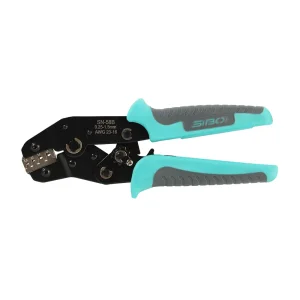
Automotive circuits are subject to continuous harmonic vibration and wide thermal swings (-40°C to +125°C). SIBO's open-barrel B-crimp tools (SO-04BPro, SO-06BPro) execute dual-stage compression: crimping the conductor core for maximum conductivity while independently strain-relieving the wire insulation sleeve.
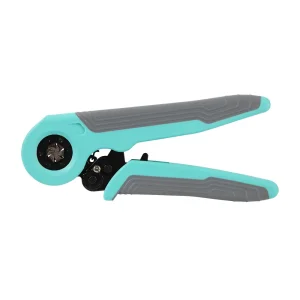
High-density PLC interfaces and terminal blocks demand ferrules crimped under DIN 46228 Part 1/4. SIBO's SO 10-4 (square) and SO 10-6 (hexagonal) self-adjusting crimpers automatically scale die aperture to the exact wire cross-section, ensuring uniform insertion profiles into spring-cage terminals.
SIBO’s multi-year investment pipeline in intelligent sensor feedback and lightweight structural composites.
Development is underway on micro-strain gauge sensors integrated into the crimper pivot core. Real-time Bluetooth telemetry will confirm whether each crimp reached optimal tonnage, logging data directly to quality assurance clouds for aerospace and medical device compliance.
To reduce technician fatigue during high-volume field operations, SIBO is engineering hybrid frames combining drop-forged alloy steel jaw housings with structural carbon-fiber handle armatures—reducing hand tool weight by up to 38% while retaining full structural rigidity.
Standardizing magnetic, ball-detent tool-less jaw interchangeability across all SIBO ratchet platforms. This initiative enables immediate field conversions across automotive, photovoltaic, telecom, and industrial wire gauges without screwdrivers or alignment jigs.
Rigorous empirical testing protocols aligned with global electrical safety and mechanical durability mandates.
| Regulatory Standard | Governing Specification | SIBO In-House Validation Protocol | Compliance Assurance Level |
|---|---|---|---|
| IEC 60352-2 | Solderless Crimped Connections: General Requirements | Mechanical tensile pull-test across 0.14–25 mm² conductors; micrographic void ratio analysis. | Zero conductor slip below calibrated threshold; 100% compliant. |
| UL 486A-486B | Wire Connectors and Soldering Lugs for Conductors | Static heating, mechanical pull-out, and current cycling under thermal stress limits. | Meets and exceeds UL North American industrial safety mandates. |
| DIN 46228 Part 1/4 | Ferrule Termination Geometry & Sleeve Compaction | Dimensional profile analysis using optical comparators; insertion force verification. | Guaranteed square and hexagonal geometry alignment. |
| RoHS 3 (EU 2015/863) | Hazardous Substances & Heavy Metal Restrictions | X-ray fluorescence (XRF) spectrometry of handle TPR polymers and metal surface treatments. | Total lead, cadmium, and hexavalent chromium content below 0.1%. |
Every production batch leaving SIBO’s Yueqing facilities undergoes random destruct-pull testing on calibrated digital force gauges, salt spray corrosion exposure testing (ASTM B117, 72 hours minimum), and optical metallographic sectioning. Our OEM/ODM clients receive full lot-traceable inspection certificates, assuring smooth market clearance across the European Union, North America, Japan, and the Australasian markets.
Comprehensive engineering clarifications for sourcing directors, quality engineers, and distributors.
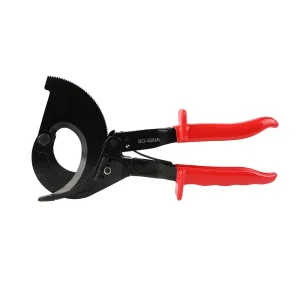
Explore our specialized range of magnetic quick-change systems, heavy-duty shear cutters, and closed-barrel solid contact crimpers.