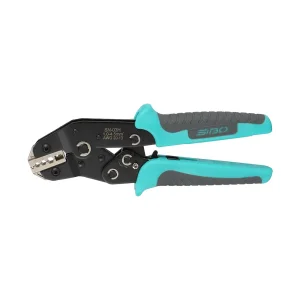
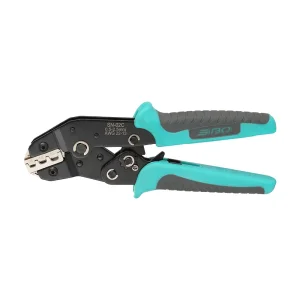
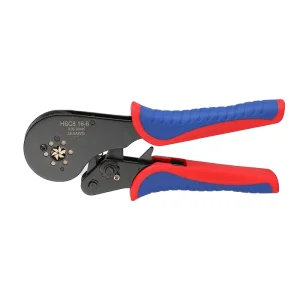
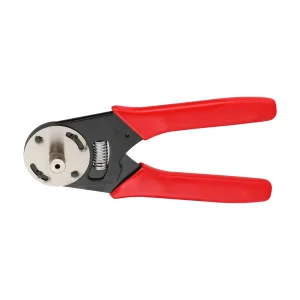
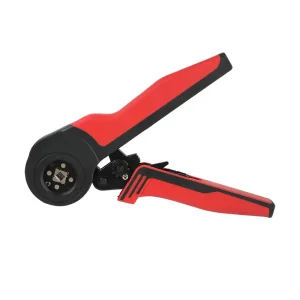
Factory-engineered ratchet crimpers, calibrated modular jaw dies, and spring terminal pliers engineered to deliver repeatable contact resistance under severe railway dynamic shock environments.
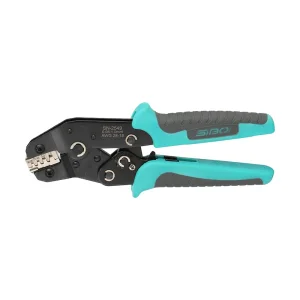
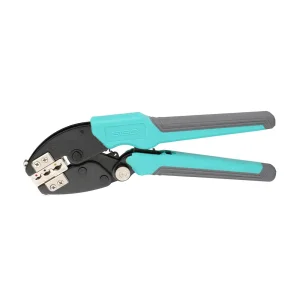
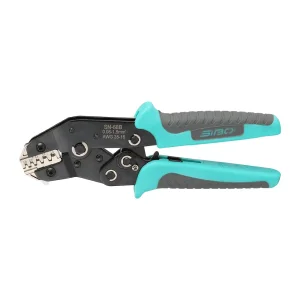
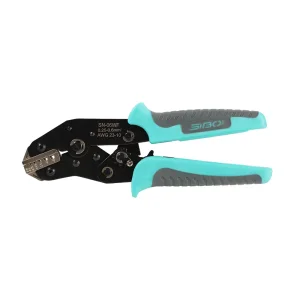
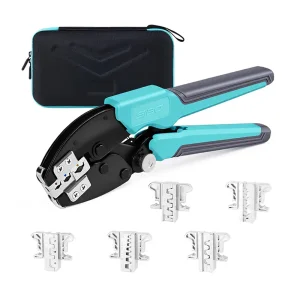
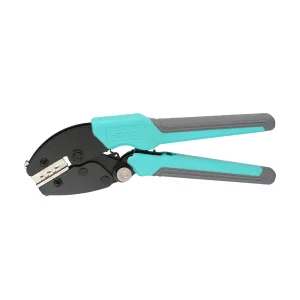
Railway electrification and modernization projects necessitate extreme mechanical integrity. Discover the stringent technical criteria driving global Tier-1 rolling stock builders and rail infrastructure authorities.
Rolling stock equipment operates under continuous mechanical excitation across three axes. Modern rolling stock procurement mandatorily references EN 50155 (IEC 60571) and IEC 61373 Category 1 Class B criteria, requiring crimped barrel connections to retain micrographic gas-tight interfaces without fretting corrosion or terminal relaxation across 30+ year service lifecycles.
Atmospheric sulfur dioxide, trackside ozone, and fluctuating condensation corrode non-gas-tight electrical joints. Enterprise rail tenders require crimpers capable of producing a conductor-to-barrel compaction ratio between 80% and 85%, eliminating micro-voids to ensure true cold welding according to IEC 60352-2 (DIN EN 60352-2) solderless connection guidelines.
Subterranean metro systems and high-speed transits demand specialized Low Smoke Zero Halogen (LSZH) fluoropolymer and cross-linked polyolefin (XLPE) cable sheathing. Railway crimping tools must accommodate thick, stiff, and abrasive insulation profiles without crushing inner insulation jackets, preventing insulation creepage and short-circuit fire propagation.
From main line electric locomotives to complex trackside interlocking cubicles, SIBO tools provide standardized crimp architectures across all vital sub-systems.
Heavy cross-section power feeder cables subjected to high heat cycles require uniform circumferential or hexagonal compression to prevent hotspot overheating and thermal runaway.
High-density relay switching cabinets demand miniature ratchet crimpers for spring and spade terminals, guaranteeing zero signal dropouts in interlocking communication buses.
Overhead line catenary monitoring stations and pantograph return-current systems rely on non-insulated ring lugs pressed with high-tonnage calibrated dies for maximum conductivity.
Passenger information systems (PIS) and onboard computing modules require clean, precision-crimped D-Sub and mini-ferrule pins using multi-contact ratchet pliers to resist electromagnetic interference (EMI).
How SIBO tools achieve repeatable micrometer-accurate crimping profiles under harsh field conditions through advanced metallurgic engineering and rigorous calibration.
Every railway-grade crimper jaw is vacuum heat-treated from alloy tool steel (AISI 4140 or premium S2 tool steel), delivering a hardened surface rating of HRC 58-62. This high-density crystal structure prevents micro-fissuring, surface spalling, and die cavity deformation across more than 50,000 full-cycle actuations.
| Base Metallurgy | High-Carbon Chrome Alloy / S2 Tool Steel |
|---|---|
| Heat Treatment | Vacuum Quenched & Double Tempered |
| Hardness Rating | HRC 58 to 62 (Jaw Working Faces) |
| Dimensional Tolerance | Wire-EDM Machined to ±0.005 mm |
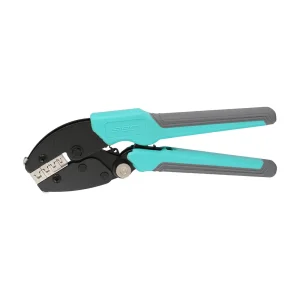
The built-in ratchet mechanism stays locked until the crimping dies bottom out completely. This completely eliminates operator dependency and under-crimping errors. Equipped with an emergency release lever, torque-adjusting dial wheel, and 28% reduced handgrip force ergonomics.
| Locking System | Full-Stroke Synchronized Ratchet Drive |
|---|---|
| Mechanical Advantage | High-Leverage Linkage (35:1 Ratio) |
| Emergency Safety | Manual Quick-Release Unlock Cam |
| Handle Ergonomics | Oil-Resistant Dual-Compound Thermoplastic |
An overview of how regional railway development programs impact wiring harness and crimping tool procurement across major continents.
Dominated by the Technical Specifications for Interoperability (TSI) and strict German/French railway standards. Focus is concentrated on cross-border high-speed rail lines requiring EN 50155 certification, RoHS 3 chemical restrictions, and standardized ferrule tools for DIN-rail modular panel builds.
Heavy-haul freight locomotives and transit authority retrofits mandate adherence to Association of American Railroads (AAR) requirements. Tools must handle large AWG conductor ranges with extreme tensile pull-out strength capable of withstanding rough track profile vibrations.
Rapid urban rail transit (URT) development and high-speed rail (HSR) networks create massive demand for high-volume, reliable crimpers. Factories prioritize durable modular dies with quick magnetic changeovers to sustain 24/7 manufacturing line cadence.
SIBO Tools guarantees full traceability, custom OEM/ODM packaging, and comprehensive mechanical laboratory testing for international rail projects.
We perform destructive cross-section cutting, resin polishing, and microscopic inspection on crimped contacts to verify symmetrical barrel curl, absence of flash fissures, and cold welding compaction rates matching customer specifications.
Every die set design is qualified with automated digital tensile pull testers following IEC 60352-2 parameters. We ensure stranded copper wires rupture prior to terminal pull-out, guaranteeing uncompromised holding strength.
We support private-label tooling programs including customized laser engraving, ergonomic two-tone handle colors, branded heavy-duty Oxford canvas cases, and application-specific modular die assortments for railway maintenance depot crews.
In-depth technical answers addressing regulatory testing, die tolerances, maintenance intervals, and contact reliability.
All our industrial tools feature a synchronized full-cycle ratchet mechanism. Once the stroke initiates, the jaws cannot be opened until the dies fully meet the mechanical stop point and reach specified crimp height. This entirely removes human error and operator fatigue from the wiring equation.
Crimped connections produced by our tools undergo rigorous 3-axis sinusoidal and broad-band random vibration tests up to 500 Hz, followed by contact resistance tests using a 4-wire micro-ohmmeter to ensure voltage drops remain well within 1.5 milliohm thresholds.
We recommend calibrating crimp height using a calibrated go/no-go pin gauge every 5,000 to 10,000 cycles, or every six months under typical manufacturing conditions. Our built-in eccentric gear wheel allows fine micro-adjustments to compensate for normal mechanical wear.
Yes. Our in-house Yueqing tooling department specializes in custom Wire-EDM profiled dies for Harting, TE Connectivity, Amphenol, and custom terminal geometries. We configure cavity dimensions directly from your contact drawings or physical conductor samples.
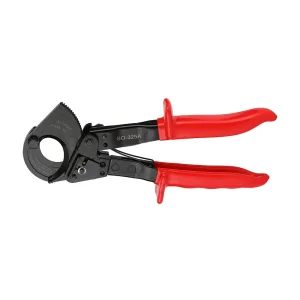
Heavy-duty cable cutters, self-adjusting ferrule crimpers, and Deutsch closed barrel solid contact crimpers engineered for locomotive maintenance facilities and harsh field environments.