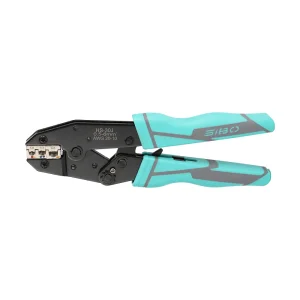
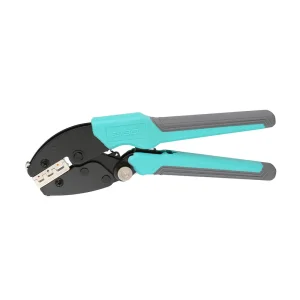
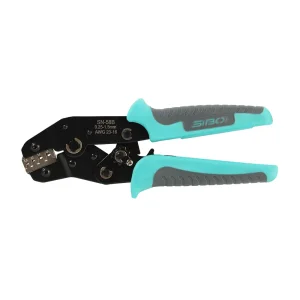
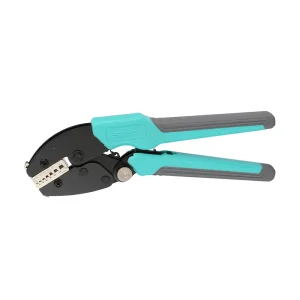
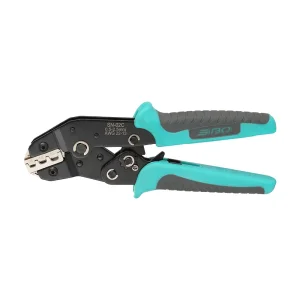
Engineered for repeatability, minimum contact resistance, and compliance with global UL 486A-B and IEC 60352-2 standards.
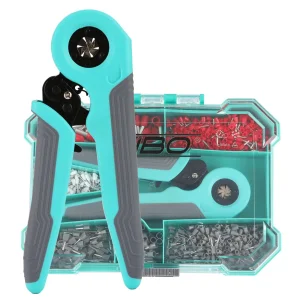
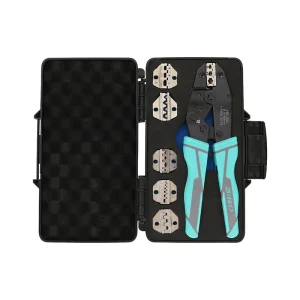
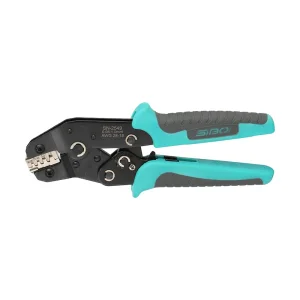
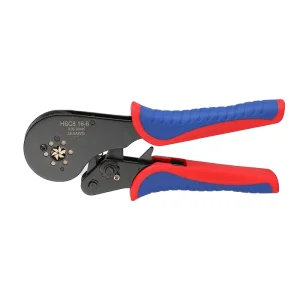
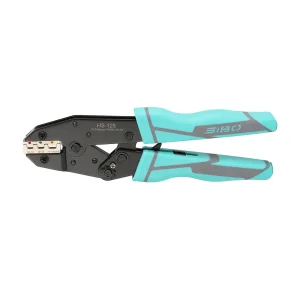
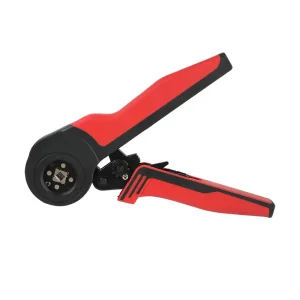
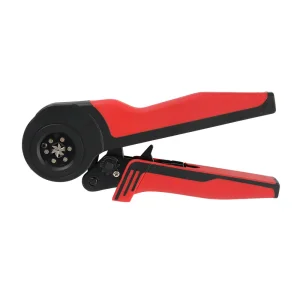
In high-reliability electrical systems, the spade terminal (also classified as a fork terminal or flanged spade lug) plays an indispensable role. Across industrial switchgear, control cabinets, commercial HVAC units, automotive wiring harnesses, and consumer electrical appliances, spade terminals provide rapid, screw-retained connectivity without the need to completely remove the terminal screw. However, the integrity of a spade termination is fundamentally dependent on the quality of the crimp tool used to assemble it.
Historically, manual electrical assembly suffered from inconsistent terminal compression, resulting in elevated electrical resistance, thermal failure points under continuous load, or premature wire pull-out under dynamic vibration. As modern installations face stricter safety mandates—such as UL 486A-B (Wire Connectors), IEC 60352-2 (Solderless Crimp Connections), and DIN EN 60947-7-1—procurement teams and system integrators are turning to precision-engineered ratcheting spade terminal crimpers that ensure complete cycle closure and controlled mechanical deformation.
A high-quality spade crimper does not simply smash metal around stranded copper. It executes a calibrated plastic deformation process known in metallurgy as cold pressure welding. Under controlled radial pressure, the air voids between individual stranded copper conductors and the internal tin-plated brass or copper barrel of the spade terminal are completely eliminated. This achieves a voidless cross-section where the copper strands mechanically interlock with the terminal wall, preventing atmospheric oxygen and corrosive elements from penetrating the joint.
In contrast, an under-crimped joint retains internal air pockets. Over time, thermal cycling—caused by alternating high-current operation and ambient cooling—induces rapid oxidation on the stranded copper surfaces. This leads to increased ohmic resistance, local hot spots, thermal runaway, and ultimately electrical fire hazard. Conversely, an over-crimped connection pinches or thins the conductor cross-section, drastically lowering mechanical tensile pull-out strength. High-precision ratcheting crimpers manufactured by leading Yueqing factories feature EDM-machined die profiles that enforce strict compliance with international conductor compression standards.
How concentrated industrial clusters in Zhejiang Province drive cost efficiency, rapid prototyping, and uncompromising mechanical tolerance.
Yueqing's electrical manufacturing corridor houses specialized hot drop forging, carbonitriding heat-treatment facilities, and vacuum quench furnaces within a 15 km radius. We source premium AISI 4140, 42CrMo, and S2 tool steels directly, keeping raw material batch variance under 1.5%.
Rather than relying on generic cast dies, our primary tooling utilizes high-precision Slow Wire Electrical Discharge Machining (WEDM) with tolerances held to ±0.005 mm. This guarantees that non-insulated spade, fork, and insulated vinyl terminal dies maintain perfect geometric concentricity.
Every professional ratcheting spade crimper is equipped with a 6-stage adjustable eccentric star wheel. This mechanical regulator allows field calibration to compensate for mechanical wear after tens of thousands of cycles, ensuring long-term audit compliance for industrial operations.
Sample crimps from every assembly shift undergo automated tensile destruction testing to verify mechanical yield strength against IEC 60352-2 pull-out curves. Micro-ohmic four-point Kelvin contact resistance tests guarantee non-heating current paths.
Spade connectors are chosen across various sectors because they combine the structural retention of ring terminals with the rapid assembly speed needed on tight production lines. Here is how our crimping solutions perform in key demanding sectors:
In high-density industrial control cabinets, terminal strips often feature closely spaced M3 or M3.5 screw barriers. Mini self-adjusting and ratchet crimpers (such as the HS-30J and SO-125) create clean, symmetrical indent crimps on insulated spade terminals (red: 0.5-1.5 mm², blue: 1.5-2.5 mm², yellow: 4.0-6.0 mm²). This prevents wire fraying and ensures quick insertion under barrier screws even in tight panel corners.
Air conditioning compressors, condenser fan relays, and heat pumps generate constant mechanical vibration and elevated ambient temperatures. Using generic hand pliers often causes conductors to shake loose over time. SIBO high-leverage ratchet crimping pliers lock the conductor inside the spade lug's serrated barrel, providing the tensile pull-out strength necessary to survive 15+ years of continuous compressor cycling.
Rolling stock and auxiliary vehicle wiring harnesses must withstand rigorous vibration spectra conforming to EN 50155 / EN 61373. Our double-crimp tooling compresses both the metallic conductor barrel and the outer nylon strain-relief sleeve simultaneously. This dual-zone mechanical crimp isolates copper strands from flex fatigue at the terminal boundary.
Marine electrical systems on boats and offshore platforms use tinned copper open-barrel and closed-barrel spade terminals to resist galvanic corrosion. SIBO's ratcheting crimp tools press the barrel with precise volumetric displacement, eliminating microscopic moisture ingress channels that cause electrolytic corrosion in high-salinity atmospheres.
A reference guide for quality inspection teams sourcing factory-direct spade crimping tools.
| Wire Gauge (AWG / mm²) | Terminal Sleeve Type | Recommended Die Profile | Min. Tensile Retention (IEC 60352-2) | Min. Tensile Retention (UL 486A) | Target Crimp Height Tolerance |
|---|---|---|---|---|---|
| 22 AWG (0.34 mm²) | Pre-Insulated Vinyl / Nylon | Oval Double-Indent (Red) | 32 N / 7.2 lbf | 36 N / 8.0 lbf | ±0.03 mm |
| 20 AWG (0.50 mm²) | Insulated / Non-Insulated | Concentric W-Indent | 50 N / 11.2 lbf | 58 N / 13.0 lbf | ±0.03 mm |
| 16 AWG (1.50 mm²) | Pre-Insulated (Blue) | Standard Oval Crimp | 150 N / 33.7 lbf | 133 N / 30.0 lbf | ±0.04 mm |
| 14 AWG (2.50 mm²) | Insulated / Open-Barrel | B-Crimp / F-Type Roll | 230 N / 51.7 lbf | 222 N / 50.0 lbf | ±0.04 mm |
| 10 AWG (6.00 mm²) | Pre-Insulated (Yellow) | High-Leverage Curved Die | 360 N / 80.9 lbf | 356 N / 80.0 lbf | ±0.05 mm |
| 8 AWG (10.00 mm²) | Heavy-Duty Non-Insulated | Hexagonal / Point Indent | 500 N / 112.4 lbf | 400 N / 90.0 lbf | ±0.06 mm |
*Note: All data verified on calibrated hydraulic tensiometers under a steady pull rate of 25 mm/min. Values represent typical minimum certification thresholds.
The manual crimper industry is undergoing continuous technological refinement. Today's industrial procurement leads are looking beyond basic tool geometries and focusing on long-term ergonomic efficiency, tool standardization, and sustainable manufacturing:
Modern ratchet mechanisms employ compound pivot linkages and eccentric levers that increase the mechanical advantage from 1:8 in traditional tools to 1:18. This reduces the manual grip force required to complete a 6.0 mm² insulated spade crimp from 400 N down to under 180 N, dramatically lowering repetitive strain injuries (RSI) in assembly plants.
Electricians and field technicians increasingly demand multi-purpose pliers. Tools like the HS-30J combination system offer interchangeable tool-steel die inserts that clip into place using push-button or magnetic locking mechanisms. Technicians can switch from insulated spade terminals to non-insulated open-barrel terminals in under 10 seconds without carrying multiple heavy frames.
Old PVC-dipped handles are susceptible to cracking, chemical breakdown, and slippage when exposed to industrial oils. SIBO tools use dual-shot injection-molded handles combining a rigid polypropylene (PP) structural core with soft, slip-resistant thermoplastic elastomer (TPE) contact zones, meeting REACH and RoHS material guidelines.
To reduce terminal sticking after high-tonnage crimping, our factory applies anti-friction black phosphating, manganese conversion coatings, or PVD hard coatings to die sets. This lowers friction, prevents micro-galling on electro-tinned spade barrels, and ensures smooth die release.
When selecting a factory partner for spade terminal crimpers in China, professional brand owners and tool distributors should evaluate manufacturers against several key manufacturing capabilities:
In-depth technical answers from SIBO's Yueqing engineering and quality assurance team.
Explore our heavy-duty ratchet crimpers, ferrule button tools, and multi-jaw sets for demanding electrical installations.