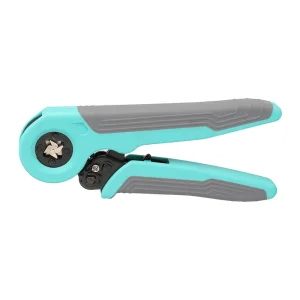
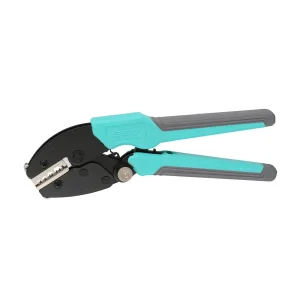
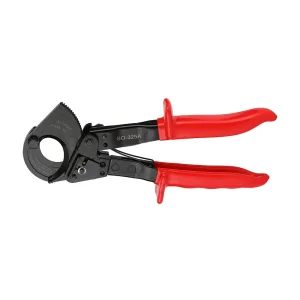
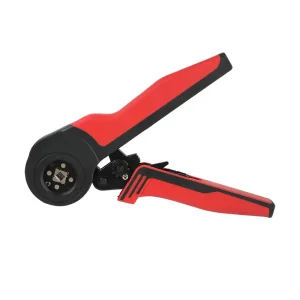
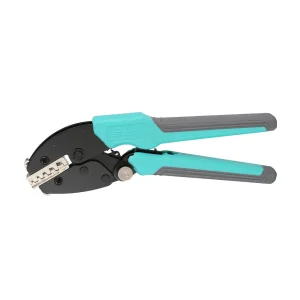
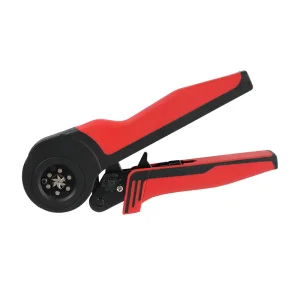
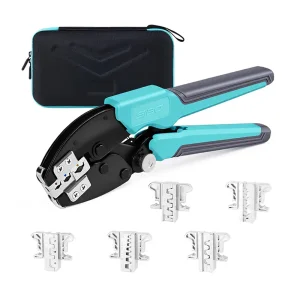
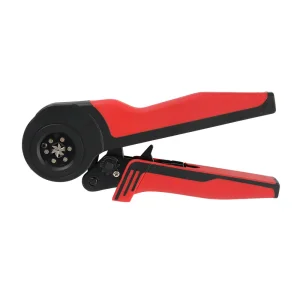
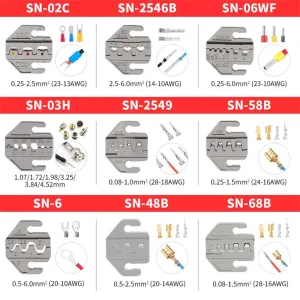
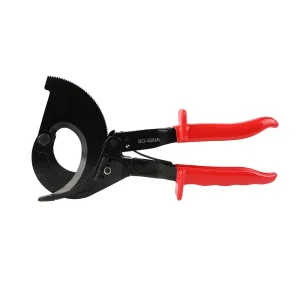
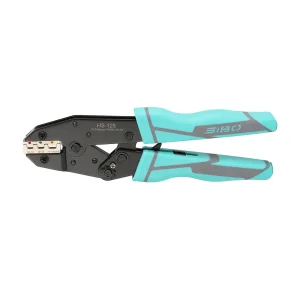
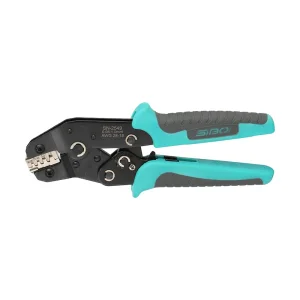
Explore our flagship precision series engineered to deliver zero-failure electrical connections, pull-out force compliance, and maximum ergonomic mechanical leverage.
A data-informed analysis of how tightening electrification regulations, renewable integration, and high-frequency automation dictate insulated crimping integrity worldwide.
Global investments in photovoltaic fields, EV charging hubs, and smart grids demand hand tools capable of micro-calibrated crimp heights. The surge in UL 486A-486B adherence means poor crimps can lead to thermal runaway, arc faults, and massive industrial warranty claims.
Industrial panel shops and harness makers process thousands of terminations per shift. Hand fatigue directly induces crimp variations. Modern top-rated crimpers employ high-leverage compound hinges, reducing gripping force by over 35% without diminishing radial compaction.
Marine systems, offshore wind nacelles, and heavy rolling stock expose insulated connectors to chemical mists, severe thermal shocks, and continuous vibration. Tooling must preserve the insulation sheath's dielectric barrier while gas-tight sealing the internal copper strands.
How concentrated supply chains, localized metal-forming technologies, and direct engineering capabilities deliver unparalleled cost-to-performance benchmarks.
Located in Yueqing, Zhejiang—the epicenter of global electrical component manufacturing—our operations source high-tensile alloy tool steel, precision CNC EDM wire-cutting, vacuum heat-treatment furnaces, and dual-compound handle injection molding within a 15-kilometer radius, slashing lead times by 60%.
Rather than relying on stamped die segments, our ratchet jaws undergo high-precision slow-wire electrical discharge machining (EDM) and hardening to HRC 42–48. This ensures that the crimping nests maintain micro-tolerances (+/-0.02mm) across high-volume production cycles.
We empower private-label tool distributors, industrial catalog brands, and electrical syndicates with rapid OEM/ODM prototyping. From tailored die teeth geometries to customized TPR ergonomic grips, two-color branding, and custom Oxford kits, turnkey sampling takes as little as 7 to 10 days.
Insulated terminal crimping spans varied environmental operating limits. Each application requires specific die contours to prevent wire extrusion, insulation damage, or high resistance.
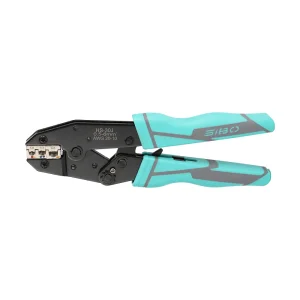
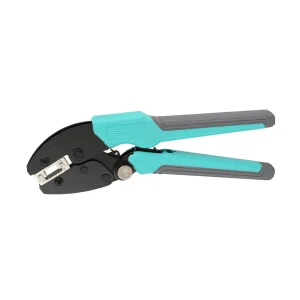
Distribution boards in automated factories feature dense DIN rail terminal blocks. The SO-30J and SO-10WF crimpers deliver uniform compressive force across PVC, nylon, and PC insulated terminals, providing gas-tight contact while safeguarding insulation sleeves from micro-cracking.
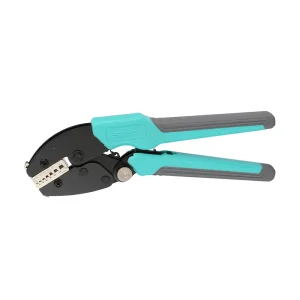
Vehicular wiring harnesses undergo intense thermal shifts and harmonic vibrations. Our B-crimp and double-crimp ratchet profiles roll open-barrel insulated nylon tabs smoothly over the cable sheath, creating dual strain-relief zones that pass strict pull-out tests.
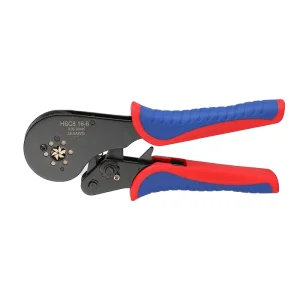
DC power distribution racks in hyperscale data centers rely on ultra-low milli-ohm drop across ring and spade connectors. The self-adjusting 16-6 and mini hex crimpers provide 360-degree radial symmetry, preventing conductor flare-out and terminal canting.
A reference technical matrix designed for supply chain managers, QA auditors, and technical buyers auditing OEM crimping hand tools.
| Evaluation Parameter | Typical Market Specification | SIBO Engineering Standard | Procurement Value Impact |
|---|---|---|---|
| Ratchet Release Mechanism | Single-stage release / Stiff latching | Full-cycle self-locking with safety release lever | Eliminates short-cycle errors; protects assembly line consistency |
| Die Steel & Hardness | Standard carbon steel (HRC 35–38) | Vacuum heat-treated alloy steel (HRC 42–48) | 3x extended wear cycle; stable die nest geometry over 50,000 cycles |
| Crimp Geometry Compliance | Visual-match only | Strict DIN EN 60352-2 / UL 486A tensile verified | Zero conductor slippage; full certification passing for end clients |
| Handle Material & Leverage | Hard single-dip PVC | Ergonomic dual-compound TPR + 35% compound leverage | Prevents repetitive strain injuries (RSI); higher operator daily yield |
| OEM / ODM Customization | High MOQ; limited logo printing | Flexible MOQs; laser engraving, die redesign, custom kits | High brand differentiation and accelerated time-to-market for private labels |
Technical answers to common questions regarding die geometry, ratchet calibration, and terminal insulation retention.
Insulated terminal crimp dies feature curved, dual-profile compression nests calibrated specifically to compress both the conductive copper barrel and the outer nylon/PVC sleeve simultaneously. Unlike non-insulated indent dies that pierce or shear the sleeve, insulated dies apply smooth, progressive pressure. This secures the wire core gas-tight while keeping the protective dielectric insulation completely crack-free.
A full-cycle ratchet ensures the crimp cycle cannot be aborted or released until the jaws reach full travel and bottom-out at the exact engineered crimp height. This mechanical lock removes operator variability and fatigue from the process, guaranteeing that every single crimped connection achieves the required tensile pull-out strength and contact density according to IEC and UL norms.
Self-adjusting tools, such as the 16-6 hexagonal or 10-4 square crimpers, use multi-jaw synchronized cam mechanisms that close radially and uniformly toward the center. Because compression is exerted equally around the entire circumference rather than via point-impact jaws, individual copper micro-strands are compacted into a dense, solid polygon without pinching or nicking the conductor.
Yes. By utilizing precision CAD design and slow-wire EDM machining in-house, our technical engineering team can tailor die cavity heights, radii, and widths to match specific OEM terminal dimensions, unusual insulation thicknesses, or specific automotive multi-conductor configurations. Tooling prototypes can be produced and verified with pull-force tests in our laboratory.
Explore our comprehensive lineup of ratcheted crimpers, modular jaw systems, and heavy-duty cable cutters designed for complete electrical toolkits.