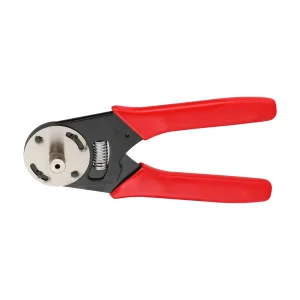
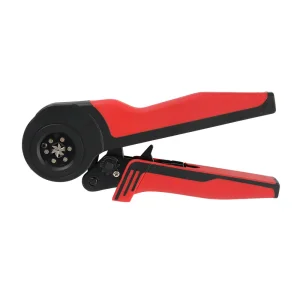
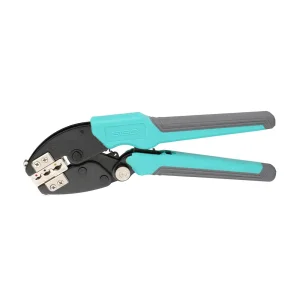
In-house forged mechanical ratchets, self-adjusting ferrule tools, and specialized quick-die crimpers built for rigorous hydrocarbon extraction, processing lines, and explosion-proof panels.
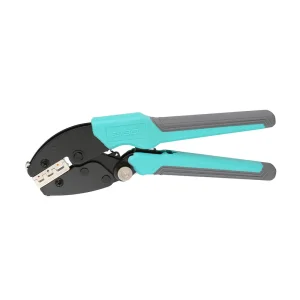
Evaluating electrical termination physics, micro-ohmic contact impedance, and metallurgical cold-flow requirements under API, IECEx, and IEEE harsh environment standards.
In modern upstream exploration, midstream pipeline transit, and downstream refining complexes, electrical failure is not merely a question of downtime; it represents catastrophic risk. The termination of medium and low-voltage electrical conductors, control telemetry loops, intrinsically safe sensor links, and heavy grounding grids requires compression mechanical joins that achieve gas-tight consolidation. As oil and gas engineering pushes into ultra-deepwater plays, high-pressure high-temperature (HPHT) reservoirs, and polar gas-gathering terminals, standard commercial-grade hand crimpers fail to provide the mechanical endurance, fatigue resistance, and microstructural uniformity mandatory for mission-critical reliability.
The physics of a heavy-duty industrial crimp involves transitioning stranded copper or aluminum conductors past their elastic limits into uniform plastic deformation without inducing tensile fracture or micro-void shear planes. Under cyclical thermal fluctuations—often spanning from -50°C in Arctic installations to +85°C in Saharan refineries—improperly compressed terminations experience galvanic oxidation, thermal relaxation, and micro-motion fretting. These conditions cause exponential spikes in contact resistance, sparking localized Joule heating that threatens ignition in Class I, Division 1 and ATEX Zone 0 environments.
Consequently, wholesale enterprise buyers, global engineering procurement and construction (EPC) conglomerates, and specialized oilfield tool distributors are shifting their technical criteria. Sourcing priorities have pivoted from general hand-tool assemblies toward systematically calibrated ratchet and hydraulic compression platforms. Tooling must guarantee exact, operator-independent crimp heights, certified die hardness (58-62 HRC), and documented pull-off tensile parameters conforming strictly to DIN EN 60352-2 and UL 486A-B directives.
Precision calibration ensures zero gas pockets within wire barrel unions, preventing the entry of corrosive H2S gas and hydrocarbon vapors into terminal junctions.
Engineered for rotary drilling platforms, shale fracturing skids, and mud-pulse telemetry systems subjected to continuous harmonic mechanical shock up to 50G.
Dies and ratchet plates treated with anti-corrosion chemical blackening, manganese phosphating, or electroless nickel coatings resisting C5-M marine exposure.
Leveraging the specialized low-voltage industrial cluster of Yueqing, China to achieve sub-micron die tolerances, automated heat treatment, and scale economies.
Yueqing Sibo Tools Manufacture Co., Ltd. sits at the geographical nexus of China's electrical apparatus and precision hardware capital. This unique industrial ecosystem grants us complete supply-chain sovereignty—from direct electric-arc furnace specialty alloy sourcing to high-precision wire-cut EDM (Electrical Discharge Machining), CNC continuous progressive stamping, and clean-atmosphere vacuum quenching. While generic sourcing hubs rely on fragmented subcontracting chains that invite metallurgical variance, our production ecosystem consolidates all critical engineering milestones in-house.
In our Industry 4.0 digital manufacturing center, every batch of tool frames is laser-cut from high-carbon alloy structural steel (AISI 4140/4340 or equivalent Cr-Mo compositions) before undergoing stress-relieving annealing. Jaws are manufactured via multi-axis CNC machining, ensuring die cavity geometries mirror CAD profiles within ±0.015mm tolerances. The ratchet leaf springs, pawls, and eccentric pressure adjustment cams undergo localized induction hardening, eliminating tooth stripping even after 50,000 continuous full-cycle actuations. Our proprietary heat-treatment process incorporates cryogenic stabilizing steps to eliminate retained austenite, thereby preventing die deformation during high-tonnage crimping cycles.
This automated rigor translates directly to supply chain resilience for international industrial partners. By coupling rapid-tooling 3D optical profilometry with modular forging dies, we reduce custom tooling turnarounds for specialized oil and gas terminal types from months to weeks. EPC clients and private-label tool conglomerates gain the agility to respond to evolving onshore shale projects, refinery revamps, and renewable-hybrid offshore platforms with zero sacrifice in structural integrity or certified performance.
Deconstructing how leading oilfield service companies (SLB, Baker Hughes, Halliburton, Saipem) qualify manual and electro-hydraulic crimper tooling.
Emergency release triggers paired with factory-locked ratchets prevent premature jaw release before terminal yield point closure.
Multi-position eccentric star wheels allow precise crimp tonnage recalibration as tooling ages, extending field service lifecycle by 300%.
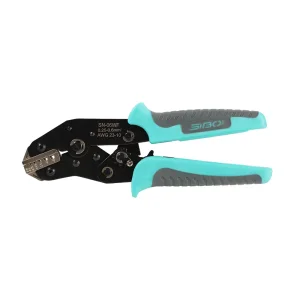
Double-hinge toggle linkages decrease manual hand-grip force by up to 45%, reducing technician musculoskeletal strain during repetitive shifts.
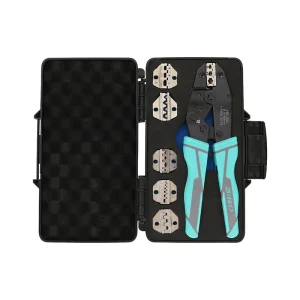
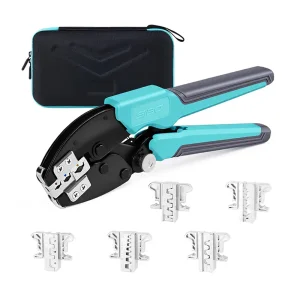
Interchangeable magnetic or pin-lock die cavities allow cross-compatibility across ferrules, D-sub, insulated, non-insulated, and MC4/solar profiles.
Operational case profiles where Yueqing Sibo crimping systems deliver uncompromising mechanical integrity across extreme climatic and industrial theaters.
Deploying heavy-gauge ratchet cutters (FST-520A) and insulated crimping tools on Floating Production Storage and Offloading (FPSO) generator rooms. Resists constant salinity, sulfur-laden fog, and high-frequency wave-sloshing vibration without crimp relaxation.
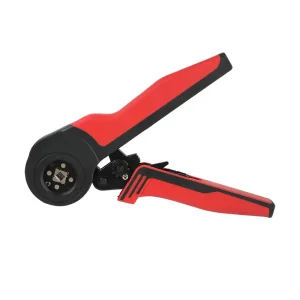
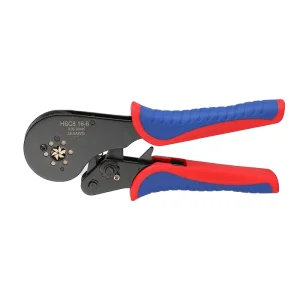
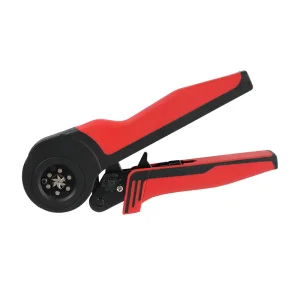
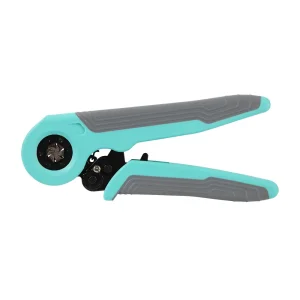
In Northern Canadian and Siberian drilling pads running downhole telemetry, cryogenic temperatures make PVC and nylon insulation brittle. Our SO-16-4 self-adjusting hex systems calibrate dynamic compression without splitting brittle cryogenic insulation sleeves.
Modernizing petrochemical cracking towers requires high-density wiring inside explosion-proof Ex-d enclosures. Our miniature self-adaptive crimpers (SO 10-6) allow single-handed operation in tight enclosures with zero conductor flare.
Direct comparative engineering parameters covering mechanism topology, operational cross-section capacities, and primary hydrocarbon terminal pairings.
| Model Series | Compression Mechanism | Wire Capacity (mm² / AWG) | Terminal Geometry Compatibility | Industrial Oilfield Application |
|---|---|---|---|---|
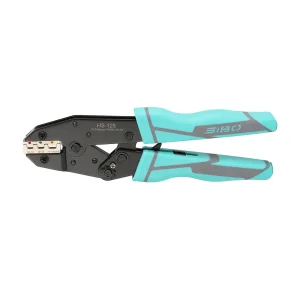
| SO-125 / SO-125 Pro | Full-Cycle Precision Ratchet | 0.5 – 6.0 mm² (AWG 20-10) | Pre-Insulated Ring, Spade, Pin | Motor control centers (MCC), field distribution boards |
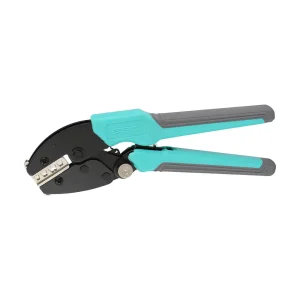
| SO 16-4 / SO 16-6 | Self-Adjusting Quadrilateral / Hex | 0.08 – 16.0 mm² (AWG 28-5) | Wire-End Ferrules / Bootlace Lugs | High-density DCS/PLC I/O wiring, instrumentation |
| HS-30J / SO-30J Pro | Heavy-Duty Toggle Multi-Cavity | 0.5 – 6.0 mm² (AWG 20-10) | Insulated Terminals & Splices | Offshore platform control consoles, alarm telemetry |
| SO-04BPro / Closed Barrel | Indentation & B-Crimp Roll | 0.5 – 2.5 mm² (AWG 20-14) | Open Barrel & D-Sub / DT Connectors | Heavy truck mud-logging units, subsea telemetry umbilical |
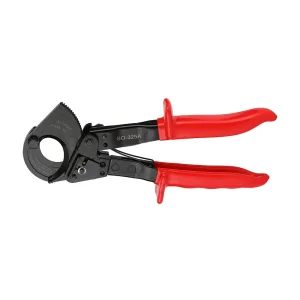
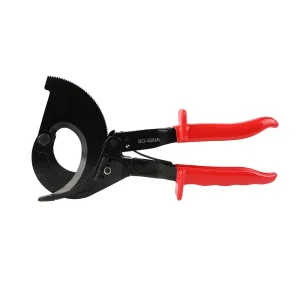
| FST-325A / FST-520A | Ratchet Mechanical Shear Blade | Up to 240 – 400 mm² Cable | Copper & Aluminum Armored Cores | Main power feeder trunklines, grounding grid cutting |
Direct engineering insights addressing gas-tight requirements, private-label manufacturing, metallurgical consistency, and international compliance.
Our crimping jaws are EDM-machined with mathematically optimized reduction angles that induce dynamic cold-welding. By eliminating internal air gaps between wire strands and terminal barrels, we guarantee micro-ohmic impedance below baseline thresholds specified by IEC 60947-7-1, preventing localized heat buildup in volatile atmospheres.
Hexagonal compression applies 360-degree equidistant pressure across the ferrule surface, producing a round profile that matches terminal block clamps. This prevents stranded core distortion and eliminates the stress concentrations common with single-indent crimpers, which can snap wires under rig vibration.
Yes. We specialize in turn-key OEM/ODM tool systems, including custom multi-jaw sets packed in heavy-duty 1680D ballistic Oxford cases. We support laser brand marking, dual-compound ergonomic handle molding in custom pantone colors, and tailored die cavity configurations for specific regional cable specs.
Tools intended for offshore and maritime deployment receive proprietary surface treatments: manganese phosphating or electro-deposited chemical blackening for carbon steel frames, and hard chrome or electroless nickel for die blocks, passing standard ASTM B117 salt-spray tests without mechanical binding.
We employ a closed-loop quality control system: each incoming steel heat lot is spectro-analyzed for alloy integrity; CNC machined dies undergo 100% optical coordinate measuring (CMM); and fully assembled tools undergo randomized 5,000-cycle life-testing followed by cross-section microscopic analysis.
All professional series tools (including SO-125 Pro, SO-30J Pro, and SO-04BPro) incorporate an eccentric cam wheel with locking gear teeth. This allows electrical calibration technicians to adjust mechanical pre-load pressure periodically, ensuring the tool remains within tight QC pull-force limits over its lifespan.
Certified mechanical ratchet cutters, specialized open-barrel aerospace/oilfield wire crimpers, and multi-jaw field electrician combination platforms.