
0.5-6.0 mm²
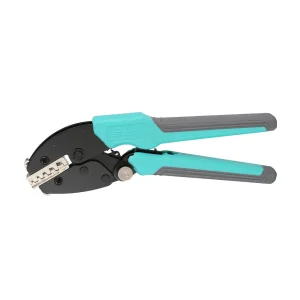
Precision-calibrated ratchet crimpers designed specifically for tropical environmental resistance, high dielectric security, and rigorous repetitive cycling across Sri Lankan industrial switchgear and solar engineering projects.
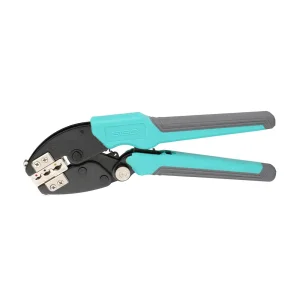
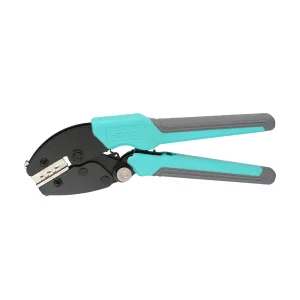
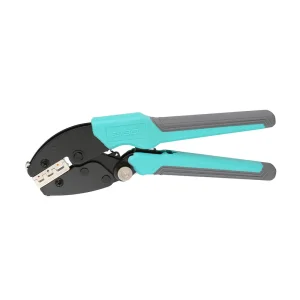
As Sri Lanka vigorously executes its Long-Term Electricity Expansion Plan (LTGEP) and establishes advanced export processing hubs under the Board of Investment (BOI), the nation's reliance on failsafe electrical interconnections has reached an unprecedented peak.
The Ceylon Electricity Board (CEB) and Lanka Electricity Company (LECO) are systematically replacing legacy distribution networks with automated ring main units (RMUs) and digitalized substations. Under-crimped terminals in these distribution boxes trigger severe hot-spots and line outages; hence, utility engineering standards are enforcing mandatory full-cycle ratcheting pliers with calibrated closure pressures.
Sri Lanka's national initiative targeting 70% renewable generation by 2030 has ignited commercial rooftop arrays, tea plantation solar projects in Nuwara Eliya, and mega-scale utility installations across the dry zones of Hambantota, Mannar, and Pooneryn. Incompetent crimping on 1000V/1500V DC strings remains the leading cause of PV arc faults and fires, generating critical demand for dedicated MC4 ratchet tooling.
With high-tech garment automation in Katunayake and Biyagama EPZs, pharmaceutical manufacturing in Mirigama, and the massive Colombo Port City civil electromechanical infrastructure, switchgear integrators require high-density terminal crimping for PLC control cabinets, motor control centers (MCC), and marine-grade shore-power connection boxes.
In high-humidity, marine-saline tropical environments like Sri Lanka, cold-crimp metallurgy dictates the lifespan of electrical infrastructure. Non-calibrated crimping results in interstitial air cavities that rapidly oxidize, driving up resistance and catastrophic thermal runaway.
| Evaluation Parameter | SIBO Industry 4.0 Ratchet Crimpers | Standard Non-Ratchet Hardware Pliers | Hydraulic / Semi-Automatic Lug Presses |
|---|---|---|---|
| Ratchet Full-Cycle Locking | Precision pawl release; cannot open until full compression depth is achieved | Absent; entirely dependent on inconsistent human operator hand-squeeze | Bypass valve regulated; prone to over-compression on wire sizes <10mm² |
| Die Profile Geometry & Steel | AISI 4140 Cr-Mo Alloy / Investment Casting; HRC 58-62 surface hardness | Stamped low-carbon steel (A3 / Q235); rapid cavity deformation | Drop-forged hardened alloy; bulky head impossible in tight switchboards |
| Electrical Contact Resistance | <0.8 mΩ cold-weld termination meeting IEC 60947-7-1 standards | >3.5 mΩ with uneven air pockets; triggers severe localized thermal spikes | <0.5 mΩ; excellent on heavy cables but unviable for small gauge controls |
| Tensile Pull-Out Strength | Exceeds DIN EN 60352-2 (e.g., >355 N for 4.0mm², >450 N for 6.0mm²) | Unpredictable failure; often 40-60% below international safety thresholds | Compliant with heavy terminal specs; unsuitable for delicate wiring |
| Tropical Saline Corrosion Resistance | Manganese phosphate anti-corrosion layer + dual-color TPR ergonomic handles | Basic electrophoretic blackening or bare metal; rust spots appear within 30 days | Painted body; high risk of seal degradation under tropical coastal humidity |
| Total Cost of Ownership (TCO) | Lowest cost-per-crimp over 50,000+ operations; zero panel rework liability | Extremely high failure liability; requires frequent panel maintenance | High initial CAPEX; requires regular calibration & hydraulic oil seals |
SIBO ratchet dies are engineered using slow-feeding wire EDM technology with geometric lead-in tapers. When crimping pre-insulated terminals or open barrel lugs, the tool forces individual copper strands into hexagonal or B-crimp shapes. This cold-welding process breaks down surface oxide films and forms a unified copper-to-copper metallographic structure impervious to tropical oxygen and moisture ingress.
Manual crimping fatigue directly correlates with assembly line errors. SIBO's compound linkage toggle system reduces operator hand force by up to 45% compared to direct-pivot pliers. Even during continuous 8-hour shift cycles in Sri Lankan assembly facilities, wire harness technicians maintain consistent crimping force from the first termination to the last.
Headquartered in Yueqing, Zhejiang—the world-renowned capital of low-voltage electrical apparatus—Yueqing Sibo Tools Manufacture Co., Ltd. combines advanced metallurgical engineering with high-capacity intelligent production lines.
Unlike trading entities, SIBO manages the entire manufacturing chain under one roof: CNC mold fabrication, progressive laser stamping, controlled-atmosphere vacuum heat treatment, automatic electroplating, and handle injection molding. This integrated setup guarantees tight dimensional repeatability batch after batch.
Every production batch undergoes strict laboratory verification, including ASTM B117 salt spray chamber testing (96 hours minimum for coastal markets), digital micro-hardness indentation testing (Rockwell C), and motorized wire pull-out tension tests conforming to UL 486A-B and IEC 60352-2 standards.
Leveraging proximity to Ningbo and Shanghai maritime hubs, SIBO delivers direct container shipments to the Port of Colombo with transit times of just 9 to 14 days. We support Sri Lankan importers, EPC contractors, and wholesale distributors in Colombo's Pettah hardware district with flexible MOQs, customized private labeling, and unified Oxford bag tool kits.
Looking for an OEM/ODM Ratchet Crimping Pliers Partner for your Brand in South Asia?
Send Inquiry Now • Get Custom Factory QuotationStandard, off-the-shelf hand tools often fall short when confronted with real-world operating environments in Sri Lanka. Here is how SIBO ratchet pliers solve critical operational bottlenecks across local projects.
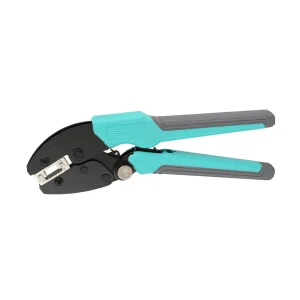
Sri Lanka's tropical climate subjects solar farms to thermal cycling, torrential monsoon downpours, and elevated ambient UV. When assembling photovoltaic string combiner boxes and inverter inputs, our SO-2546B Pro and SO-2546C Pro ensure crimp heights on MC4 stamped and formed pins are kept within strict 0.05 mm tolerances. This eliminates micro-gapping, prevents runaway connector fires, and maintains string DC efficiency.
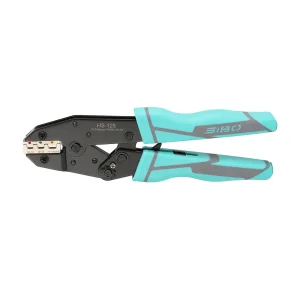
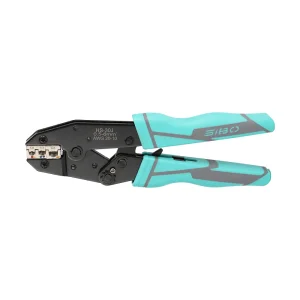
Switchboard panel fabricators serving Colombo Port City substations, high-rise buildings, and export factories face space constraints and demanding vibration criteria. Utilizing the SO-30J Pro and SO-125 Pro, technicians achieve reliable compression on red, blue, and yellow insulated terminals. The calibrated ratchet releases only after complete mechanical compression, preventing human-induced terminal looseness.
Precision textile machinery and automated tea processing grading lines rely on high-density DIN-rail terminal blocks and PLC I/O racks. Loose wire strands invite catastrophic short circuits. SIBO's SO-10WF Pro tubular ferrule crimping tools produce square or trapezoidal indentations that lock multi-strand copper cores into solid pins, ensuring seamless terminal block insertion.
Harbor cranes, tugboats, and container-handling logistics equipment are continuously exposed to ocean spray and extreme mechanical vibration. For non-insulated heavy lugs and open-barrel harness wiring, the SO-10 Pro and SO-04BPro deliver deep B-crimps and point indentations that eliminate cold solder joints, surpassing marine survey and classification standards.
Explore our complete portfolio of professional ratchet crimpers, available for immediate wholesale distribution, private-label branding, and international tender sourcing.
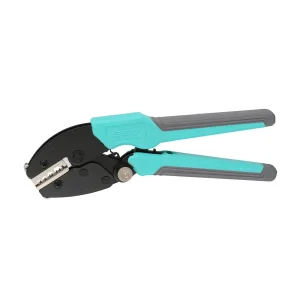
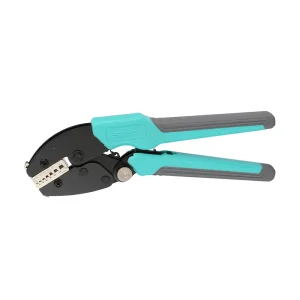
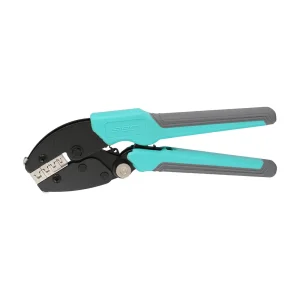
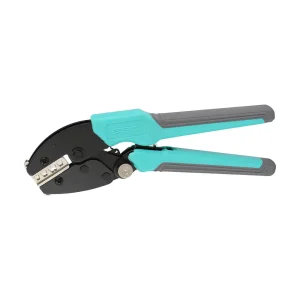
Ensuring tool reliability before containerized import requires disciplined quality control protocols. SIBO equips procurement engineers and quality assurance officers with verified metrics to avoid sub-standard market imports.
Technicians perform cross-sectional micro-polishing and chemical etching on finished crimp specimens. Under 50x magnification, an acceptable crimp shows zero interstitial voids between wire strands and the terminal barrel, confirming that complete molecular cohesion has been achieved.
Using a motorized digital pull tester, pull force is measured at a constant elongation rate of 25 mm/min until separation occurs. Under DIN EN 60352-2, a 2.5 mm² joint must sustain >230 N and 6.0 mm² must exceed >450 N. SIBO-crimped terminations consistently deliver 15-25% safety margins over these standards.
Contact resistance across the crimp interface is tested under rated electrical currents. According to IEC 60947-7-1, the millivolt drop across an authorized crimp should not exceed 3.2 mV. Lower contact resistance directly translates into cooler running temperatures inside sealed tropical panels.
When importing hand tools under Sri Lanka HS Code 8203.20.00, avoid cheap stamped mild-steel alternatives. Sub-standard tools cause jaw flex during compression, leading to under-crimped lugs that fail CEB or solar third-party site inspections. Partnering directly with Yueqing Sibo Tools provides traceable mill test certificates, RoHS and CE compliance, and comprehensive after-sales die replacement support.
Detailed answers regarding tool selection, shipping to Colombo, customs compliance, and technical die specifications for South Asian electrical contractors.
Equip your Sri Lankan distribution network, solar installation teams, or switchboard manufacturing plants with factory-direct, IEC-compliant ratchet crimping tools. Request our 2025/2026 engineering catalog, product samples, and direct wholesale pricing today.