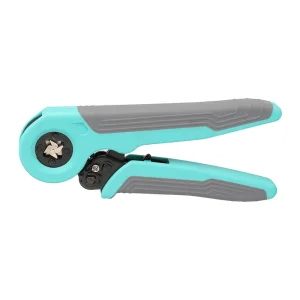
Portugal Industrial Grade
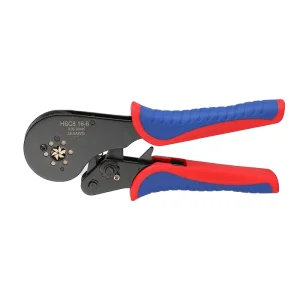
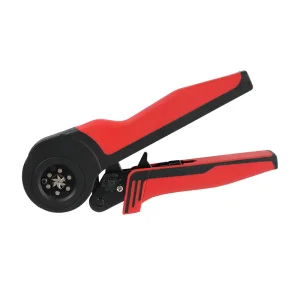
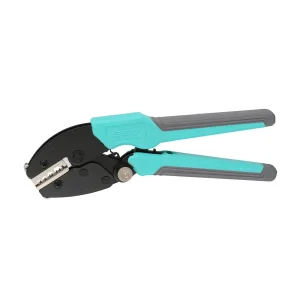
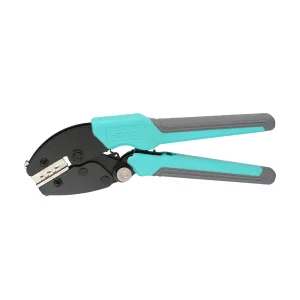
Explore our core calibrated models providing self-compensating pressure curves for end sleeves and ferrules across diverse wire cross-sections.
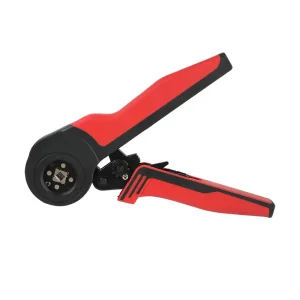
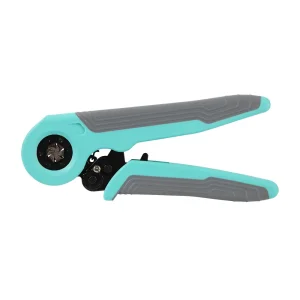
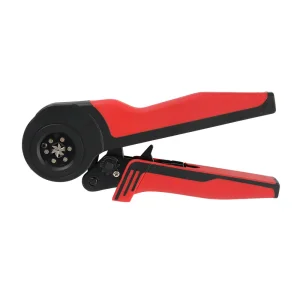
From the industrial corridors of Porto, Braga, and Aveiro to the massive photovoltaic projects across Alentejo, modern Iberian manufacturing demands tooling that minimizes thermal loss and terminal rejection.
Portugal generates well over 60% of its electrical consumption from renewable assets. Utility-scale balance-of-plant (BOP) enclosures, combiner boxes, and central inverters operating in high ambient heat require gas-tight hexagonal ferrule terminations to avoid resistive hot spots and micro-arcing over decades of operation.
With an automotive and OEM ecosystem clustered around Palmela and Setúbal, Tier-1 wiring harness suppliers face stringent quality audits. Self-adjusting crimpers eradicate human setup error by automatically regulating mechanical stroke according to multi-conductor wire gauges ranging from AWG 28 up to 5.
High salinity environments along the Portuguese Atlantic coastline induce electrolytic corrosion within substandard wire terminations. Self-adjusting crimping ensures 360-degree envelope compression that prevents corrosive salt-air ingress into stranded copper conductors.
Modern electrical engineering has outpaced manually swapped die sets. Global industrial installations are standardizing on automated four-mandrel and six-synchronous-jaw crimp systems.
Traditional fixed-die pliers rely heavily on operator discretion. An incorrect cavity choice causes incomplete compacting or strand shearing. Self-adjusting mechanisms dynamically conform to the ferrule sleeve’s exact volumetric displacement, equalizing pressure over every single copper filament irrespective of insulation thickness.
Square crimping (SO 10-4 / SO 16-4) forms flat edge contact points ideal for rectangular switchgear terminal blocks (e.g., screw-clamp rails common in European assemblies). Hexagonal crimping (SO 10-6 / SO 16-6) yields an omnidirectional round-like shape, creating zero-clearance fits in spring-cage or circular push-in terminals prevalent in high-density European PLCs.
| Series Model | Crimp Profile | Capacity (mm²) | Capacity (AWG) | Core Mechanism Material | Target Application |
|---|---|---|---|---|---|
| SO 10-4 Series | Square Form | 0.08 – 10.0 mm² | AWG 28 – 7 | Hardened Cr-V Alloy Steel | Standard Distribution Panels & HVAC |
| SO 16-4 Series | Ultra-Compact Square | 0.08 – 16.0 mm² | AWG 28 – 5 | High-Carbon Forged Steel | Heavy-Duty Switchboards & Power Feeds |
| SO 10-6 Series | Hexagonal 6-Jaw | 0.08 – 10.0 mm² | AWG 28 – 7 | Micro-alloy Precision CNC | Tight Terminal Strips & Micro-relays |
| SO 16-6 Series | Hexagonal Synchronized | 0.08 – 16.0 mm² | AWG 28 – 5 | Special Heat-Treated Tool Steel | Photovoltaic Balance of Systems & Rail |
Procuring hand tools for industrial deployment across Portugal requires adherence to rigorous EU occupational safety directives and Portuguese labor regulations.
Every tool batch is benchmarked against international tensile extraction limits. When crimped using SIBO self-adjusting jaws, wire ferrules endure maximum pull forces without sheath separation, satisfying the electrical certification mandated by Certiel inspections in Portugal.
In accordance with Portuguese Decree-Law 50/2005 (workplace equipment safety), our high-leverage toggle joint mechanisms reduce handle actuation force by 33%. Non-slip, dual-component TPR grips prevent repetitive strain injuries among shift assemblers.
We provide streamlined DDP/CIF maritime and air logistics to Portuguese commercial gateways including the Port of Leixões (Porto), Port of Lisbon, and Port of Sines. Complete EU CE declarations, REACH chemical compliance files, and RoHS certifications are supplied directly with wholesale consignments.
As Industry 4.0 digitizes Portuguese manufacturing, hand tool technology continues to evolve toward higher endurance alloys, telemetry tracking, and zero-defect manual crimping.
By vacuum-sputtering TiN coatings onto internal cam mandrels, mechanical friction during rapid closure is lowered by 40%, boosting die lifetime past 100,000 continuous crimps under corrosive environments.
Future tool configurations feature embedded NFC chips logging production run cycles and calibration intervals directly to smart factory maintenance databases used by Portuguese automotive sub-suppliers.
Replacing traditional stamped structural steel handles with structural carbon-fiber reinforced polyamides cut tool weight by up to 28% without sacrificing the 15 kN clamping force demanded by 16mm² ferrules.
Key technical and procurement insights addressing standards, custom die manufacturing, and distribution logistics across Portugal.
Explore our complete manufacturing array supporting multi-standard electrical contractors, solar PV technicians, and panel manufacturing plants across the Iberian Peninsula.