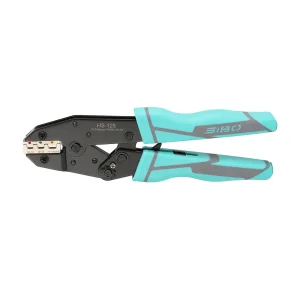
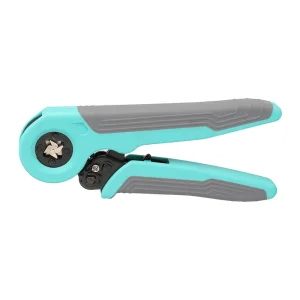
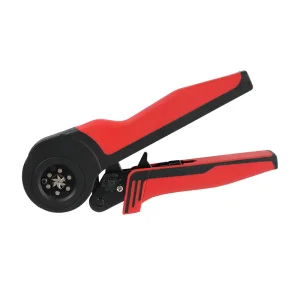
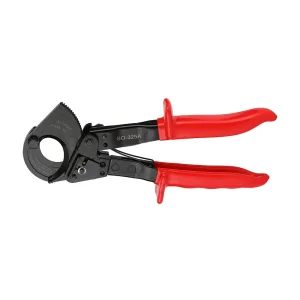
Featured cable preparation and terminal crimping apparatus manufactured to deliver optimal contact resistance, pull-out forces, and repeatable ergonomics.
Understanding the transition to Industry 4.0, Society 5.0, and strict micro-tolerance requirements in Japanese electrical manufacturing.
The manufacturing sector in Japan represents a benchmark for precision, mechanical reliability, and structural endurance. Within key industrial hubs—including the Greater Tokyo Area, Chukyo Industrial Zone (Nagoya), and Hanshin Industrial Zone (Osaka-Kobe)—the integration of automation lines, automotive harness manufacturing, and switchgear manufacturing dictates exceptional tooling performance. As Japan accelerates its energy transition under carbon neutrality objectives, photovoltaic generation infrastructure, wind power converters, and high-density industrial control panels demand manual and semi-automatic crimping equipment that completely removes human error variables.
In the Japanese domestic landscape, wiring assemblies must rigorously fulfill Japanese Industrial Standards (JIS C 2805 for copper wire crimp terminals and JIS C 2806 for non-insulated wire splices). A single sub-standard connection can disrupt high-frequency robotic cells or automated train control mechanisms. As procurement managers at Japanese Tier-1 harness makers seek cost-optimized supply chains without sacrificing metallurgical integrity, factory-direct OEM/ODM manufacturers capable of tight die tolerances (±0.02mm) and long-life mechanical ratchets represent critical strategic value.
Overcoming operational bottlenecks through verified mechanical engineering and materials control.
With an aging specialized workforce in Japan, tools that require extreme hand pressure contribute to repetitive strain and poor crimp consistency. Self-adjusting toggle mechanisms reduce operational force by up to 35%.
Global suppliers exporting control systems into Japan must adhere concurrently to IEC, UL, and JIS criteria. Calibrated ratchets ensure every crimp executes through a complete cycle before jaw release.
High-density electronic cabinets require smaller wire cross-sections (0.08mm² to 2.5mm²). Hexagonal and square crimping dies prevent strand separation and cross-sectional flash formation.
From metallurgical preparation to robotic CNC die finishing: how we fulfill Tier-1 Japanese OEM requirements.
Our manufacturing complex in Yueqing integrates comprehensive upstream and downstream precision manufacturing processes. We eliminate quality variances through end-to-end tooling management: starting from cold-heading alloy steels (such as 40Cr and 42CrMo), precision wire EDM cutting for micro die cavities, to controlled atmosphere vacuum heat treatments yielding HRC 48-52 rockwell hardness ratings. This ensures zero jaw deformation across tens of thousands of cycles under typical Japanese factory operating pressures.
Vacuum quenching and micro-alloy tempering to prevent notch sensitivity and micro-cracking during heavy shear or high compression loads.
Sub-micron slow-wire electrical discharge machining producing die cavities matched to exact open-barrel and insulated flag terminal profiles.
Multi-point pressure verification testing ensure release points align strictly with standardized terminal retention force ratings.
Laser engraving serialisation, surface anti-corrosion passivation, and independent lab compliance with environmental requirements.
Explore our complete catalog of ratchet crimpers, flag terminal tools, and precision open-barrel solutions.
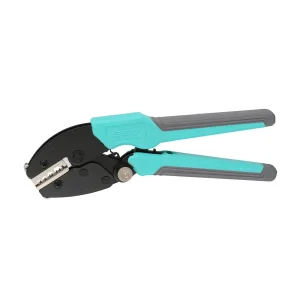
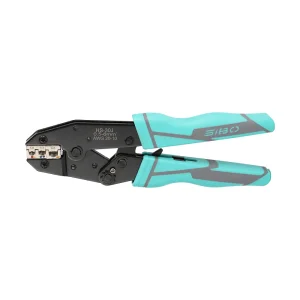
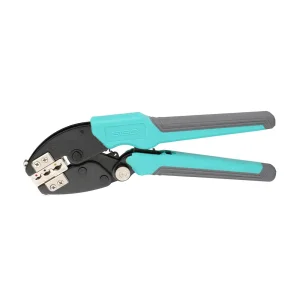
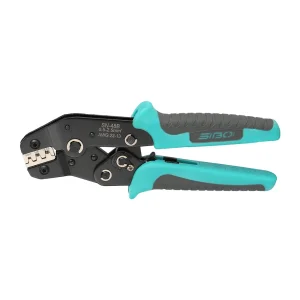
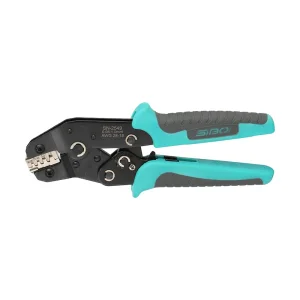
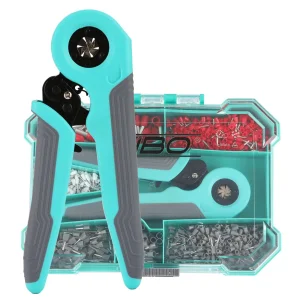
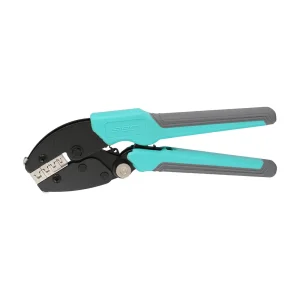
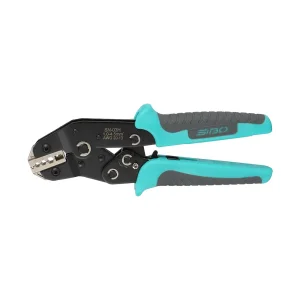
Detailed engineering guidelines on terminal geometry, die wear limits, and factory-level ODM specifications.
Connect with our technical engineering division to receive sample units, customize die configurations, or schedule an in-depth factory audit.
Send Inquiry Now