High-durability crimping pliers and ratchet cutters calibrated for Peruvian contractors, mining electrical substations, and regional distribution board fabricators.
Analyzing the macro-economic drivers shaping hardware tool procurement across Peru, from coastal maritime hubs to high-altitude extraction basins.
Peru stands at the nexus of a massive industrial transition across Latin America. As the world's second-largest copper producer and a premier exporter of silver, zinc, and tin, the nation's economic engine is fundamentally anchored in its rich mineral basins—including the Southern Mining Corridor (Las Bambas, Antapaccay, Cerro Verde) and the central/northern Andean highlands (Antamina, Toromocho, Quellaveco). However, the operational reality of modern mining has fundamentally transformed: heavy machinery, crushing plants, flotation concentrators, and conveyor networks are transitioning from mechanical drivetrains to electrified, digitally monitored switchboards and remote automation control centers. This structural pivot demands uncompromising reliability from every terminal, cable lug, and connection joint within high-vibration, high-dust environments.
Parallel to mining expansion, Peru is executing an unprecedented modernization of its maritime trade architecture, headlined by the flagship Megaport of Chancay alongside continuous upgrades at the Port of Callao. The Chancay Multipurpose Port Terminal, developed in deep partnership with Chinese maritime engineering, will establish direct trans-Pacific shipping corridors, shaving transit times between Shanghai/Ningbo and South America by over 10 to 15 days. For industrial importers, distributors in Lima's historic hardware hubs (such as Las Malvinas and Avenida Argentina), and engineering procurement contractors (EPCs), this logistics corridor completely alters the economics of hardware supply. Direct factory sourcing from China's premier electrical manufacturing hub in Yueqing, Zhejiang, is no longer constrained by protracted lead times, unlocking immediate inventory replenishment cycles.
Furthermore, Peru's national energy grid is undergoing rapid diversification under the supervision of the Ministry of Energy and Mines (MINEM) and OSINERGMIN. The arid coastal regions of Moquegua, Arequipa, and Tacna host expanding utility-scale photovoltaic (PV) developments, including the Rubí and Clemesí solar complexes. Solar farm installations require hundreds of thousands of specialized DC photovoltaic connections—specifically MC4 and MC4-EVO2 solar connector contacts crimped directly onto 4mm², 6mm², and 10mm² solar cables under intense ultraviolet exposure and temperature cycling. Substandard manual crimping introduces micro-gaps, leading to resistive heating, arc faults, and catastrophic plant outages. The modern Peruvian industrial enterprise no longer treats crimping pliers as generic commodities, but as safety-critical engineering instruments.
Navigating Peruvian regulatory codes to ensure crimped electrical terminations deliver permanent electrical continuity, mechanical shear strength, and dielectric integrity.
In the Peruvian jurisdiction, electrical installations are rigorously audited by OSINERGMIN (Organismo Supervisor de la Inversión en Energía y Minería) and must strictly comply with the Código Nacional de Electricidad (CNE - Utilización y Suministro), alongside technical guidelines ratified by INACAL (Instituto Nacional de Calidad) through Normas Técnicas Peruanas (NTP). Specifically, low-voltage control circuits and power distribution assemblies must adhere to NTP-IEC 60947 (low-voltage switchgear and controlgear) and NTP-IEC 60228 (conductors of insulated cables). When non-insulated copper cable lugs, pre-insulated vinyl/nylon terminals, or tubular end-sleeves (ferrules) are terminated, the crimping interface is the single point of failure subject to mechanical shear testing and pull-out resistance benchmarks governed by IEC 60352-2 / UL 486A-B.
At SIBO Tools, our manufacturing dies are cut via high-precision CNC wire electrical discharge machining (WEDM) to micro-tolerances (+/- 0.005mm). This ensures that every compression cycle achieves true cold-welding metallurgy without fracturing fine stranded copper conductors (such as Class 5 and Class 6 flexible wires frequently deployed in mining control cabinets). A non-ratcheting or loose tolerance crimper leaves internal air voids between strands. In the high-humidity, saline conditions of Callao or Chimbote, oxygen and moisture infiltrate these voids, triggering rapid galvanic oxidation that exponentially increases joint electrical resistance. In contrast, SIBO's ratcheting mechanism forces copper strands to deform plastically into a solid, gas-tight hexagonal or trapezoidal cross-section, permanently preventing internal oxidation.
| Peruvian Application Sector | Applicable National/Global Standard | Recommended SIBO Tool Model | Terminal & Wire Cross-Section | Key Engineering Metric |
|---|---|---|---|---|
| Andean High-Altitude Mining (Antamina, Las Bambas, Toquepala) |
CNE Utilización / IEC 60352-2 OSINERGMIN DS-024-2016-EM |
SO-16-6 & SO-10WF Pro | 0.08 – 16 mm² (AWG 28-5) End Ferrules & Heavy Lug Pins |
Zero-void gas-tight crimp; resists vibration-induced terminal looseness under seismic load. |
| Southern Solar PV Arrays (Moquegua, Arequipa, Ica) |
IEC 62852 / UL 6703 NTP 399.400 Photovoltaic Code |
SO-2546B Pro / SO-2546C Pro | 2.5 / 4.0 / 6.0 mm² MC4 & Photovoltaic Contacts |
Calibrated crimp height prevents thermal runaway under 1500V DC continuous load. |
| Chancay & Callao Maritime Logistics (Crane switchboards, ship-to-shore) |
IEC 60947-1 / NTP-IEC 60228 Marine Grade Saline Durability |
SO-30J Pro & FST-325A | 0.5 – 6.0 mm² Insulated Rings Cables up to 240 mm² Cu/Al |
Specialized electrophoretic blackened finish resists maritime salt-fog corrosion. |
| Commercial & Residential Building (Lima Metropolitana, Trujillo, Piura) |
CNE Suministro / NTP 370.301 UL 486A-B Wire Connectors |
SO 10-4 & Mini SN-03H | 0.25 – 10 mm² Pre-insulated & Bootlace Ferrules |
Ergonomic 30% force reduction lever mechanism minimizes repetitive technician strain. |
Bridging the world's epicenter of low-voltage electrical apparatus with Peru's burgeoning industrial market without intermediaries.
Unlike trading entities that outsource production, SIBO manages jaw stamping, heat treatment (HRC 42-48 tool steel), chemical blackening, and precision calibration in-house in Yueqing, Zhejiang. Every die cavity is verified on optical comparators before dispatch.
Equipped with automatic release override mechanisms and micro-adjustable pressure gears. If foreign debris obstructs the terminal in field operations, technicians can safely disengage the cycle while guaranteeing that closed crimps achieve complete metallurgical yield.
We empower regional Peruvian tool brands, electrical consortiums, and retail giants (e.g., Sodimac, Promart, Maestro distributors) with customized handle colorways (yellow/black, red/gray), laser-engraved logos, bilingual Spanish/English retail blister cards, and Oxford canvas kit bags.
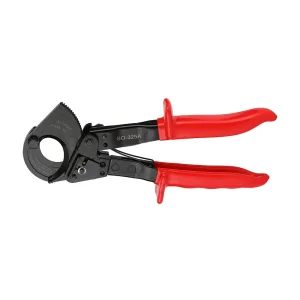
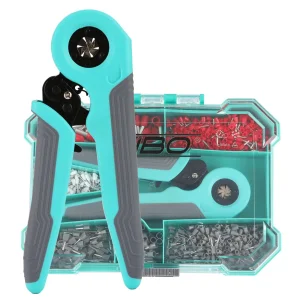
Direct manufacturer engagement eliminates 25% to 40% in multi-tiered importer markups. Furthermore, as Peruvian importers scale operations, SIBO supports mixed-SKU containerization—allowing buyers to consolidate self-adjusting ferrule crimpers, solar connector tools, heavy-duty ratchet cable cutters, and assorted terminal kits within a single ocean shipment destined for Callao or Chancay. Our engineering department reviews customer terminal samples and technical datasheets, fine-tuning die geometries prior to mass production to guarantee 100% terminal-to-tool mating.
From subterranean copper tunnels to coastal mega-cranes, discover the high-reliability use cases of SIBO hand tools.
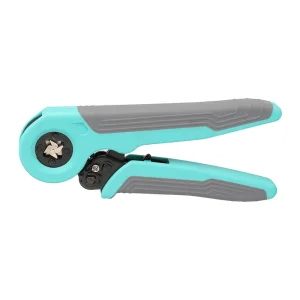
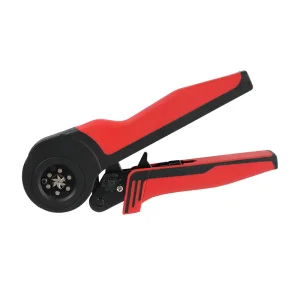
Ball mills and flotation cells in Moquegua and Junín produce massive harmonic vibrations. Control wiring terminated with SIBO hexagonal self-adjusting crimpers (SO 16-6) ensures that stranded ferrule terminations never vibrate loose inside PLC Marshalling cabinets, preventing costly unscheduled stops.
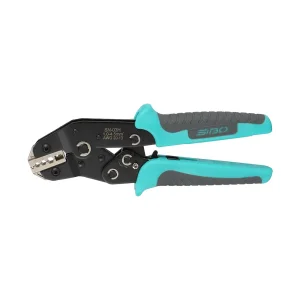
In high-irradiance solar corridors where daytime ambient temperatures soar and nighttime plunges to near freezing, the SO-2546 solar crimper ensures homogeneous deformation of solar contact pins, preventing hotspot generation and micro-arcing in 1500V string combiners.
Panel builders throughout Lima's industrial zones (Ate, Lurín, San Juan de Lurigancho) assemble primary switchgear for urban substations. SIBO's ratcheting tools for insulated terminals (SO-30J) maintain consistent compression height without cracking PVC sleeves or nicking copper strands.
Direct factory pricing, customized branding, Spanish OEM packaging, and rapid shipping coordination to Callao and Chancay ports. Partner with a dedicated crimping tool manufacturer in Yueqing, China.
Send Inquiry NowDetailed answers concerning procurement, compliance, altitude performance, and logistics for Peruvian tool distributors and electrical contractors.
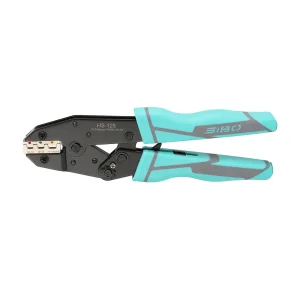
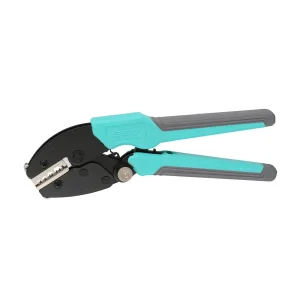
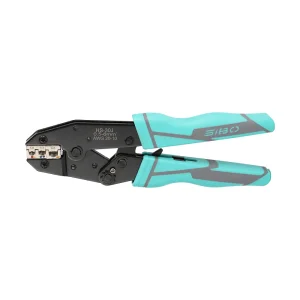
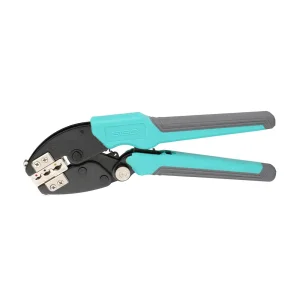
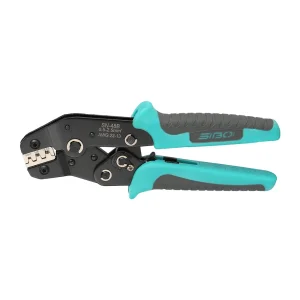
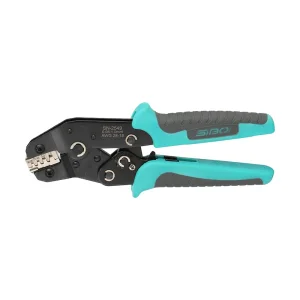
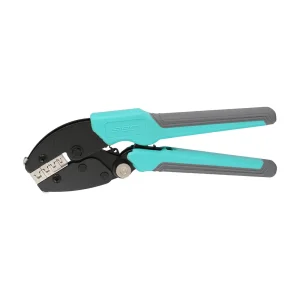
Precision ratcheting pliers for non-insulated terminals, open-barrel connectors, flag terminals, and comprehensive electrician kits.
Connect directly with our engineering sales division in Yueqing, Zhejiang, China. Obtain certified test reports, request trial sample kits, or initiate custom private-label production with direct freight booking to Callao and Chancay.
