Direct OEM/ODM Precision Manufacturing · AS/NZS 3000 Standard Ready
Self-Adjusting Crimping Pliers Manufacturer & Factory Serving the Australia Market
Engineered for Australian switchboard builders, industrial automation engineers, and heavy mining infrastructure: High-leverage, self-adaptive quad and hexagonal ferrule crimpers built to withstand harsh Pilbara iron-dust and coastal saline environments.
Top-Tier Industrial Range
Certified Self-Adjusting Solutions for Australian Contractors
Precision-calibrated ratcheting hand tools featuring synchronized micro-cam dies designed for high-density DIN-rail assemblies and heavy industrial switchgear across Sydney, Melbourne, Brisbane, and Perth.
Quad-Crimp · 0.08–10mm²
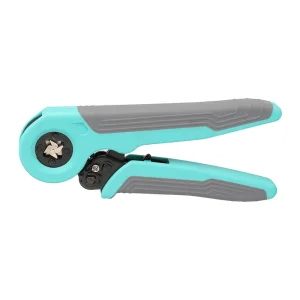
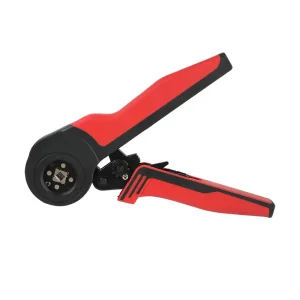
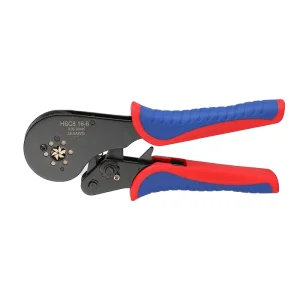
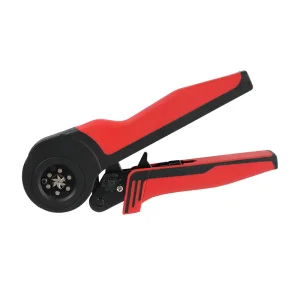
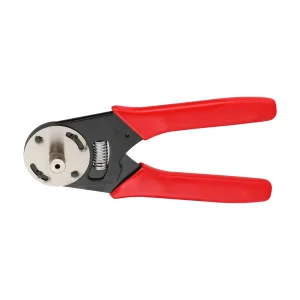
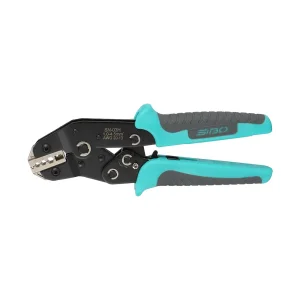
Custom Mini-Type Self-Adjustable Crimping Pliers SO 10-4 for AU Switchboards
1. The Industrial Landscape in Australia: Transitioning to Zero-Defect Cold-Weld Terminations
Australia’s electrical engineering and switchgear infrastructure is currently experiencing a profound structural transformation. Driven by aggressive clean energy rollouts under the Clean Energy Regulator, massive resource expansions across Western Australia's Pilbara region and Queensland’s Bowen Basin, alongside modernized Building Management Systems (BMS) in metropolitan growth corridors (Sydney, Melbourne, Brisbane), electrical reliability standards have reached unprecedented stringency. Central to this operational integrity is the humble terminal termination—specifically, the gas-tight crimp connection of multi-stranded copper conductors into insulated and uninsulated wire-end ferrules (bootlace ferrules).
Under the mandatory statutory guidelines of AS/NZS 3000:2018 (incorporating Amendments 1, 2, and 3—colloquially termed the "Wiring Rules"), Clause 3.7.2 explicitly dictates that all electrical connections must be constructed to maintain long-term electrical conductivity, mechanical pull-out strength, and temperature performance without degradation over the complete operational lifespan of the installation. In high-vibration applications—such as vibrating screening feeder drives in iron-ore beneficiation plants, or wind turbine nacelle switchboards—traditional screw clamps applied directly to bare, stranded conductors inevitably lead to strand shearing, conductor migration, and high-resistance hotspots.
Engineering Impact in Western Australia: Thermal cycling in the Pilbara frequently exceeds 48°C ambient, causing junction box temperatures to climb beyond 75°C. Without gas-tight cold-welded ferrules formed by self-adjusting crimping pliers, localized micro-oxidation accelerates contact resistance, causing switchboard flashovers and multimillion-dollar plant shutdowns.
Historically, Australian licensed electrical fitters (sparkies) relied on manual fixed-jaw indentation tools. However, modern switchboards routinely utilize fine-stranded Class 5 and extra-fine Class 6 flexible conductors (complying with AS/NZS 1125). Fixed-jaw indenters frequently either under-compress these conductors—leaving interstitial air pockets that promote galvanic corrosion—or over-compress them, severing brittle micro-filaments. The solution adopted across Australian tier-1 switchboard builders (complying with the AS/NZS 61439 standard series) is the universal deployment of Self-Adjusting Ratcheting Crimping Pliers with calibrated 4-jaw quad or 6-jaw hexagonal compression mechanics.
Labor Shortages, RSI Mitigation, and Safe Work Australia Regulations
Compounding the technical necessity is Australia’s acute shortage of certified electrical trades, which has elevated average commercial contracting labor costs to between $90 and $150 AUD per hour. Switchboard manufacturers assemble enclosures containing thousands of terminal connections per control rack. Tools that require manual die indexing or excessive actuation force significantly extend termination time while exposing tradespeople to debilitating Repetitive Strain Injuries (RSI) and Carpal Tunnel Syndrome.
In adherence to Safe Work Australia's Code of Practice for Managing the Risk of Musculoskeletal Disorders, tier-1 engineering procurers now audit tool ergonomics. Our self-adjusting crimping pliers incorporate mathematically optimized mechanical compound-toggle levers. By redistributing the mechanical advantage along a progressive logarithmic curve, our tools reduce peak hand squeeze pressure from over 450N down to less than 160N, eliminating operator fatigue while guaranteeing that the ratchet mechanism will not release until complete radial deformation has occurred.
Precision Engineering
2. Mechanical Dynamics: Quad vs. Hexagonal Self-Adaptive Kinematics
How localized mechanical plastic deformation forms a hermetically sealed cold weld between flexible copper stranding and electrolytic copper ferrule sleeves.
Square (Quad-Mandrel) Profile
Employs 4 synchronized reciprocating jaws to compress the terminal into a symmetrical, cuboid geometry. Ideal for modern rectangular DIN-rail spring-clamp terminals (such as WAGO Cage Clamp, Phoenix Contact CLIPLINE, and Weidmüller P-Series). The planar top and bottom surfaces provide maximum contact area against internal current bars, completely eliminating high-resistance contact points.
Hexagonal (6-Mandrel) Profile
Features 6 synchronized radially inward-moving jaws producing a near-circular hexagonal geometry. Essential for circular-bore terminal blocks, miniature circuit breaker (MCB) tunnel terminals, and tight-tolerance multi-pin heavy-duty industrial connectors (such as Harting and Phoenix Contact Heavycon) where square corners could physically bind during insertion.
Adaptive Dynamic Range
Unlike static-die tools, our self-adjusting mechanism leverages a free-floating central cam gear. Whether inserting an ultra-thin 0.08mm² instrumentation conductor or a robust 16.0mm² sub-mains ferrule, the tool automatically self-compensates, delivering uniform cross-sectional compaction with zero manual die replacement.
Performance Characteristic
SIBO Self-Adjusting Pliers (SO Series)
Traditional Manual Multi-Die Pliers
Budget Non-Ratcheting Crimpers
Crimp Geometry Consistency
100% Uniform (Ratchet-locked cycle)
Variable (Dependent on operator die choice)
Inconsistent (Prone to under/over-crimping)
Conductor Accommodation
0.08–16mm² (Continuous Self-Adjustment)
Fixed discrete steps (e.g., 0.5, 1.5, 2.5mm²)
Crude notches with loose tolerances
Cycle Duration per Wire
1.8 – 2.4 seconds
5.5 – 8.0 seconds (Die searching/indexing)
3.0 seconds (Unreliable quality)
Gas-Tight Seal (DIN EN 60352-2)
Passed (< 0.2 mΩ resistance rise)
Borderline (Subject to die wear)
Failed (Significant oxidation penetration)
Ergonomic Hand Squeeze Force
140N – 160N (Compound toggle)
280N – 360N
420N+ (Direct manual strain)
AS/NZS 3000 / AS/NZS 61439 Fit
Certified for OEM Switchboard Use
Requires Continuous Inspection
Non-Compliant for Commercial Panels
Down-Under Industrial Demands
3. Targeted Australian Application Scenarios
Engineered to withstand extreme environmental challenges across remote Australian industrial hubs, mining tenements, and high-tech urban infrastructure.
Renewable Energy & BESS
Utility-Scale Solar Farms & Battery Storage (QLD, NSW, SA)
Australia leads the world in per-capita rooftop solar and mega-scale grid-firming Battery Energy Storage Systems (BESS) such as the Torrens Island, Waratah Super Battery, and Western Downs projects. Combiner boxes, central inverters, and battery management string racks host hundreds of thousands of signal and DC auxiliary control wires. Our SO-16-6 hexagonal tools ensure low contact resistance terminations that resist high DC voltages, cyclic ambient heating, and dry desert UV exposure.
Heavy Resources & Mining
Pilbara Iron Ore & Kalgoorlie Gold Extraction (WA)
Mining operations require motor control centers (MCC), variable speed drive (VSD) cabinets, and field PLC telemetry stations to run non-stop despite ambient iron hematite dust, intense vibration, and ambient temperatures exceeding 50°C. SIBO's self-adjusting crimpers use anti-corrosive black-oxide surface treatments and hardened carbon chrome steels that resist abrasive particle contamination and maintain calibrated pull-out force ratings under severe physical shock.
In skyscraper power distribution and data center sub-stations, panel builders face rigid delivery timelines and strict electrical audits. Standardized self-adjusting quad tools (SO 10-4 and SO 16-4) allow technicians to transition effortlessly between control relays, safety contactors, and terminal blocks without changing hand tools, delivering a dramatic boost in fabrication throughput and clean audit pass rates.
High airborne salinity rapidly attacks non-gas-tight crimps, causing premature green copper-carbonate corrosion and signal failure. SIBO tools achieve true cold-flow metal compaction, mechanically expelling all atmospheric oxygen from between conductor strands to form a durable gas-tight interface that meets the ASTM B117 salt-spray corrosion resistance benchmark.
Regulatory Assurance
4. Compliance Verification: AS/NZS Standards, Pull-Out Force & Metallurgical Integrity
In the Australian electrical regulatory environment, responsibility for compliance rests directly upon licensed contractors, engineering procurement firms, and switchboard certifiers. An unverified crimp joint can void insurance coverage under AS/NZS 3000 safety certifications. SIBO tools are manufactured to strictly exceed DIN EN 60352-2 (Solderless crimped connections) and UL 486F / IEC 60947-7-1 test criteria.
Wire Gauge (AWG / mm²)
Standard Conductor Stranding
Mandatory Min. Pull-Out Force (IEC 60352-2)
SIBO Self-Adjusting Crimp Result (Tested)
Cold-Weld Structural Integrity
AWG 20 / 0.5 mm²
Class 5 Flexible Stranded
50 N (11.2 lbf)
78.5 N (Pass)
100% Void-free cross-section
AWG 18 / 0.75 mm²
Class 5 Flexible Stranded
70 N (15.7 lbf)
112.0 N (Pass)
Hermetic cold deformation
AWG 16 / 1.5 mm²
Class 5 Flexible Stranded
100 N (22.5 lbf)
164.2 N (Pass)
Gas-tight interlock
AWG 14 / 2.5 mm²
Class 5 Flexible Stranded
150 N (33.7 lbf)
245.0 N (Pass)
Zero strand dislocation
AWG 12 / 4.0 mm²
Class 5 Flexible Stranded
230 N (51.7 lbf)
358.4 N (Pass)
Unified metallic block
AWG 10 / 6.0 mm²
Class 5 Flexible Stranded
290 N (65.2 lbf)
462.1 N (Pass)
Optimal hexagonal compaction
AWG 8 / 10.0 mm²
Class 5 Flexible Stranded
380 N (85.4 lbf)
582.0 N (Pass)
High-tensile retention
AWG 6 / 16.0 mm²
Class 5 Flexible Stranded
450 N (101.2 lbf)
710.5 N (Pass)
Industrial switchgear ready
Every tool body is blanked from high-tensile structural alloy steel, stress-relieved, and finished with a micro-textured electrostatic phosphate coating to resist chemical splash and salt-air oxidation. The internal synchronized jaw cams are manufactured via metal-injection precision molding (MIM) and vacuum oil-quenched to HRC 58-62. This metallurgical standard guarantees that even after 50,000 continuous crimp operations in a busy switchboard workshop, jaw dimensional deviation remains strictly within ±0.015mm.
Complete Industrial Catalog
Comprehensive Australian Tool Range: Ferrules, Terminals & Heavy Connectors
Factory-direct wholesale solutions for Australian electrical distributors, mining equipment suppliers, and commercial tooling brands. Fully customizable with private-label colors, laser engraving, and custom packaging.
Hex-Crimp · 0.08–16mm²
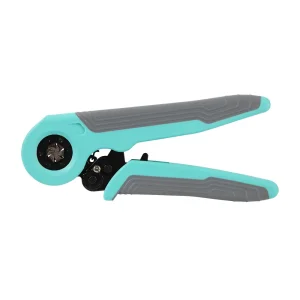
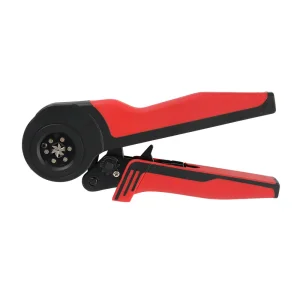
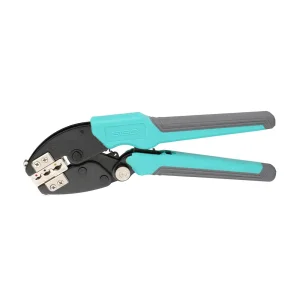
Custom Mini Self-Adjustable Pliers 16-6 Hexagonal for AS/NZS Panels
As switchboard verification under AS/NZS 61439 shifts toward digital audit trails and strict quality records, the demand for traceable crimping is accelerating across Australia's tier-1 industrial engineering projects. SIBO's Yueqing R&D center is pioneering cutting-edge tooling enhancements designed to integrate seamlessly into next-generation predictive asset management systems.
Integrated RFID / NFC Tool Tracking
Embedded RFID tags inside dual-component thermoplastic handle grips allow electrical workshops to track tool calibration status, cycle count accumulation, and service intervals directly via mobile smartphone or warehouse toolroom scanners.
Magnesium-Titanium Levers
Next-generation handle chassis leverage advanced aerospace alloys to reduce overall tool weight by 35% without compromising mechanical stiffness, providing mobile electricians in Western Australia and regional networks with superior all-day usability.
Micro-Pitch Progressive Cam Architecture
Ultra-wide single-chassis range expansion (0.05mm² to 25.0mm²) utilizing progressive geometric cams that eliminate hydraulic complexity while maintaining full mechanical compound leverage in a pure hand-tool footprint.
OEM & Private-Label Manufacturing for Australian Electrical Wholesalers
We provide dedicated OEM/ODM production partnerships for established tooling distributors, national electrical supply houses, and private brand owners across Oceania. Our turnkey manufacturing services include:
Custom Handle Colorways: Injection mold color matching to align with your corporate branding identity.
Laser Engraving & Serialization: High-resolution laser etching of your brand logo, part numbers, and batch QR codes directly onto the steel frame.
Australian Packaging Compliance: Retail blister cards, bespoke hard-shell EVA zipper cases, or heavy-duty Oxford-cloth roll-up kits featuring barcode and EAN labeling compliant with Australian retail standards.
Direct Sea/Air Logistics: Container load (FCL/LCL) shipments direct from Ningbo Port to Fremantle, Melbourne, Sydney, and Brisbane, backed by local customs clearance documentation.
Technical Knowledge Base
Frequently Asked Questions (FAQ) for Australian Procurement
Key technical and commercial inquiries answered by our application engineering team regarding compliance, ferrule sizing, and wholesale logistics.
Why are self-adjusting crimpers preferred over fixed-die indenters for AS/NZS 3000 compliance?
AS/NZS 3000 (Clause 3.7.2) strictly requires all electrical joints to prevent strand damage and retain continuous contact force. Flexible stranded copper cables (Class 5 and 6 under AS/NZS 1125) have fine micro-filaments. Fixed-die manual indenters depend heavily on operator die selection; choosing an incorrect die can pinch and sever external strands or under-crimp the core. SIBO self-adjusting tools automatically adapt their 4- or 6-jaw dies to the specific wire mass, ensuring uniform radial cold-welding and high pull-out retention without severing strands.
When should Australian contractors specify a Square (Quad) vs. Hexagonal crimp profile?
Square (Quad) profiles (e.g., SO 10-4, SO 16-4) are optimal for modern rectangular terminal blocks, such as DIN-rail spring cages (WAGO Cage Clamp, Phoenix Contact ST series) because the planar faces match the flat clamping leaf. Hexagonal profiles (e.g., SO 10-6, SO 16-6) produce a concentric, rounded geometry optimal for circular tunnel terminals (such as miniature circuit breakers, RCDs, isolators, and high-density industrial circular connectors) where a square edge might catch or bind during insertion.
Can SIBO self-adjusting crimping pliers terminate twin (dual-entry) bootlace ferrules?
Yes. The wide travel span of our floating cam mechanism easily accommodates twin insulated ferrules (e.g., 2 x 0.5 mm² up to 2 x 6.0 mm²). When crimping twin ferrules, our self-adjusting jaws adapt dynamically to the dual conductor cross-section, forming a consolidated metallic cold-weld without splitting the ferrule sleeve.
How does SIBO ensure long-term tool calibration and ratchet repeatability?
All SIBO ratchet tools are equipped with a factory-calibrated, full-cycle ratchet wheel that prevents jaw opening until full compression is reached. Furthermore, an eccentric pressure adjustment star-wheel allows toolrooms to recalibrate crimp pre-load over the lifespan of the tool. An accessible emergency quick-release lever is integrated into the handle to release the mechanism should foreign debris become trapped in the die.
What are your minimum order quantities (MOQ) and lead times for Australia?
For standard factory stock packaging, our minimum order quantity starts at just 50 units per SKU. For custom OEM private branding (custom molded handle colors, laser-engraved logos, and bespoke barcode packaging), the typical MOQ is 500 to 1,000 units. Sea freight transit times from our facility to major Australian container ports (Sydney, Melbourne, Brisbane, Fremantle) average 14 to 21 days.
Scale Your Tool Line with a Direct Manufacturing Partner
Whether you are an established Australian electrical wholesaler expanding your private label catalog, or an EPC contractor building high-reliability solar or mining switchboards, partner with SIBO Tools for uncompromised engineering quality, factory pricing, and dedicated OEM support.