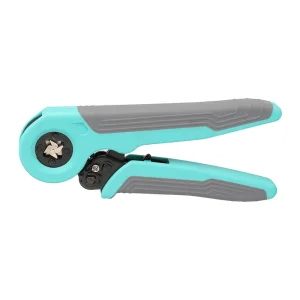
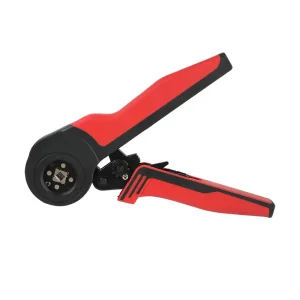
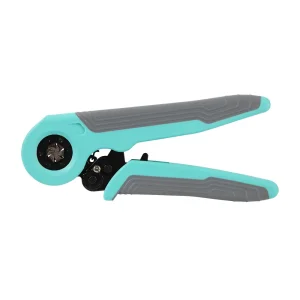
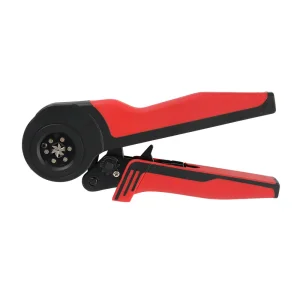
Explore our core four self-adjusting ferrule tools optimized for precision panel builders, cleanroom fabrication labs, and advanced OEM applications throughout New England.
From Cambridge biotech incubators to the Route 128 technology corridor, Massachusetts electrical engineering requires zero-defect connection systems that adhere to UL 486F, IEC 60947, and CE standards.
Greater Boston is the global epicenter for medical device prototyping and automated diagnostic equipment. Micro-gauge control circuits demand micro-ferrule crimps (AWG 28-10) with verified gas-tight characteristics to resist corrosive cleanroom reagents and maintain signal integrity in life-critical machines.
High-reliability autonomous mobile robots (AMRs), automated storage and retrieval systems (ASRS), and defense sensor arrays engineered in Waltham, Burlington, and Framingham require hexagonal crimp geometries that provide superior vibration stability without loose stranded wires causing intermittence.
With major offshore wind terminal hubs developing along Massachusetts coastlines and massive energy storage deployment in the Northeast, switchgear engineers require self-adjusting crimpers capable of handling high-duty cycles on flexible heavy-strand wiring across tight DIN-rail terminal blocks.
The global transition to electrification, smart factories (Industry 4.0), and resilient microgrids is fundamentally redefining the technical requirements for crimping hand tools.
Traditional multi-nest crimping tools rely heavily on the operator matching the correct die notch with wire gauge. In fast-paced switchgear manufacturing, an operator error of just one gauge notch leads to catastrophic contact overheating, mechanical slippage, or damaged copper strands.
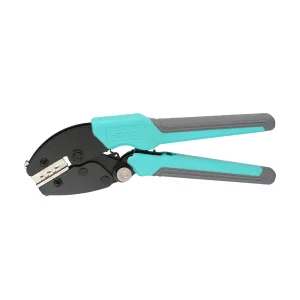
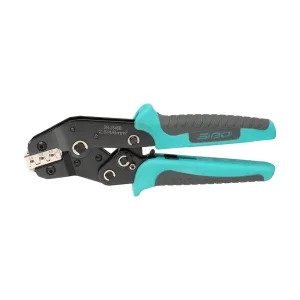
Self-adjusting mechanisms dynamically synchronize internal carbon-steel cam plates against the terminal circumference. By providing continuous mechanical feedback and self-centering compression, our crimping tools deliver uniform pull-out resistance (exceeding UL 486F pull-force benchmarks) regardless of operator experience.
This automation of mechanical precision cuts assembly cycle times by up to 35% across high-density PLC I/O cabinets and modular machine tool wiring harnesses.
Modern panel builders must balance contact surface area with geometric clearance inside push-in terminal blocks and screw clamps:
| Crimp Geometry | Primary Applications | Core Engineering Benefit |
|---|---|---|
| Square (4-Jaw) | Traditional screw-clamp terminals, standard barrier blocks | Maximizes parallel flat contact surface area; prevents rotation under screw pressure. |
| Hexagonal (6-Jaw) | Spring-loaded & push-in terminals, circular connectors | Delivers circular cross-section approximation; enables easiest insertion into compact, tight-clearance push-in cavities. |
Headquartered in Yueqing, Zhejiang—China’s epicenter for electrical hardware and low-voltage switchgear—our factory bridges direct manufacturing efficiency with North American quality expectations.
Our crimper jaws are forged from high-grade alloy carbon steel and machined through precision Wire Electrical Discharge Machining (Wire EDM) and CNC milling. Critical components undergo progressive heat treatment to HRC 44-48, ensuring minimal jaw deflection across 50,000+ crimp cycles.
We empower regional tool distributors and private-label hardware brands with custom dual-component TPR ergonomic handles, laser-engraved logos, custom calibration dials, and complete field-ready kits housed in heavy-duty Oxford storage cases with color-coded ferrule assortments.
Our unified production ecosystem encompasses stamping, machining, chemical blackening, hardening, and final ratchet calibration under a single roof. This vertical integration guarantees 15 to 25-day lead times for bulk export orders, insulating Boston buyers against localized supply chain crunches.
In addition to our flagship self-adjusting ferrule tools, we produce high-durability ratcheting crimpers, heavy-duty cable cutters, and open-barrel automotive connection systems trusted across global electrical distribution networks.
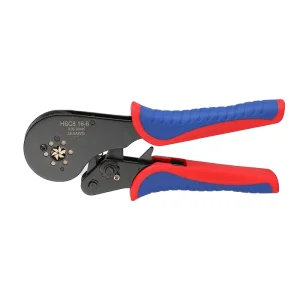
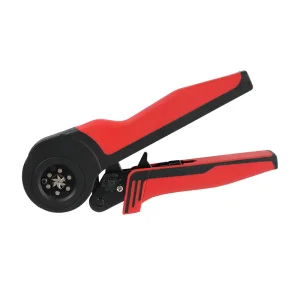
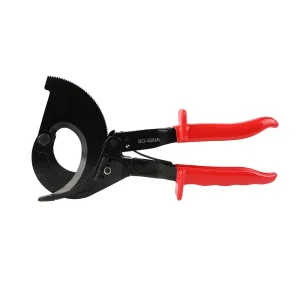
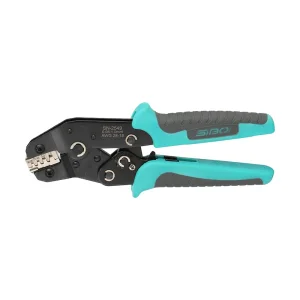
Direct technical guidance from our chief tooling engineers to assist procurement managers and quality verification teams in Boston and international markets.
Unlike fixed-die crimpers where crimp depth depends on the operator choosing the exact notch, our self-adjusting tools use an integrated cam-and-toggle linkage system. When the handles are compressed, the internal four or six jaws close concentrically. Once the contact resistance and material compaction reach the calibrated force threshold, the full-cycle ratchet automatically trips and releases. This ensures identical gas-tight density whether crimping an ultra-thin 0.08 mm² (AWG 28) signal conductor or a thick 16 mm² (AWG 5) power supply line.
Square crimping compresses ferrule sleeves into a block profile with broad, flat parallel surfaces. This is optimal for traditional rectangular screw clamps and terminal blocks where flat surface contact prevents screw slippage. Hexagonal crimping, produced by six synchronized jaws, approximates a round conductor cross-section. This profile is engineered specifically for modern spring-cage and push-in DIN-rail terminal blocks (such as WAGO, Phoenix Contact, or Weidmüller), where space is restricted and multi-directional clearance is required.
Yes. Over 65% of our factory production caters to OEM/ODM private-label distribution across North America and Europe. We provide multi-color dual-component handle molding (custom pantone matching), precision laser etching for your company logo and part numbering, customized calibration pressure dials, and turnkey retail or industrial packaging including custom thermoformed blisters, color retail boxes, or branded Oxford canvas kits.
Every production batch undergoes three tiers of verification: (1) Dimensional inspection using optical comparators to confirm jaw cavity tolerances within ±0.03 mm; (2) Mechanical tensile pull-force testing using calibrated motorized test benches to confirm compliance with UL 486F and IEC 60947-1 extraction standards; and (3) Micro-ohm electrical contact resistance testing on crimped terminations to guarantee absence of internal air pockets and oxidation vulnerability.
For standard models carrying neutral packaging, trial orders can ship within 5 to 7 business days. For customized OEM branded production runs, typical lead times range between 15 and 25 calendar days. We support flexible MOQs starting as low as 200 units for custom-branded tools, allowing New England distributors and industrial suppliers to validate regional product-market fit with minimal inventory risk.
