Engineered to deliver gas-tight electrical terminations compliant with IEC 60352-2 standards under heavy vibration and high ambient humidity in South Asian industrial corridors.
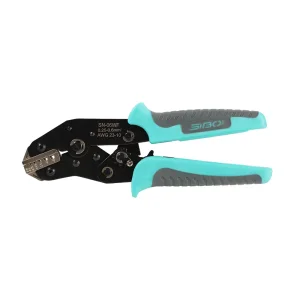
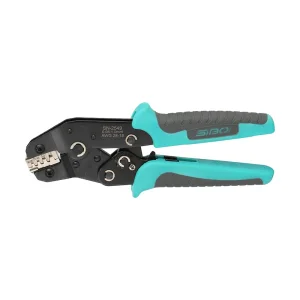
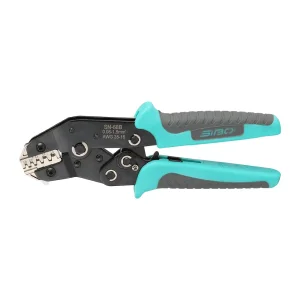
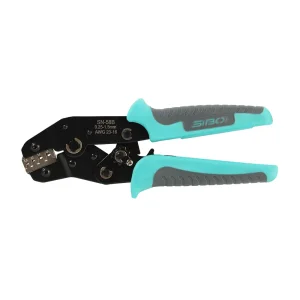
Analyzing the surging demand for professional-grade crimping hand tools within the China-Pakistan Economic Corridor (CPEC) Phase II and regional distribution networks.
Pakistan's industrial manufacturing ecosystem is experiencing a generational shift. With the expansion of the China-Pakistan Economic Corridor (CPEC) moving from primary energy generation into secondary manufacturing, Special Economic Zones (SEZs) such as Rashakai, Dhabeji, and Allama Iqbal Industrial City (Faisalabad) require standardized, reliable assembly methodologies. High-voltage power sub-stations managed by DISCOs (including LESCO, K-Electric, FESCO, and IESCO) are enforcing stringent guidelines on cable terminations to mitigate grid-level transmission losses and preventable downtime caused by loose crimping joints.
Modern electrical engineering projects in Pakistan cannot afford poor electrical terminations. The technical landscape divides into distinct industrial clusters:
Heavy electrical equipment, marine switchgear, and automotive wire harness plants (SITE, Korangi, Port Qasim). High humidity and saline atmospheric conditions require high-pressure gas-tight crimping that prevents interfacial galvanic corrosion.
Lahore, Gujranwala, and Sialkot switchgear panel builders assemble thousands of low-voltage distribution panels every week. Consistent crimp height calibration eliminates resistance buildup and hotspot fires under extreme 48°C summer thermal loads.
Across Sindh and Southern Punjab, decentralized solar installations and commercial net-metering facilities require MC4 and solar connector crimpers engineered to survive intense UV exposure and high-torque field handling.
How Yueqing Sibo Tools eliminates terminal failure modes through verified metallurgical integrity, calibrated ratchet geometry, and international regulatory alignment.
Global original equipment manufacturers (OEMs) and major engineering contractors operating within Pakistan follow strict procurement mandates. Hand-operated classic crimping tools must satisfy continuous duty metrics without introducing variable human operator error. When crimping pre-insulated terminals, non-insulated lugs, or bootlace ferrules, a failed connection creates resistance spikes, thermal runaway, and catastrophic electrical arc fires.
| Wire Gauge (AWG / mm²) | Standard Tensile Pull Force Min. (N) | SIBO Factory Calibration Yield (N) | Electrical Contact Resistance Test |
|---|---|---|---|
| 22 AWG / 0.5 mm² | 50 N | > 78 N | Passed (< 0.15 mΩ) |
| 16 AWG / 1.5 mm² | 150 N | > 210 N | Passed (< 0.18 mΩ) |
| 10 AWG / 6.0 mm² | 360 N | > 490 N | Passed (< 0.22 mΩ) |
| 6 AWG / 16.0 mm² | 600 N | > 820 N | Passed (< 0.25 mΩ) |
Our classic crimping pliers use precision wire-cut electrical discharge machining (WEDM) die cavities. Unlike cheaper cast or sintered dies that display micro-porosity and dimensional drift, our dies are CNC-machined from forged chromium-vanadium (Cr-V) or high-carbon steel alloys, vacuum-hardened up to HRC 62. This prevents dimensional widening across tens of thousands of cycles.
Understanding mechanical deformation, surface oxide elimination, and the biomechanics behind full-cycle ratcheting systems.
The fundamental goal of electrical crimping is achieving controlled plastic deformation of both terminal barrel and stranded conductor. When compressed correctly, the individual copper wire strands deform into a void-free composite matrix. This mechanical cold-weld breaks the natural insulation layer of copper oxide, allowing true metal-to-metal contact.
Three common failure modes degrade electrical terminations across local facilities: under-crimping, over-crimping, and asymmetric terminal displacement.
Occurs when operators release manual handles early due to physical fatigue. SIBO's integrated full-cycle ratchet will not disengage until the die jaws touch complete mechanical bottoming, guaranteeing 100% crimp height consistency.
Karachi's coastal humidity rapidly oxidizes air gaps left within imperfect crimps. SIBO's precision die profiles apply multi-directional radial force, reducing internal void ratios below 5% to seal out oxygen and corrosive industrial gases.
Repetitive strain injury (RSI) lowers line assembly quality over 8-hour factory shifts. Our classic pliers use compound mechanical linkages that lower the manual squeeze force by 35% without reducing jaw compression energy.
A strategic overview of metallurgical, ergonomic, and digital quality-assurance developments guiding tool production from 2025 to 2030.
As the international electrical hardware market shifts toward smart automation and zero-defect initiatives, classic hand tools are incorporating specialized metallurgy, modular dies, and digital quality monitoring. Yueqing Sibo Tools invests over 8% of annual revenue into product engineering and material science.
We provide tailor-made handle color palettes, high-precision laser brand engraving, customized packaging options, and specialized die configurations for electrical wholesalers and utility contractors.
Comprehensive customs coordination, China-Pakistan FTA Phase II tariff benefits, and multimodal freight delivery schedules.
Direct factory sourcing requires smooth import-export logistics. Yueqing Sibo Tools provides dedicated operational support for trading houses, distributors, and EPC companies across Pakistan, removing traditional international supply chain friction.
Our tools are categorized under HS Code 8203.2000 (Pliers, pincers, tweezers, and similar tools). Under the China-Pakistan Free Trade Agreement (CPFTA Phase II), buyers can access zero or significantly reduced custom duties upon presenting a compliant Certificate of Origin (Form FTA) issued by China Customs. We provide all authenticated commercial invoices, packing lists, and bill of ladings aligned with Pakistan Single Window (PSW) declarations.
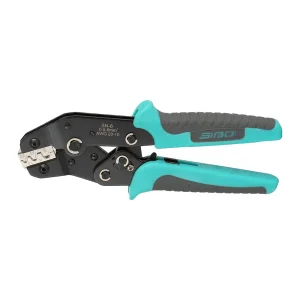
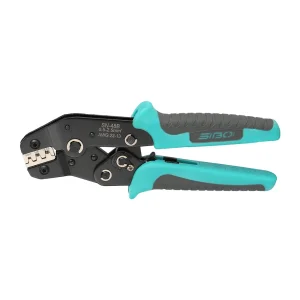
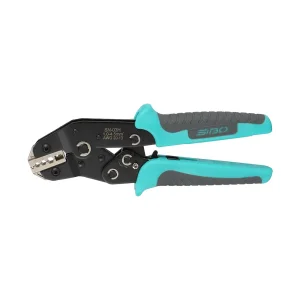
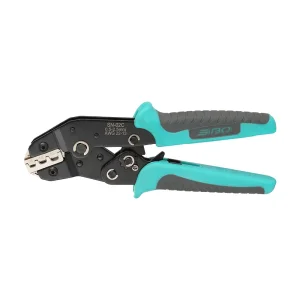
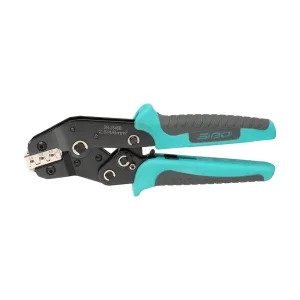
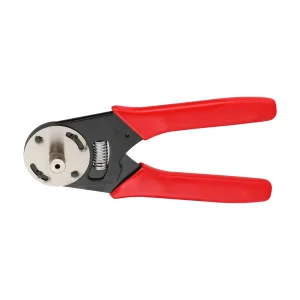
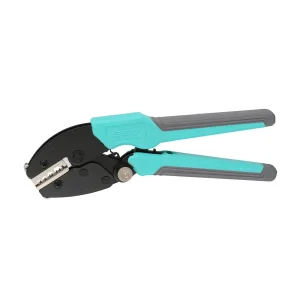
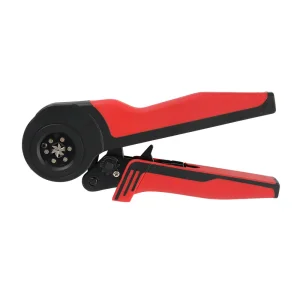
Explore our complete inventory of ratchet crimping pliers, self-adjusting ferrule tools, and specialized contact crimpers engineered for export to the Pakistan market.
Comprehensive engineering, regulatory, and logistics answers for wholesale buyers, utility engineers, and hardware brand distributors.
Non-ratcheting pliers rely entirely on manual hand strength. During high-volume industrial switchgear assembly, operator fatigue leads to incomplete crimp cycles. Incomplete crimping leaves microscopic internal air gaps among copper wire strands. In Pakistan's industrial regions, high humidity combined with ambient temperatures above 45°C accelerates internal oxidation inside these loose joints. This causes sharp spikes in electrical contact resistance (> 2 mΩ), resulting in thermal expansion, melted insulation, and eventual panel fires. SIBO's full-cycle ratchet ensures jaws complete 100% of their programmed travel stroke before releasing, delivering uniform, inspection-ready cold-weld terminations every cycle.
Under the China-Pakistan Free Trade Agreement (CPFTA Phase II), hand tools classified under HS Code 8203.2000 enjoy preferential duty rates compared to standard MFN (Most Favored Nation) tariffs. When Yueqing Sibo Tools issues an official Certificate of Origin (Form FTA) validated by China Customs, authorized importers can clear shipments at Karachi, Port Qasim, or inland dry ports with significant customs duty exemptions, lowering your landed unit cost.
Our crimping dies are forged from premium chromium-vanadium (Cr-V) and high-carbon alloy steels. Die geometry is cut via high-precision Slow-Feeding Wire Electrical Discharge Machining (WEDM) with tolerances held to ±0.005 mm. The dies undergo vacuum oil-quenching heat treatment, achieving a surface hardness of HRC 58 to 62. This prevents die wear, burring, or wall expansion even when crimping thick-walled copper lugs across more than 50,000 cycles.
Yes. As an in-house manufacturer, we provide end-to-end OEM and ODM support for international hardware brands and local Pakistani distributors. This includes dual-color customized TPR handle moldings, high-contrast fiber laser logo marking on tool bodies, bespoke die configurations for uncommon terminals, and localized retail packaging (blister cards, color boxes, or heavy-duty Oxford tool pouches).
Standard wholesale orders for catalog tools typically require a manufacturing lead time of 15 to 25 calendar days, depending on batch volume. Ocean freight from Ningbo or Shanghai to Karachi Port takes roughly 16 to 22 transit days. For bonded inland transit to Lahore or Faisalabad dry ports, allow an additional 3 to 5 business days. Urgent sample runs and custom die prototypes can be shipped via air courier within 4 to 6 business days.
Partner directly with Yueqing Sibo Tools Manufacture Co., Ltd. Eliminate middleman markups, secure CPFTA tariff reductions, and provide electrical contractors across Pakistan with dependable, calibrated hand tools built for demanding industrial environments.
Send Inquiry Now / Request Wholesale Quotation