Engineered for high-frequency signal integrity, extreme vibrational resistance, and microscopic crimp height control across mission-critical avionics wire looms.
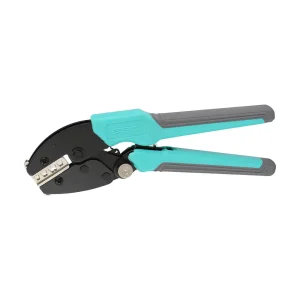
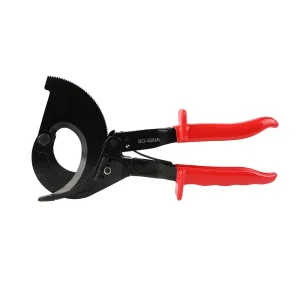
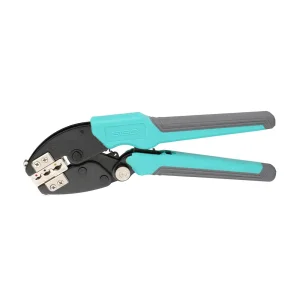
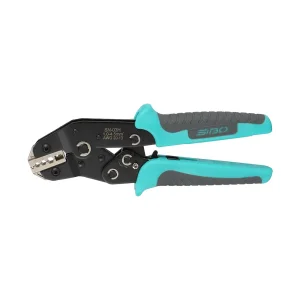
Analyzing structural shifts in avionic harness termination: Why micro-pitch crimping integrity dictates the operational envelope of autonomous flight hardware.
The unmanned aerial vehicle (UAV) sector is undergoing rapid industrial consolidation. As low-altitude commercial logistics, autonomous agricultural spraying, defense surveillance platforms, and eVTOL (electric vertical take-off and landing) aircraft expand across complex operating environments, standard electrical crimpers are no longer sufficient. Precision wire harnesses represent the central nervous system of any autonomous craft; a microscopic failure in electrical resistance or mechanical tensile strength at a flight controller pinout inevitably translates into uncommanded flight deviations or catastrophic hardware losses.
Modern UAS telemetry, triple-redundant IMUs, and brushless electronic speed controllers (ESCs) employ miniature pitch configurations ranging from 1.0mm (such as SH connectors) to 1.25mm (Molex PicoBlade) and 2.0mm (PH series). Crimping a 28 AWG to 32 AWG conductor into an open-barrel micro-socket requires sub-millimeter die tolerances. Traditional multi-purpose hand tools frequently crack connector retention wings or deform terminal lances, disabling latch retention within receptacle housings.
Consequently, Tier-1 aerospace contractors and UAS manufacturers now prioritize specialized UAV crimping tools with wire-stop locators, mirror-polished EDM dies, and full-cycle ratchets calibrated to prevent jaw release prior to achieving definitive metal compression.
Unlike stationary industrial control cabinets, UAV airframes endure continuous, broad-spectrum harmonic vibration induced by high-RPM motor rotation and aerodynamic turbulence. Hand-soldered joints create brittle stress concentration points susceptible to work hardening and fatigue fractures. A cold-formed, gas-tight mechanical crimp distributes stress across the strain relief wing and the conductor core, safeguarding structural continuity under continuous 20G to 50G vibrational envelopes.
Controlled B-crimp and 4-indent barrel geometries compress individual copper strands into a unified polygonal structure, eliminating oxygen voids to eliminate galvanic corrosion.
Machined using slow-wire Electrical Discharge Machining with micro-inch tolerances, maintaining pitch accuracy for JST, Molex, Hirose, and Deutsch connectors.
Integrated pressure-sensing full-cycle ratchet mechanisms enforce standard crimp height (CH) and pull-out force compliance across thousands of production cycles.
From defense prime contractors to precision contract electronics manufacturers (CEMs), international buyers require complete traceability, ergonomic sustainability, and verified metallurgical lifecycles.
Global defense and aerospace enterprises demand crimping devices verified against pull-out force tables (MIL-DTL-22520, SAE AS7928). Procurement audits verify tool wear lifecycles via metallurgical hardness testing (HRC 42-48 frames, HRC 58-62 dies).
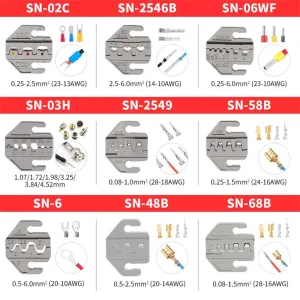
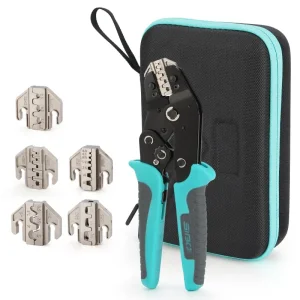
Military, agricultural, and logistics fleet operators manage distributed repair depots worldwide. Procurement directives specify modular crimping kits containing interchangeable die matrices (open barrel, D-sub, insulated flag, solar) housed within ruggedized Oxford or blow-molded enclosures.
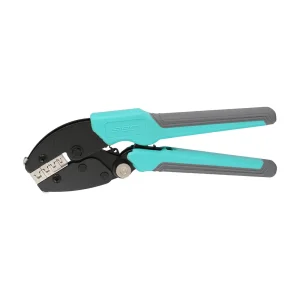
Assembly line throughput hinges on human factors. Procurement teams require compound-lever mechanics reducing hand grip fatigue by over 30%, pairing anti-slip thermoplastic elastomer (TPE) handles with balanced weight distributions under 550 grams.
How the Yueqing precision electrical industrial cluster combines digital metallurgy, automated EDM calibration, and agile OEM/ODM manufacturing to anchor global hardware logistics.
From cold-rolled carbon steel blank stamping to multi-stage vacuum heat treatment and precision profile wire-cutting, our end-to-end Yueqing manufacturing hub removes subcontracting delays and assures micro-tolerance control.
Every newly cut die matrix undergoes computerized optical measuring machine (CMM) inspections and pull-tester cross-section analysis to certify crimp compression heights before scaling volume runs.
Global brands leverage our proprietary tool platforms for turnkey customization, including dual-color customized TPR ergonomics, laser-etched cavity scales, OEM branding, and private-label retail packaging configurations.
From high-current lithium propulsion buses to ultra-dense avionics compute racks, see where SIBO tools deliver uncompromising structural reliability.
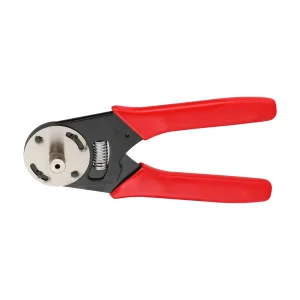
Termination of mil-spec D-Sub closed barrel pins and multi-pin circular connectors across autonomous reconnaissance units. Withstands persistent 40G airframe vibration, rapid thermal cycling (-40°C to +85°C), and electromagnetic interference.
High-current DC power wiring, centrifugal pump connections, and motor ESC phase lines. Resists exposure to chemical mists, high ambient humidity, and sustained continuous discharge loads exceeding 100A.
Onboard sensor suites, LiDAR telemetry harnesses, and battery management interconnects (BMS) for commercial middle-mile drones. Ensures ultra-low contact resistance to extend battery flight envelopes.
Explore our heavy-duty self-adjusting mechanisms, solar PV contacts, closed-barrel connectors, and specialized ferrule configurations.
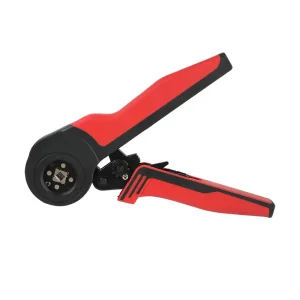
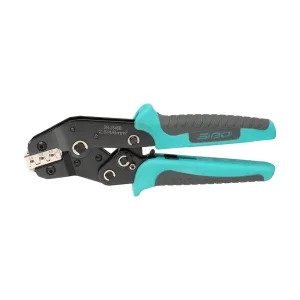
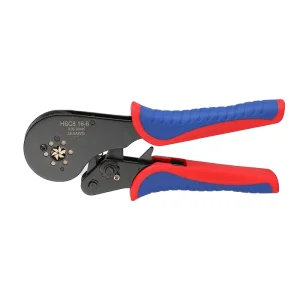
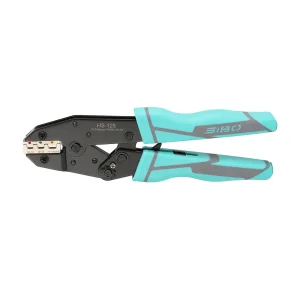
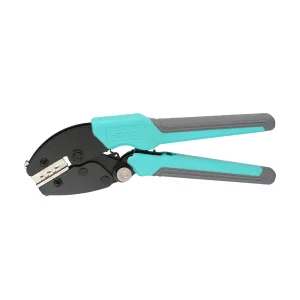
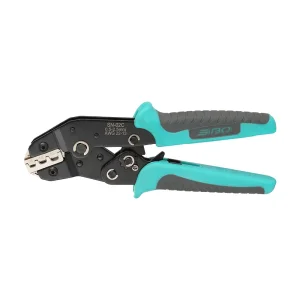
Technical guidance direct from our Yueqing tooling engineers to optimize your avionics wire assembly and international procurement specifications.
